Subscribe to our newsletter
Copyright © 2026 lmitac.com All Rights Reserved. Contact - Terms and Conditions - Privacy Policy - Quality Policy - Vacancies - Sitemap
London Maritime Academy is a trade name for London Premier Group
version: 2.9.0
Subscribe to our newsletter
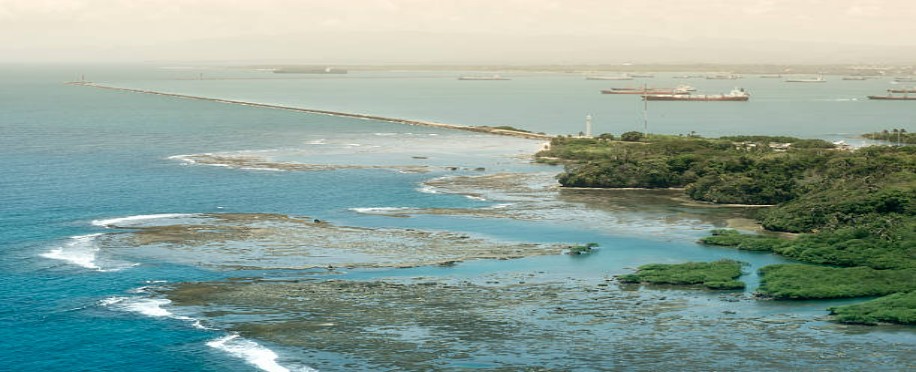
With growing environmental pressures on coastal regions, Integrated Coastal Zone Management (ICZM) offers a sustainable framework that balances economic development with environmental protection. By integrating land and sea planning and involving multiple stakeholders, ICZM promotes coordinated decision-making to protect ecosystems, reduce conflicts, and ensure long-term coastal resilience.
Integrated Coastal Zone Management (ICZM) is a dynamic, continuous, and iterative process designed to promote the sustainable management of coastal zones. It is a holistic governance framework that brings together various stakeholders—including government agencies, NGOs, and the private sector—to develop and implement a coordinated strategy for the allocation of environmental, socio-cultural, and institutional resources.
In this Article, we will highlight the most important aspects of this concept. Why do you think it is so important?
Unlike traditional sector-by-sector management, Integrated Coastal Zone Management (ICZM) integrates land and water components, considering the interdependencies between terrestrial and marine environments, often extending from coastal hinterlands to the exclusive economic zone (EEZ). The main objective is to balance ecological protection with social and economic development, while mitigating conflicts, preserving biodiversity, and reducing vulnerability to natural hazards. Integrated Coastal Zone Management (ICZM) emphasizes "integrated" planning across spatial, temporal, and administrative levels to achieve sustainable multiple uses of coastal resources. This approach often requires a national strategy to effectively coordinate diverse stakeholders and align with a specific Integrated Coastal Zone Management ICZM project or long-term management plan.
That being addressed, it’s obvious we’re talking about a PROGRAM.
The Integrated Coastal Zone Management ICZM program follows a structured, multi-phase roadmap toward sustainability, typically implemented in an iterative cycle of planning and action.
This cyclical process:
Inception → Profiling → Visioning → Planning → Implementation → Evaluation → Revision
ensures that coastal management adapts to evolving pressures and long-term goals.
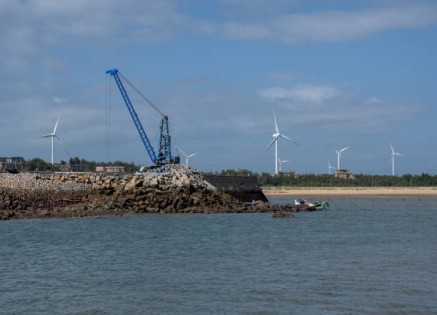
Implementing Integrated Coastal Zone Management (ICZM) faces several key challenges. Institutional fragmentation is paramount, as multiple agencies often manage sectoral interests (tourism, fisheries, shipping, etc) with competing mandates and inadequate coordination. Furthermore, there is a distinct lack of enforcement and financial resources for implementing plans, particularly in developing national contexts. Inadequate scientific data and monitoring systems often impede evidence-based decision-making.
Finally, navigating conflicting stakeholder interests—such as balancing large-scale commercial projects development with local livelihoods and habitat protection—remains a major barrier to achieving true, long-term sustainability, often requiring a coordinated, holistic approach at the local level. Addressing these systemic, governance, and Eco concerns is crucial for successful coast conservation.
Facing these challenges requires an ecosystem-based framework, active stakeholder participation, and adaptive coastal management techniques & strategies that allow for flexibility in the face of uncertainty. Effective ICZM fulfilment involves leveraging technology for monitoring, establishing robust legal frameworks, and ensuring local communities perspectives are involved in policy creation to build resilience. By prioritizing sustainable use and holistic approach to managing coastal resources and balancing socio-economic needs, Integrated Coastal Zone Management (ICZM) seeks to transform vulnerability into resilience, protecting both ecosystems and human livelihoods.
Integrated Coastal Zone Management (ICZM) is evolving from a voluntary framework into an indispensable, dynamic strategy to harmonize economic growth with ecological sustainability in the face of accelerating climate change.
The future outlook for Integrated Coastal Zone Management ICZM focuses on fostering climate resilience, integrating land-sea interactions, and transitioning toward a sustainable "Blue Economy".
Key trends include the adoption of nature-based solutions (NBS), alongside with implementing IoT sensors, GIS data analytics & AI Applications to enable real-time monitoring of coastal erosion and biodiversity loss.
Looking toward 2030, successful Integrated Coastal Zone Management ICZM fulfilment will depend on strengthening institutional coordination, mobilizing innovative finance, and enhancing inclusive stakeholder participation to manage the intensifying land-use conflicts in fragile coastal zones.
It is essential to accelerate the transition of integrated coastal zone management from the conceptual phase to the implementation. It is simply a practical approach based on sustainability as both a starting point and an ultimate goal. It is at the forefront of developing coastal areas in a systematic, scientific, and effective manner.
Knowledge is A Keyword - says the book! Adaptation to reality is the Map-Road!
We offer you both at our Coastal Environment Courses in London! LMA covers the whole spectrum of the maritime sector. Take a look & pick what best suits your demands.
LMA offices in London, Dubai, Istanbul, Athens, Amsterdam, Barcelona, Singapore, and Kuala Lumpur are always open to have you at one of our courses. We are keen to meet you there!
Don't forget the Online option, as well!


