Subscribe to our newsletter
Copyright © 2026 lmitac.com All Rights Reserved. Contact - Terms and Conditions - Privacy Policy - Quality Policy - Vacancies - Sitemap
London Maritime Academy is a trade name for London Premier Group
version: 2.9.0
Subscribe to our newsletter
Posted On: 4/5/2026, 5:42:07 PM
Last Update: 4/5/2026, 5:42:07 PM
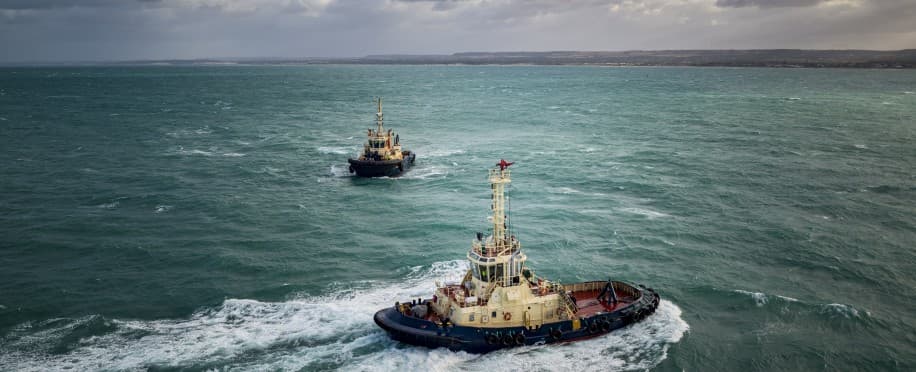
The African Union (AU) is advocating for a unified voice for its member nations as the IMO begins a fresh round of discussions for the global shipping decarbonisation regulations. African nations have historically negotiated at the International Maritime Organisation (IMO) using a disjointed strategy.
Several African countries, including Kenya, have presented their perspectives for the upcoming ISWG-GHG 21 meeting, with Kenya supporting the Net Zero Framework and contributing to the governing principles of the Net Zero Fund.
DRC, Ghana, and Togo support the fund, while Liberia opposes GHG pricing in the maritime sector, and Algeria is against the Net Zero Framework (NZF).
There is a consensus among neighbouring countries to adopt a unified approach in international negotiations. A recent ECOWAS meeting in Abuja, organised by the African Union Commission, attempted to forge a single position for Africa, with the German development organisation GIZ aiding African ports in their green transition.
Likewise, the Revised African Maritime Transport Charter, implemented in August after 15 years of ratification, has ignited debates. Originating from discussions among Transport Ministers in Addis Ababa in 1993, the Charter seeks to strengthen continental collaboration to address maritime sector challenges, particularly in light of significant institutional and technological changes in global shipping that may impact Africa.
The Charter has established an African Maritime Organisation within the African Union Commission, complementing existing regional bodies like the Maritime Organisation of West and Central Africa (MOWCA) and the Maritime Organisation for Eastern, Southern and North Africa (MOESNA).
The African Union Commission is convening a Committee of State Parties to structure this organisation, aimed at promoting a unified African stance at the International Maritime Organisation (IMO).
In simple terms, the AUC is researching member states' goals in marine sector development, with a special emphasis on port infrastructure and shipping fleet expansion. However, IMO decisions on green fuel transitions may disproportionately harm African economies, potentially causing twice the cost pressures seen by developed countries.
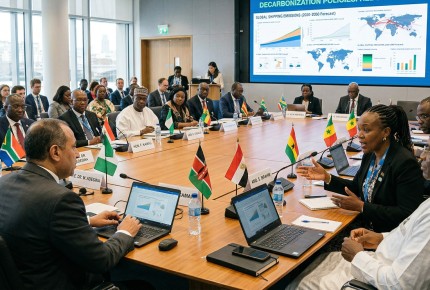
The African Union Commission (AUC) seeks to have Africa actively involved in shaping future laws for a unified stance on international shipping. Currently, only 18 of 44 African IMO members have ratified MARPOL Annex VI, which hinders Africa's efforts in maritime decarbonisation. This situation presents an opportunity for a collective influence on the global shipping industry's Net Zero Framework.
Notably, Dr. Dola Oluteye, during her presentation at the Abuja conference, highlighted that African states participate in the design of the NZF but lack a coordinated continental strategy for engagement.
The African Common Position is described as a collective representation of the diverse needs of Africa's 55 countries, acknowledging potential fragmentation but emphasising unity. Dr. Oluteye notes that this aligns with the IMO's existing framework, which recognises the necessity of varied approaches through a set of mid-term measures to address the unique requirements of its diverse membership.
The AUC Department of Infrastructure and Energy is conducting studies to facilitate Africa's green transition in the maritime sector.
Further, Dr. Dola highlighted that an African Common Position does not mandate identical submissions from all African states but rather seeks consensus on a unified platform consisting of shared principles, clearly defined red lines, and a coordinated process.
Maritime Training Courses investigate maritime decarbonisation by focusing on regulatory compliance (IMO GHG Strategy), alternative fuels (methanol, ammonia, hydrogen, LNG), and technical/operational efficiency improvements. AI-driven route optimisation, wind-assisted propulsion, port electrification (cold ironing), and carbon capture technologies are critical for achieving net-zero ambitions.
Read more news: