Subscribe to our newsletter
Copyright © 2026 lmitac.com All Rights Reserved. Contact - Terms and Conditions - Privacy Policy - Quality Policy - Vacancies - Sitemap
London Maritime Academy is a trade name for London Premier Group
version: 2.9.0
Subscribe to our newsletter
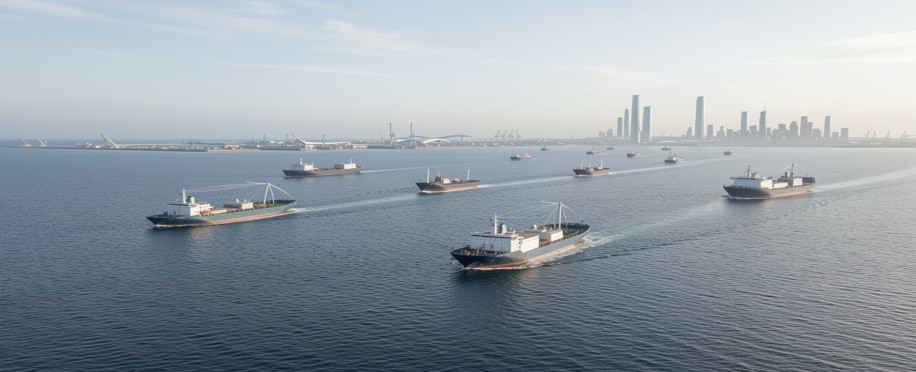
The maritime industry is entering a decisive era of transformation as the International Maritime Organization (IMO) accelerates its push toward Zero-Emission Shipping. Driven by stricter climate regulations, decarbonization targets, and the adoption of cleaner fuels and advanced technologies, global shipping is undergoing a fundamental shift in how vessels are designed, powered, and operated. This transition is reshaping investment decisions, operational strategies, and the future competitiveness of the entire maritime sector.
The global maritime sector is undergoing a structural transformation as climate regulation becomes more stringent and globally coordinated. With shipping responsible for approximately 3% of global greenhouse gas (GHG) emissions, pressure has intensified to accelerate decarbonisation at scale.
At the center of this shift is the International Maritime Organization (IMO), which is redefining the regulatory framework for international shipping. The IMO’s updated climate strategy now places Zero-Emission Shipping at the core of its long-term vision, signalling a move away from incremental efficiency improvements toward a full fuel-system transformation.
This transition reflects a broader recognition that Zero-Emission Shipping is no longer a theoretical ambition but an operational requirement shaping fleet planning, investment decisions, and global trade competitiveness.
The IMO’s revised GHG Strategy (2023) sets a clear trajectory toward net-zero emissions by around 2050, supported by interim reduction milestones for 2030 and 2040. This roadmap is designed to ensure that Zero-Emission Shipping becomes progressively embedded into global maritime operations.
A key development is the emerging IMO Net-Zero Framework, which is expected to introduce two major compliance mechanisms:
These mechanisms collectively aim to close the cost gap between conventional fuels and emerging low-carbon solutions while accelerating the adoption of Zero-Emission Shipping technologies across the fleet. However, significant uncertainty remains regarding how strictly these measures will be enforced across flag states and whether compliance will be uniformly monitored in practice. In addition, industry consensus has yet to be fully achieved on the appropriate level of carbon pricing, with shipowners, fuel suppliers, and cargo interests expressing differing views on cost allocation and competitiveness impacts. This is further complicated by regional divergence, particularly as the European Union continues to advance its own emissions trading and fuel regulations, raising questions about future alignment or overlap with IMO-led global standards.
Achieving Zero-Emission Shipping requires coordinated development across fuel supply chains, vessel technology, and operational practices.
One of the most critical enablers of Zero-Emission Shipping is the adoption of alternative fuels such as green ammonia, hydrogen, and synthetic methanol. These fuels offer long-term decarbonisation potential but require significant investment in production capacity, storage systems, and global bunkering infrastructure.
The success of Zero-Emission Shipping will depend heavily on how quickly these fuels can move from pilot projects to commercial-scale availability.
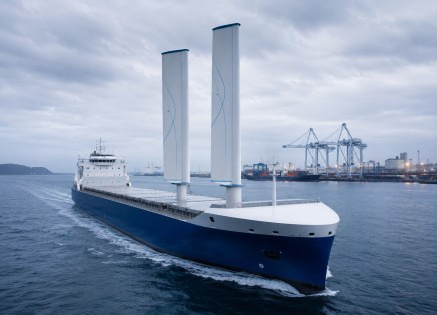
Modern vessel design is evolving to support Zero-Emission Shipping goals through integrated efficiency technologies. These include:
Such innovations reduce fuel consumption and support compliance with tightening IMO emissions standards, making Zero-Emission Shipping more technically achievable.
Digital transformation is playing an increasingly important role in enabling Zero-Emission Shipping. Advanced voyage optimisation systems, real-time emissions monitoring, and AI-based routing tools are helping operators reduce fuel consumption and improve efficiency across global fleets.
Operational strategies such as Just-in-Time arrival planning also reduce unnecessary idling and port congestion, directly contributing to Zero-Emission Shipping objectives.
Despite strong regulatory momentum, the transition toward Zero-Emission Shipping faces several structural challenges.
The most significant barrier remains cost. Low-carbon and zero-emission fuels are currently far more expensive than traditional marine fuels, creating financial pressure for shipowners and operators.
Infrastructure readiness is another limitation. Many ports are not yet equipped to handle alternative fuels or provide the energy systems required for large-scale Zero-Emission Shipping deployment.
Regulatory uncertainty also plays a role. While IMO direction is clear, implementation timelines and market mechanisms are still evolving, which can slow down long-term investment decisions.
The implications of Zero-Emission Shipping extend across the entire maritime value chain.
Shipowners must reassess fleet renewal and retrofit strategies to remain compliant with future regulations. Ports are increasingly becoming energy transition hubs, investing in alternative-fuel infrastructure and electrification systems.
Cargo owners are also beginning to priorities emissions performance in procurement decisions, while financial institutions are integrating environmental risk into lending and insurance models.
This interconnected shift means that Zero-Emission Shipping is no longer a niche regulatory topic but a core commercial factor shaping global trade.
The IMO’s regulatory direction confirms that Zero-Emission Shipping will define the next era of global maritime transport. While technical, financial, and infrastructure challenges remain, the regulatory pathway is now firmly established.
Over time, compliance with emissions standards will become a baseline requirement for market participation, influencing competitiveness and access to global trade routes.
Early preparation is therefore essential for maritime stakeholders seeking to remain resilient in a rapidly changing regulatory environment.
To stay ahead of these developments and strengthen industry expertise, professionals can benefit from specialised training such as LMA Maritime Training Courses, which support understanding of evolving IMO regulations and operational requirements linked to Zero-Emission Shipping.