Subscribe to our newsletter
Copyright © 2026 lmitac.com All Rights Reserved. Contact - Terms and Conditions - Privacy Policy - Quality Policy - Vacancies - Sitemap
London Maritime Academy is a trade name for London Premier Group
version: 2.9.0
Subscribe to our newsletter
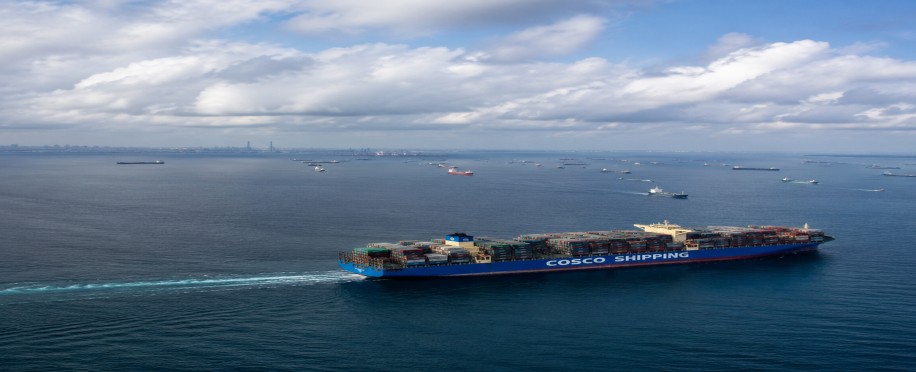
Green Shipping Corridors are rapidly becoming one of the maritime industry's most effective pathways toward decarbonisation. By connecting major ports through low-emission trade routes and supporting the adoption of alternative fuels, clean technologies, and collaborative initiatives, these corridors are helping shape the future of sustainable global shipping.
The maritime industry is entering a decisive phase in its decarbonisation journey. Shipping accounts for nearly 3% of global greenhouse gas (GHG) emissions (UNCTAD, 2024), placing increasing pressure on the sector to reduce its environmental footprint. In response, Green Shipping Corridors have emerged as one of the most promising tools for accelerating maritime decarbonisation. These targeted routes between major port hubs provide practical environments for testing and scaling zero-emission technologies, policies, and alternative fuels.
What began as a series of pilot concepts is now gaining tangible momentum. According to recent industry assessments, more than 80 green shipping corridor initiatives are currently under development worldwide. More importantly, several pioneering corridors have moved beyond planning and into implementation, with vessel construction, bunkering infrastructure, and fuel production facilities already underway.
The geographic footprint of green shipping corridors is expanding well beyond its original centres in Europe and North America. Today, major emerging economies—including China, India, Brazil, Chile, and Kenya—are actively exploring and developing their own sustainable maritime trade routes.
Among the most prominent examples are the Los Angeles–Shanghai and Rotterdam–Singapore corridors, which connect some of the world's busiest and most emissions-intensive port clusters. At the same time, regional initiatives across the Baltic and North Seas are demonstrating how collaborative approaches can support the deployment of alternative-fuel vessels and supporting infrastructure.
Developing a successful green corridor requires alignment across three key technical areas:
Industry efforts are increasingly focused on scalable zero-emission fuels such as green methanol, renewable ammonia, and liquid hydrogen. These fuels are expected to play a central role in helping the shipping industry meet its long-term emissions-reduction targets.
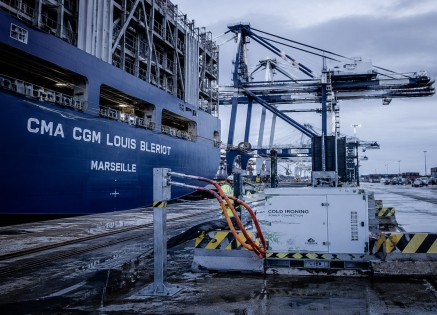
Ports are investing in Onshore Power Supply (OPS) systems that allow vessels to connect to shore-side electricity while berthed, significantly reducing emissions in port areas. In addition to lowering greenhouse gas emissions, shore power can improve local air quality and reduce noise pollution in port communities.
Enhanced data-sharing systems and Just-in-Time arrival practices help reduce waiting times, improve operational efficiency, and lower fuel consumption. Digitalisation is increasingly becoming an essential component of maritime decarbonisation strategies.
 Overcoming the "Feasibility Wall"
Despite rapid growth in the number of projects, many green shipping corridors continue to face a significant commercial and financial challenge often referred to as the "feasibility wall." The primary obstacle remains the substantial cost difference between emerging e-fuels and conventional marine fuels.
Uncertainty surrounding future regulations and market incentives has further complicated investment decisions. Without clear and predictable economic signals, many stakeholders remain cautious about committing large-scale capital to new fuel production and infrastructure projects.
To overcome these barriers, governments and industry partners are introducing targeted support mechanisms. Programs such as the UK's International Green Corridor Fund, contracts for difference (CfDs), and H2Global's double-auction model are helping to reduce investment risk and encourage early market development. These public-private initiatives are proving increasingly important in supporting first movers and establishing future fuel supply chains.
Green corridors are no longer viewed simply as bilateral agreements between two ports. Increasingly, they are evolving into broader multi-port networks that generate benefits across the maritime value chain:
Shared trade routes create larger and more predictable demand signals, giving fuel producers greater confidence to invest in commercial-scale e-fuel production.
Cargo owners, freight forwarders, shipping companies, and port authorities are collaborating to strengthen supply-chain resilience and prepare for future carbon-related regulations.
Reduced emissions of sulfur oxides, nitrogen oxides, and particulates can improve air quality in port communities and contribute to better public health outcomes. These local environmental benefits often provide immediate and visible advantages while the broader transition to low-carbon shipping continues.
Green Shipping Corridors have evolved from a theoretical concept into one of the maritime industry's most practical frameworks for achieving decarbonisation. While challenges related to fuel costs, infrastructure investment, and regulatory certainty remain significant, industry engagement continues to grow and investment activity is accelerating.
For maritime stakeholders, participation in green corridor initiatives is increasingly becoming a strategic consideration rather than a future possibility. Those that engage early may be better positioned to secure fuel availability, manage transition risks, and help shape the operational and commercial standards that will define the next generation of sustainable global trade.
As environmental regulations continue to evolve, maritime professionals must stay informed about emerging technologies, fuels, operational practices, and regulatory developments associated with Green Shipping Corridors.
We at LMA have some great experts ready to help you enhance your knowledge & keep up to date if you are deeply involved in the maritime industry. Take a look at our LMA Marine Environment Training Courses in London & pick what perfectly fits your needs.