Subscribe to our newsletter
Copyright © 2026 lmitac.com All Rights Reserved. Contact - Terms and Conditions - Privacy Policy - Quality Policy - Vacancies - Sitemap
London Maritime Academy is a trade name for London Premier Group
version: 2.9.0
Subscribe to our newsletter
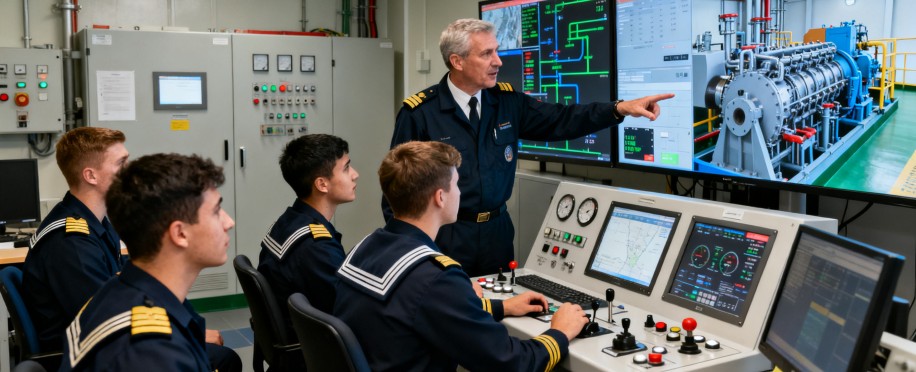
Marine engineering courses provide the technical knowledge and practical skills needed to build a successful career in the maritime industry. From ship operations and propulsion systems to offshore opportunities, these programs prepare future engineers for global career growth.
Specialised marine engineering courses provide the targeted technical skills and practical knowledge needed to accelerate professional careers in the maritime sector. Delivered through intensive, 3-to-10-day tailored program options—both in interactive classroom settings and flexible online formats—these courses enable working engineers and advanced technical students to upgrade their expertise without enrolling in multi-year university degree pathways.
As modern ships adopt new technologies, green propulsion systems, and digital automation, shipping operators require ongoing professional training for every critical shipboard operation. Short-term marine engineering courses focus on immediate operational challenges, helping active engineers maintain complex marine machinery and ensure smooth sea operations.
In this guide, we explore how tailored marine engineering courses work, how specialised maritime education elevates your professional growth, and how these short programs prepare experienced technical personnel for high-impact roles across global vessels.
Unlike multi-year academic degree options intended for entry-level seafarers, short-term marine engineering courses focus on specific, high-value technical domains. These 3-to-10-day programs concentrate on major operational areas, including engine control automation, auxiliary machinery, high-voltage safety, and modern propulsion systems.
These specialised marine engineering courses are delivered through two flexible formats designed for active professionals:
When evaluating marine engineering courses, professionals gain access to intensive, real-world instruction across a wide range of cutting-edge operational disciplines. The essential topics are covered in maritime engineering curriculum modules through comprehensive thematic areas designed for working engineers:
With global environmental mandates tightening, short marine engineering courses place strong emphasis on energy efficiency and alternative propulsion. Training covers carbon capture and storage (CCS) systems for commercial vessels, carbon footprint auditing across fleet operations, and energy-efficient vessel design strategies. Engineers learn to integrate sustainable ship design, hydrogen fuel cell technology, and eco-friendly innovations to reduce emissions drastically.
Maintaining complex cargo and inerting equipment is critical for safety on oil tankers and gas carriers. Modules deliver targeted instruction on Inert Gas Systems (IGS) and Inert Gas Generators (IGG), alongside specialised piping and pumping arrangements aboard oil tankers. Working professionals gain practical insights into maintaining pressure integrity, preventing fire hazards, and streamlining cargo transfer routines.
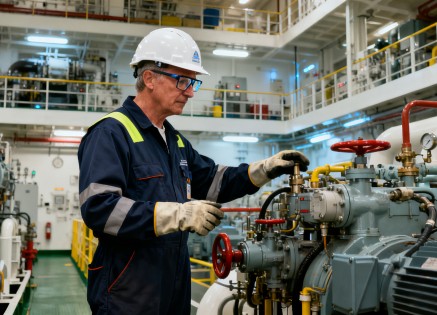
Understanding modern power generation is crucial for maintaining vessel reliability at sea. Intensive training covers advanced ship propulsion systems, dual-fuel technology, and modern internal combustion engines. Participants learn to analyse diagnostic data, optimise fuel consumption, and manage complex mechanical-electrical power interfaces.
Beyond conventional vessel machinery, specialised maritime engineering courses extend to coastal engineering, marine construction, resilient maritime infrastructure, and offshore renewable energy systems. Advanced modules also introduce underwater robotics, subsea engineering principles, and marine bioengineering to equip technical leaders for modern offshore platforms and subsea intervention operations.
Enrolling in specialised marine engineering courses transforms your technical confidence and unlocks advanced opportunities. Key benefits include:
Through focused modules, these courses provide deep insights into modern shipboard machinery, diagnostic software, and high-pressure hydraulic systems.
Updating your credentials through marine engineering courses ensures complete alignment with international maritime safety standards, environmental protocols, and emission rules.
Completing accredited short marine engineering courses helps active engineers fulfil certification requirements, earn rank upgrades, and transition into senior management roles aboard commercial vessels.
These intensive, short-duration courses are tailored specifically for experienced professionals and ambitious students seeking targeted skill enhancement:
Specialised marine engineering courses offer an efficient, high-impact pathway to mastering advanced machinery and keeping pace with changing industry requirements. By choosing focused short programs, maritime professionals can build targeted expertise, optimise vessel performance, and secure long-term success in their careers.
Ready to enhance your technical credentials? Explore upcoming schedules for tailored marine engineering courses and enrol today!