Subscribe to our newsletter
Copyright © 2026 lmitac.com All Rights Reserved. Contact - Terms and Conditions - Privacy Policy - Quality Policy - Vacancies - Sitemap
London Maritime Academy is a trade name for London Premier Group
version: 2.9.0
Subscribe to our newsletter
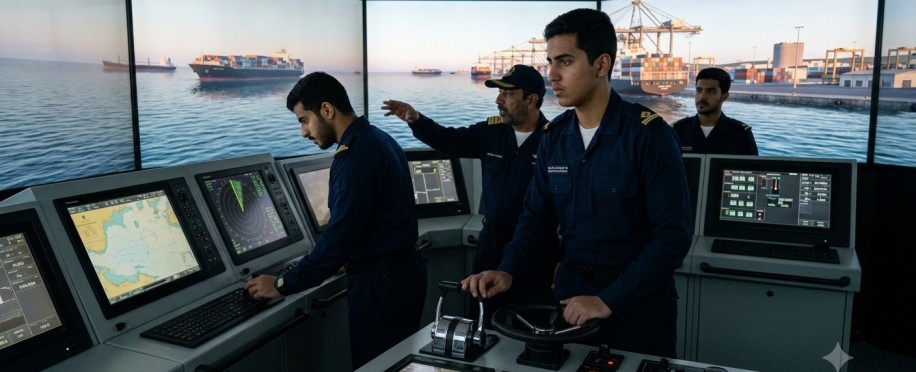
The maritime industry offers rewarding career opportunities, but language barriers can make professional training more challenging for Arabic-speaking learners. Maritime training in Arabic countries bridges this gap by providing accessible education and by ensuring that the learners are assessed to level in English language to make them able to compete internationally after being graduated,supported by internationally recognized qualifications, and practical skills for Arab seafarers.
Studies show that Arab seafarers are less than 2% of the global seafarer population (2.56 million seafarers based on the BIMCO/ICS Seafarer Workforce Report 2026). Thus, you may think it is hard to find maritime training in Arabic countries.
But maritime education and training in Arabic countries is growing, especially in Saudi Arabia, UAE, and Egypt, which combined have the greatest seafarer population in the region. A well-established maritime academy provides academic education of transport requirements, field equipment, stakeholder management, and marine engineering with a strong certificate.
Continue reading our article to learn all about Arabic seafarer training, what are the available opportunities, best training and education, and future career growth possibilities to consider.
Maritime training in Arabic countries refers to professional education and certification programs delivered in classroom in Arabic countries. These training courses help Arab seafarers understand technical concepts, explore maritime transport principles, develop practical skills, meet international maritime standards, offer better solutions, and prepare for careers in the global shipping and offshore industries.
Established maritime academy training supports seafarers and workers with better understanding, business knowledge access, licensing and compliance principles, transport standards, and more.
Focused maritime technology in Arabic countries enhances marine knowledge and understanding of the science behind safety procedures, navigation principles, specific maritime software, and related terminology.
Best training courses for seafarers and offshore workers help talented seafarers gain essential qualifications and quality certifications to reach better opportunities in maritime fields.
Maritime training, especially that delivered by a reliable academy, strengthens understanding with practical applications, helping seafarers confidently apply global safety regulations, marine transport principles, and operational best practices.
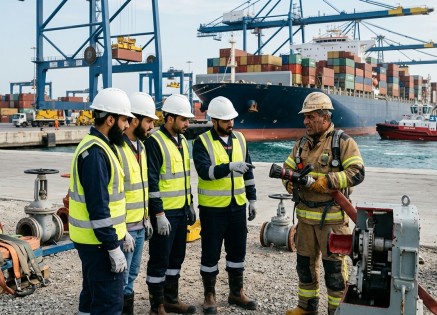
Arab seafarers have many open opportunities for training in Arabic countries to develop their knowledge, skills, and careers with an accredited maritime academy.
Maritime courses in Dubai provide a great opportunity to learn about ports, transportation, and offshore projects across the Middle East and internationally.
Recognized maritime qualifications enable Arab seafarers to compete for positions with international companies operating across global trade routes.
Choosing the right maritime training courses will help you advance your career, skills, and growth rates.
Choose a recognized maritime academy offering accredited programs that meet international learning standards and deliver accepted maritime certifications upon completion.
Qualified instructors come with real maritime experience and practical insights to help learners understand industry expectations, onboard operations, and maritime responsibilities.
· Practical Training Approach:
Select training programs combining classroom learning with practical exercises, simulators, transport and safety drills to develop confidence and real-world proficiencies.
Training delivered in Arabic countries improves maritime understanding, especially the hi-tech subjects and transport supervision. It also builds confidence before progressing to internationally recognized maritime qualifications successfully.
Maritime training in Arabic countries provides great career opportunities for seafarers due to accredited knowledge, quality certificates, and advanced training.
| Career | Role |
| Deck Officer | Navigation and vessel operations |
| Marine Engineer | Ship machinery and systems |
| Ship Captain | Vessel leadership |
| Maritime Safety Officer | Safety compliance |
| Port Manager | Port operations |
Maritime training in Arabic countries is your best option to learn all about the maritime industry without any barriers, with updated knowledge, curricula, and applications.
Finding the best maritime academy in the industry is what will make your training effective, successful, and empowering your career, especially in the Middle East market.