Subscribe to our newsletter
Copyright © 2026 lmitac.com All Rights Reserved. Contact - Terms and Conditions - Privacy Policy - Quality Policy - Vacancies - Sitemap
London Maritime Academy is a trade name for London Premier Group
version: 2.9.0
Subscribe to our newsletter
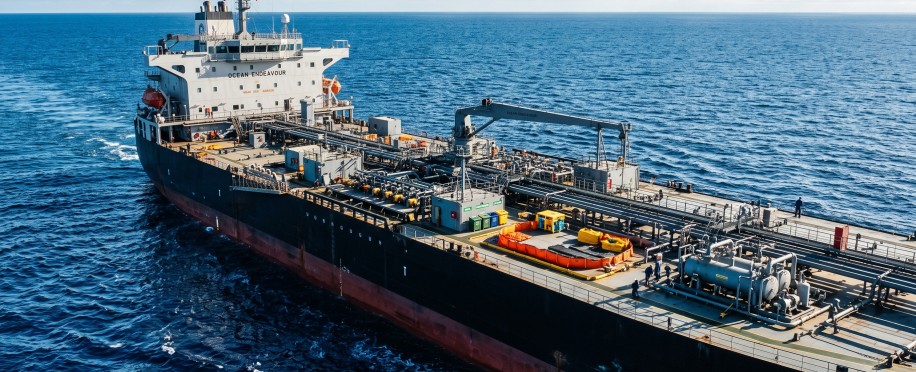
MARPOL 73/78 is the global framework for preventing pollution from ships. From oil and garbage to sewage, emissions, and onboard records, effective compliance depends on turning regulations into consistent daily operations.
MARPOL73/78 regulations as amended explained properly one thing: whether a ship can prevent pollution during real operations. Certificates matter. Procedures matter too. What matters most is whether the vessel actually follows them while handling oil; waste; sewage; fuel; and other pollution risks. That is where compliance becomes visible.
In this article, we explain how MARPOL works; what each annex covers; where ships commonly face compliance problems; and what operators should check before those problems become enforcement issues.
MARPOL stands for the International Convention for the Prevention of Pollution from Ships. It was adopted by the IMO in 1973. However, the 1978 Protocol followed and the combined convention entered into force in 1983.
Since then, the convention has continued to develop through amendments. That matters because shipping has changed. Fuel standards have tightened. Environmental expectations have increased. New control areas have also been introduced.
According to the IMO’s overview of pollution prevention, MARPOL applies to almost all of the world’s merchant tonnage. In practice, this makes it one of the most important environmental frameworks in international shipping as per the table 1 below
| Gross Tonnage | Typical MARPOL 73/78 Requirements |
| All ships | Annex III, Annex V (basic garbage rules), Annex VI (general air pollution provisions), Annex I for oil tankers, Annex II for chemical tankers |
| 100 GT and above | Garbage Management Plan (Annex V) |
| 150 GT and above | Additional Annex I requirements for oil tankers (e.g., Oil Record Book) |
| 400 GT and above | Annex I (most non-tankers), Annex IV (sewage), IAPP Certificate, EEXI, and many Annex VI energy-efficiency requirements |
| 5,000 GT and above | Carbon Intensity Indicator (CII) rating and reporting under Annex VI |
| Ships carrying >15 persons | Annex IV sewage requirements and Annex V garbage placards, regardless of GT |
Table I MARPOL 73/78 Requirements
Nevertheless, when looking at what MARPOL means for everyday ship operations, MARPOL regulations explained from an operational perspective go far beyond environmental policy. The rules affect equipment. They affect documentation. They influence voyage planning and onboard procedures. They can also affect whether a vessel passes a port State inspection.
The easiest way to understand the MARPOL regulations explained is to look at its six technical annexes.
| Annex | Main area covered | What it means onboard |
| Annex I | Oil pollution | Controls oily waste and oil discharge |
| Annex II | Noxious liquid substances | Sets rules for bulk chemical cargoes |
| Annex III | Harmful packaged substances | Controls transport in packaged form |
| Annex IV | Sewage | Regulates sewage discharge |
| Annex V | Garbage | Controls disposal of ship-generated waste |
| Annex VI | Air pollution | Regulates emissions and fuel standards |
Table II Classification of Annexes
Each annex addresses a different risk. However, compliance must work as one system. Good garbage management will not compensate for weak oil-record practices. Strong air-emission controls will not excuse poor sewage procedures.
Annex I focuses on oil pollution from ships, which includes pollution caused by normal machinery-space operations as well as tanker-related activities and accidental releases.
Here, documentation is the key player that will win the game. why?
An inspector usually compares Oil Record Book entries with tank conditions. However, they may also examine equipment use. And if those records do not match what is physically happening onboard, further questions are likely.
MARPOL regulations explained through Annex I show why crews must understand the reason behind each entry. Record keeping should reflect the actual operation. It should never become a routine exercise completed simply because a form requires it.
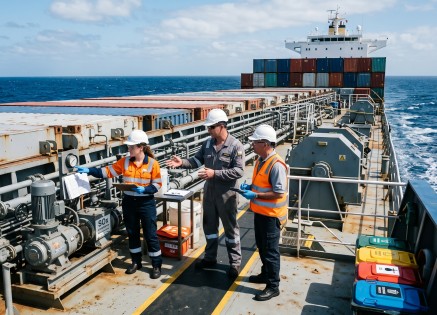
Annex V deals with garbage generated onboard. It generally prohibits the discharge of garbage into the sea unless a specific exception applies.
Plastics cannot be discharged at sea.
Ships may also need a Garbage Management Plan and appropriate records depending on their type and size. Crews therefore need to know how different waste types should be separated. They also need to understand where waste can legally go.
Such a concern is important inside special areas because discharge restrictions may become stricter.
Annex VI addresses air pollution from ships. This includes sulphur emissions and nitrogen oxides. It also covers energy-efficiency measures.
One of the best-known requirements is the sulphur limit for marine fuel.
Outside designated Emission Control Areas (ECAs), the global sulphur limit is 0.50% m/m. Inside a sulphur ECA, the limit is 0.10% m/m unless the vessel uses an approved equivalent method.
This means voyage planning now has a direct environmental compliance element.
For example, entering an ECA may require a fuel changeover. The crew must know when that process should begin. They must also keep the required records and make sure the fuel system can complete the change safely.
Some sea areas receive additional protection under MARPOL. These are known as special areas.
Why does that matter?
A discharge that may be permitted in one location could be prohibited in another.
Before any discharge, the crew should confirm four things:
This is a simple process. Yet it can prevent serious mistakes.
Special areas are different from one Annex to another as per the table III below;
| MARPOL Annex | Pollution Type | Special Areas / ECAs |
| Annex I | Oil | Mediterranean Sea, Baltic Sea, Black Sea, Red Sea, Gulfs Area, Gulf of Aden, Antarctic Area, North West European Waters, Oman Area of the Arabian Sea, Southern South African Waters |
| Annex II | Noxious Liquid Substances (NLS) | Antarctic Area only |
| Annex III | Harmful Substances in Packaged Form | No Special Areas designated |
| Annex IV | Sewage | Baltic Sea (Passenger Ships) |
| Annex V | Garbage | Mediterranean Sea, Baltic Sea, Black Sea, Red Sea, Gulfs Area, North Sea, Antarctic Area, Wider Caribbean Region (including the Gulf of Mexico and the Caribbean Sea) |
| Annex VI | Air Pollution | Emission Control Areas (ECAs): Baltic Sea (SOx, PM & NOx), North Sea (SOx, PM & NOx), North American ECA, United States Caribbean Sea ECA, Canadian Arctic ECA*, Norwegian Sea ECA* (*recently adopted with implementation dates under Annex VI) (Publicatieplatform UitvoeringsContent) |
Table III Special Areas for each Annex
MARPOL regulations explained properly cannot separate records from actual operations. Documentation is evidence of what the ship did.
Typical records may include Oil Record Books; Garbage Record Books; bunker delivery notes; waste receipts; certificates; and management plans.
The important point is consistency.
If a record says equipment operated normally but the physical condition suggests otherwise, an inspector may investigate further.
This is particularly serious when authorities suspect deliberate manipulation. The guide on collecting evidence in suspected MARPOL evasion cases explains why records can become central to enforcement.
A pre-arrival review should test more than paperwork.
Start with the physical condition of pollution-prevention equipment. Then compare that condition with onboard records.
Check whether certificates remain valid. Review waste storage. Verify fuel documentation when approaching an ECA. Confirm that crew members understand the procedures they are responsible for.
MARPOL regulations explained through this process become easier to manage because the focus shifts from memorising legal text to verifying operational control.
If a defect is found, report it through the correct procedure. Record the action taken. Then confirm whether shore management or the flag Administration needs to become involved.
Many problems are not caused by a complete absence of procedures. They happen because procedures exist but are not followed consistently.
Common warning signs include:
The lesson is straightforward. MARPOL compliance should be checked continuously rather than prepared only before inspection.
MARPOL regulations explained in practical terms come down to alignment. Equipment must work. Documentation must reflect reality. Crews must understand their responsibilities. Voyage planning must account for current environmental requirements.
For shipping companies, strong compliance reduces enforcement exposure. It also protects operational continuity and commercial credibility. For shipboard teams, it provides a clearer system for preventing pollution before an incident becomes a legal problem.