Subscribe to our newsletter
Copyright © 2026 lmitac.com All Rights Reserved. Contact - Terms and Conditions - Privacy Policy - Quality Policy - Vacancies - Sitemap
London Maritime Academy is a trade name for London Premier Group
version: 2.9.0
Subscribe to our newsletter
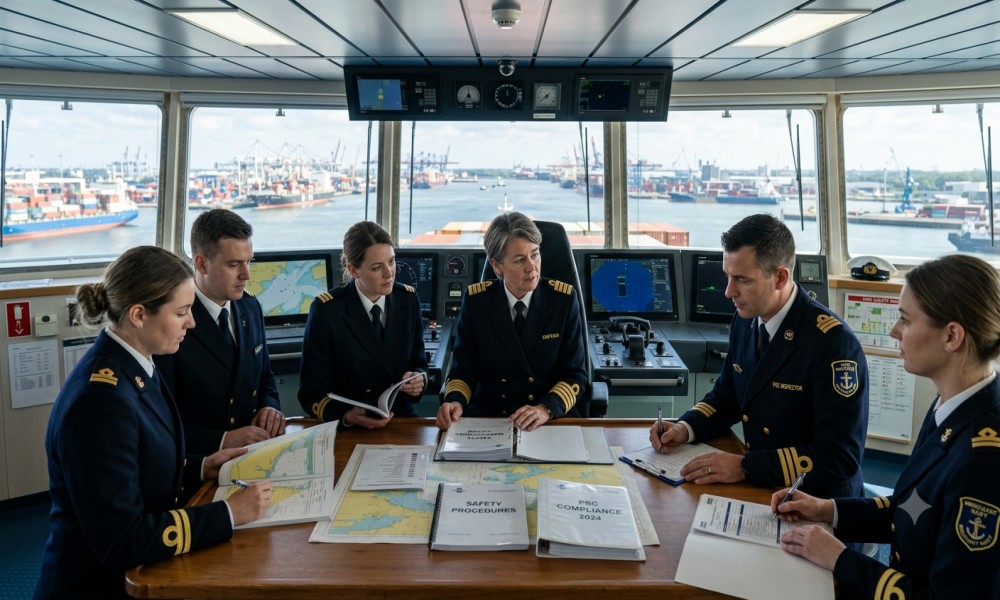
Port State Control (PSC) inspections play a vital role in maintaining global maritime safety by ensuring ships comply with international regulations and operational standards. As inspection methods become more risk-based and data-driven, shipping companies must strengthen compliance, crew preparedness, and safety management to reduce deficiencies and avoid costly detentions.
Port State Control (PSC) Inspections remain one of the most important enforcement tools for ensuring compliance with international maritime safety and environmental conventions. Conducted under regional agreements such as the Paris Memorandum of Understanding (MoU) and the Tokyo MoU, Port State Control serves as a critical verification layer for IMO instruments, including SOLAS, MARPOL, MLC and STCW.
Over the past decade, Port State Control regimes have evolved from routine checks into intelligence-led enforcement systems. Today, inspection selection is primarily driven by vessel risk profiles, flag performance, and historical deficiency data rather than random selection.
This shift has made modern PSC Inspections more targeted, data-driven, and risk-focused.
A major development in Port State Control is the widespread use of risk-based targeting systems. Vessels are now classified based on multiple indicators such as detention history, company performance, and classification society reliability.
This approach ensures inspection resources are focused on higher-risk ships, improving enforcement efficiency while reducing unnecessary delays for well-compliant operators.
For Example: A vessel with repeated fire safety deficiencies and prior detention records is automatically flagged as high-risk. As a result, it may be inspected in multiple consecutive ports, even within a single voyage.
Despite evolving regulations, detention causes remain relatively consistent across global regimes. Most findings relate to operational safety rather than documentation alone.
Common deficiencies include:
For example, during a routine inspection in a major European port, a bulk carrier was detained after inspectors discovered that the emergency fire pump could not be started due to poor maintenance and lack of onboard testing routines. The issue was not regulatory complexity but maintenance neglect.
While Port State Control is governed by international conventions, enforcement styles vary by region.
Despite regional differences, global enforcement is gradually converging toward more harmonised risk-based standards.
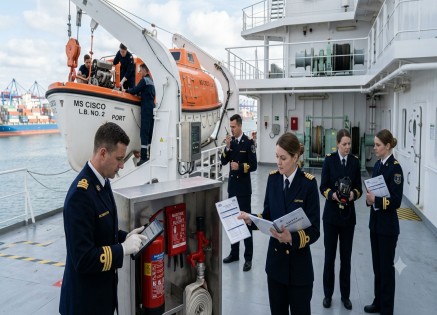
Another important feature of modern enforcement is the use of concentrated inspection campaigns. These time-bound initiatives focus on specific risk areas such as cargo securing, fire safety systems, ballast water management, or emergency preparedness.
During these campaigns, inspectors apply enhanced scrutiny to selected systems across many vessels, often leading to a temporary increase in recorded deficiencies.
These campaigns are designed to identify systemic weaknesses across the fleet rather than penalise individual operators.
The commercial consequences of enforcement actions can be significant. A detention may result in voyage delays, contractual disputes, increased port costs, and heightened scrutiny from charterers and insurers.
For this reason, shipping companies are increasingly integrating compliance readiness into daily operational planning rather than treating it as a pre-inspection activity.
Continuous maintenance, structured internal audits, and crew training programs are now standard industry practices aimed at reducing exposure to enforcement actions.
A strong compliance culture is one of the most effective ways to reduce deficiencies during inspections. This includes not only technical maintenance but also crew awareness, procedural discipline, and emergency preparedness.
Structured maritime education and competency development play an important supporting role in this area. Programs such as LMA Flag and Port State Training Courses help reinforce operational understanding and regulatory awareness across crew levels.
The future of maritime enforcement is increasingly data-driven. Digital reporting systems, vessel performance analytics, and predictive risk modelling are expected to play a larger role in determining inspection priorities.
This evolution will not reduce enforcement intensity but will make it more precise. High-risk vessels will face more focused attention, while compliant operators may benefit from reduced inspection frequency.
At the same time, core safety expectations will remain unchanged, ensuring that fundamental operational standards are consistently enforced globally.
PSC Inspections continue to be a cornerstone of global maritime safety governance, ensuring consistent enforcement of international standards across diverse fleets and trading routes.
While the methodology has evolved significantly toward risk-based and data-driven models, the underlying objective remains unchanged: ensuring safe operation, environmental protection, and competent shipboard performance across the global maritime industry.
Finally, the vessel should always be seaworthy; otherwise, she should not sail.