Subscribe to our newsletter
Copyright © 2026 lmitac.com All Rights Reserved. Contact - Terms and Conditions - Privacy Policy - Quality Policy - Vacancies - Sitemap
London Maritime Academy is a trade name for London Premier Group
version: 2.9.0
Subscribe to our newsletter
Posted On: 5/11/2026, 6:05:14 PM
Last Update: 5/11/2026, 6:05:14 PM
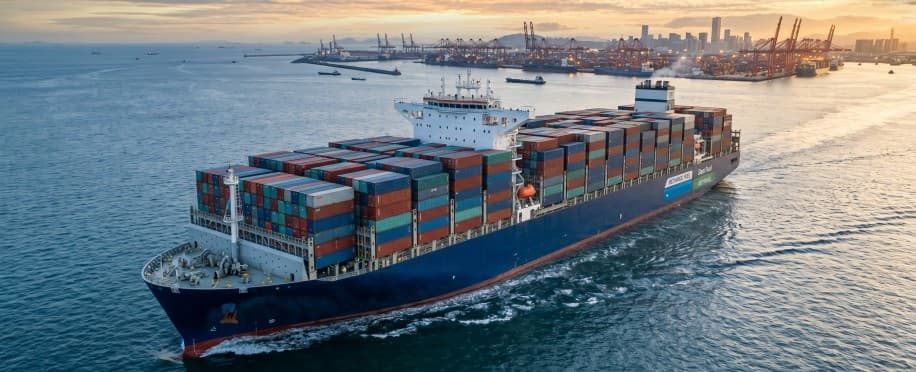
Chinese officials marked the naming ceremony of the OOCL Wisdom, the largest methanol-fuelled containership. As the first of 12 in its series, this vessel enhances China's initiative in green shipping.
In 2022, COSCO Shipping, parent of Orient Overseas Container Line (OOCL), ordered twelve ultra-large methanol-fuelled containerships. Seven are being constructed by Nantong Cosco KHI Ship Engineering for OOCL, while five are being built by Dalian Cosco KHI Ship Engineering for COSCO.
The total order for the ships is valued at nearly $2.9 billion, with deliveries expected by 2028. The first ship, named OOCL Wisdom, was launched on May 8 in Nantong.
At 399 metres in length, OOCL Wisdom is the largest-capacity methanol-fuelled containership, with a capacity of 24,168 TEU, building on the company’s previous ultra-large vessels delivered over the last two years.
Moreover, the vessel has a deadweight tonnage of 225,000 and features the largest methanol dual-fuel propulsion system, with all major engines and boilers capable of dual-fuel operation. It boasts a service speed of 22.7 knots.
The company emphasises the integration of new technologies in its ship design, featuring an advanced intelligent data platform and energy efficiency management system. These innovations enable real-time communication between the ship and shore, automatic optimisation of speed and trim, and real-time predictions of hull structural fatigue damage.
During the naming ceremony, OOCL CEO Tao Weidong stated, "The delivery of OOCL Wisdom not only expands OOCL's fleet and sets a new benchmark for our vessel technology, but also demonstrates our firm commitment to green and low-carbon development, digital intelligence, and sustainability."
Maritime Engineering Courses concentrate on methanol dual-fuel box ships, highlighting engine technology, fuel supply systems, regulatory compliance (IMO), and bunkering infrastructure. Converting from traditional diesel engines, regulating low-flashpoint fuel toxicity, and determining the total cost of ownership (TCO) for large boats are all major issues.
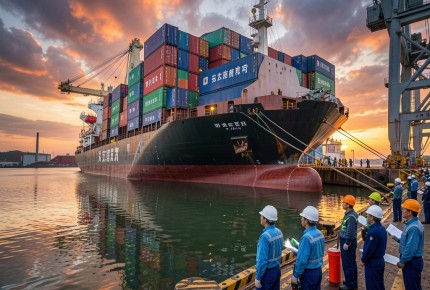
It is the newest vessel in COSCO's methanol ship fleet. The company's new series of 16,163 TEU containerships was introduced last year with the COSCO Shipping Yangpu.
The ship is 366 metres (1,200 feet) long and features an ultra-large methanol storage tank of 11,000 cubic metres. It permits the ships to go from the Far East to the East Coast of the United States without refuelling.
The fact that methanol only has roughly one-third the energy density of conventional fuels makes it difficult to operate over long distances and necessitates the use of big tanks.
The final ship of the 16,136 TEU class, the COSCO Shipping Lily, was delivered earlier this year. COSCO Shipping Panama and COSCO Shipping Carnation came next.
Additionally, 16 methanol-fuelled containerships with a capacity of 12,000 TEU have been ordered by COSCO Shipping. Additionally, it finished converting COSCO Shipping Libra, its first 20,000-TEU vessel, to dual-fuel methanol capability.
While some, like Maersk, have halted their drive into methanol due to worries about the fuel supply and infrastructure to sustain expansion, COSCO has emerged at the forefront of the methanol-fuelled ship industry.
According to DNV's calculations, there are already 70 methanol dual-fuelled containerships in operation, and 180 more are being ordered. The majority of ships that run on methanol are containerships.
Read more news: