Subscribe to our newsletter
Copyright © 2026 lmitac.com All Rights Reserved. Contact - Terms and Conditions - Privacy Policy - Quality Policy - Vacancies - Sitemap
London Maritime Academy is a trade name for London Premier Group
version: 2.9.0
Subscribe to our newsletter
Posted On: 4/24/2026, 2:34:47 PM
Last Update: 4/24/2026, 2:34:47 PM
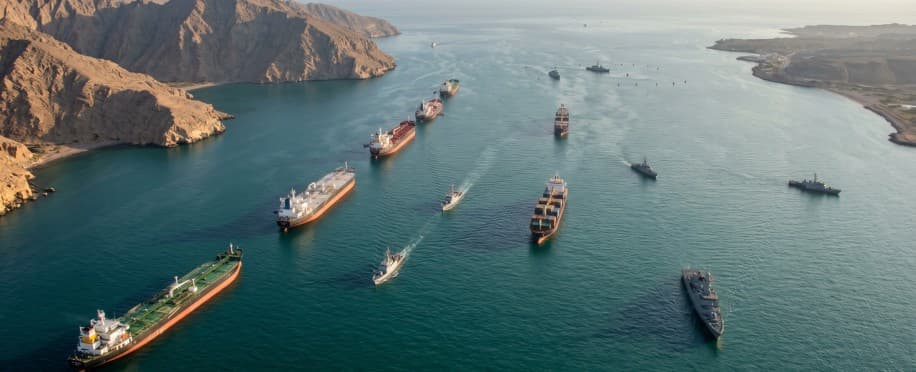
A grim internal assessment from the Pentagon indicates that reopening the Strait of Hormuz may be a much longer process than first indicated, as the White House steps up attempts to stabilise the world's energy markets.
Military sources have informed Congress that it could take up to six months to completely clear the waterway of Iranian-laid mines when hostilities stop, despite recent reports of progress.
This schedule threatens to prolong the world economic crisis well into the year.
Senior Defence Department officials allegedly delivered the six-month estimate to the House Armed Services Committee on Tuesday during a covert briefing. Officials familiar with the conversation said the assessment demonstrates that the threat lurking beneath the surface will persist long after Washington and Tehran establish a peace agreement or truce.
However, this sombre military vision is opposed to current political rhetoric. The public's newfound optimism contrasts sharply with this timeframe. The Pentagon's data points to a far more nuanced reality than President Trump's social media claims that Iran was already removing naval mines with American help.
Notably, Pentagon spokesman Sean Parnell called the leaked information “inaccurate” and denounced the publication, even though he acknowledged that the classified briefing had occurred.
Lawmakers on both sides of the aisle are irritated by the possibility of a semi-permanent shutdown of a pipeline that supplies one-fifth of the world's gas and oil, but the administration has not offered an official alternative timeframe.
Learners at the Maritime Training Academy study the removal of naval mines, also known as Mine Countermeasures (MCM), which involves a combination of advanced technology, oceanography, and tactical military strategy. Sea mine clearance is substantially more difficult than landmine disposal since it occurs in a three-dimensional, moving environment.
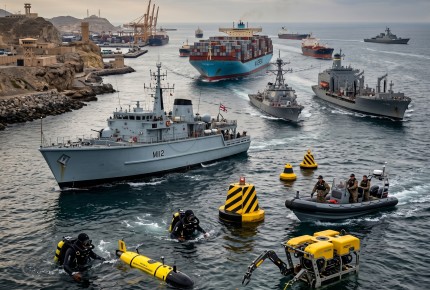
The volume and sophistication of the ordnance used make it impossible to clear the strait. According to military intelligence, Iran had hundreds of devices in store before the war, but only about 20 are thought to be in use in the Strait at the moment.
Additionally, officials cautioned that some of them are remotely placed or “GPS-guided” mines, which use technology that makes them much harder to find than conventional moored explosives.
The threat's geography presents another difficulty. Iran has released a “danger zone” chart that warns vessels away from the core Traffic Separation Scheme (TSS) that covers 1,400 square kilometres, or fourteen times the area of Paris.
Further, recovery operations for the U.S. Navy's Independence-class littoral combat ships now stationed in the area are made more difficult by rumours that Iran may have lost track of some of its own deployed devices, adding to the pandemonium.
Global market volatility functions as a gauge for the delay's stakes. The Strait of Hormuz served as China, South Korea, and Japan's main energy supply route before the war. Oil prices continue to be at levels that pose a threat to the larger global economy, despite the waterway being mostly closed and a precarious truce currently in effect.
Domestically, the six-month span holds significant political weight. If the waterway remains risky throughout the autumn, high petrol costs may persist until the November midterm elections. This poses an increasing issue for the government, especially given recent polling showing a growing divide in the political base over overseas military entanglements.
As military strategists from over 30 countries convene in London this week for discussions on maritime security headed by the United Kingdom and France, the shipping industry's message of caution remains unchanged.
Ultimately, industry behemoths such as Hapag-Lloyd have warned that unless definitive, mine-free paths are developed, the critical channel would remain a ghost town, regardless of diplomatic progress on land.
Read more news: