Subscribe to our newsletter
Copyright © 2026 lmitac.com All Rights Reserved. Contact - Terms and Conditions - Privacy Policy - Quality Policy - Vacancies - Sitemap
London Maritime Academy is a trade name for London Premier Group
version: 2.9.0
Subscribe to our newsletter
Posted On: 4/17/2026, 8:49:14 PM
Last Update: 4/17/2026, 8:49:14 PM
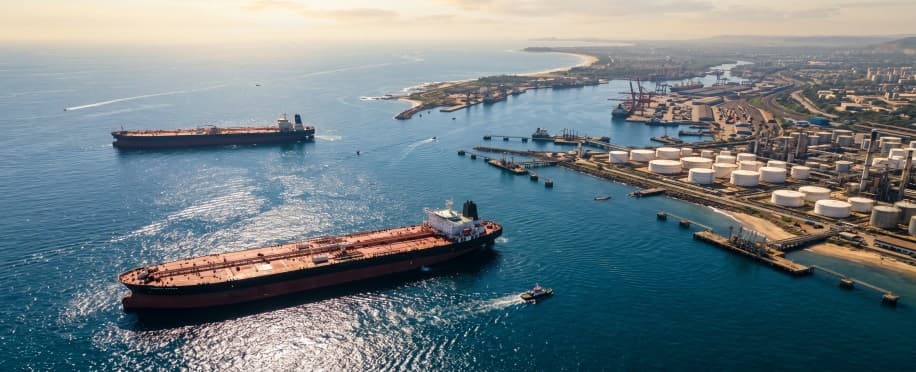
Two sanctioned VLCCs transporting Iranian oil have docked off India's eastern and western coasts, marking the first such occurrence in nearly seven years, according to ship-tracking data and industry sources.
The vessels Felicity and Jaya are estimated to carry around 2 million barrels of crude oil each, loaded from Iran’s Kharg Island in February and March.
Plus, their arrival is linked to a temporary sanctions waiver from the United States, permitting the sale of Iranian oil already on tankers at sea.
Felicity, from the National Iranian Tanker Company, anchored near Sikka on Gujarat's coast, a vital hub for crude oil refiners like Reliance Industries and Bharat Petroleum Corporation.
Simultaneously, Jaya was moored off Paradip on India's eastern coast, serving as a significant delivery point for Indian Oil Corporation (IOC).
Moreover, India ceased importing Iranian crude oil in May 2019 due to tightened US sanctions, despite Iran previously being one of its largest oil suppliers, contributing up to 11.5% of total imports and over 500,000 barrels per day before the sanctions took effect.
Maritime Training Courses cover Very Large Crude Carriers (VLCCs), with a focus on specialised marine operations, sophisticated cargo management, safety requirements, and environmental compliance, via a specific emphasis on ships with DWTs greater than 200,000. Cargo handling, manoeuvring qualities, and the use of energy-efficient technologies are all important topics of study.
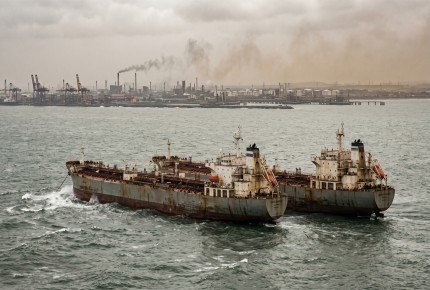
Indian refiners have depended on Iranian crude for its compatibility with local refining processes and favourable pricing. Recent shipments have been allowed under a one-month waiver from the U.S., which permits transactions for Iranian oil already in transit.
Besides, the measure aims to stabilise global oil supply disrupted by the conflict in West Asia. Indian Oil Corporation has acquired at least one cargo under the waiver, though buyer identities are unclear. Reliance Industries and Bharat Petroleum are associated with the Sikka terminal, while IOC operates via Paradip.
Felicity, operated by the National Iranian Tanker Company, is carrying crude oil loaded at Kharg Island in mid-March. Meanwhile, Jaya, a Curacao-flagged tanker, lifted oil from the same hub in late February, prior to strikes involving the US and Israel.
The ownership of Jaya is unknown in shipping databases, a typical situation for vessels associated with sanctioned trade routes.
Another tanker, Ping Shun, carrying 600,000 barrels of Iranian crude, was diverted to China mid-voyage due to payment issues, initially bound for Vadinar, India, marking the potential for the first Iranian oil delivery to India in seven years.
Around 95 million barrels of Iranian oil are estimated to be on vessels at sea, with about 51 million barrels suitable for Indian refiners, while the remainder is likely destined for buyers in China and Southeast Asia.
Furthermore, the arrival of Iranian tankers indicates a cautious re-entry of Iranian crude into India’s supply chain amid ongoing regulatory uncertainties and rising geopolitical tensions. The US waiver is set to expire on April 19, while President Trump has indicated intentions to obstruct vessels in the Strait of Hormuz following failed discussions with Iran.
The Strait of Hormuz is a vital maritime chokepoint for global oil and LNG shipments, and any disruption in vessel traffic could affect global energy markets and ongoing shipments.
India, reliant on imports for over 88% of its crude oil, has diversified its supply sources since 2019, acquiring oil from the Middle East, the United States, and Russia.
Read more news: