Subscribe to our newsletter
Copyright © 2026 lmitac.com All Rights Reserved. Contact - Terms and Conditions - Privacy Policy - Quality Policy - Vacancies - Sitemap
London Maritime Academy is a trade name for London Premier Group
version: 2.9.0
Subscribe to our newsletter
Posted On: 4/12/2026, 8:23:46 PM
Last Update: 4/12/2026, 8:23:46 PM
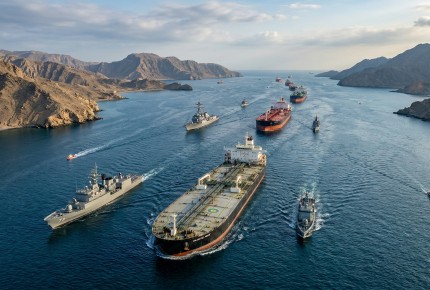
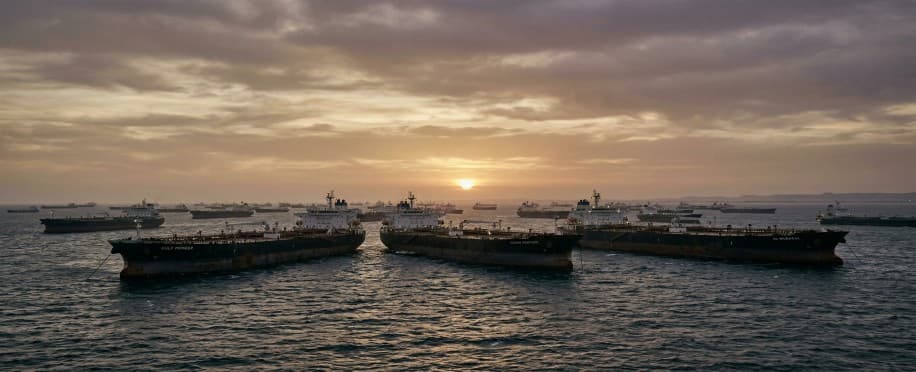
Ship owners are evaluating a potential US-Iran ceasefire agreement that could allow the reopening of the Strait of Hormuz, facilitating the passage of over 800 vessels stranded in the Persian Gulf.
The Strait has been blocked since the US and Israeli airstrikes on Iran in late February, resulting in increased Iranian control and a severe energy supply crisis.
On April 7, just before a deadline set by President Donald Trump, the two sides reached a ceasefire agreement in exchange for a reopening.
Iran agreed to two weeks of safe passage in coordination with its armed forces, but specific details remain unclear, while Trump announced a "COMPLETE, IMMEDIATE, and SAFE OPENING."
Mr. Trump indicated on social media that the US would assist with traffic congestion to ensure smooth operations, while shipowners in Asia, the Middle East, and Europe reacted to the potential reopening with a mix of relief and caution.
On April 8, traffic around the strait remained largely unchanged, although some individuals reported contacting insurers and security advisers while placing vessels on standby.
A spokesperson for A.P. Moller-Maersk A/S stated that while the ceasefire might open up transit possibilities, full maritime certainty was lacking, and further understanding of any attached conditions was necessary, citing limited information available.
Moreover, Tokyo-based Nippon Yusen Kabushiki Kaisha is monitoring a significant slowdown in traffic through a major energy thoroughfare, which has seen daily vessel transits drop from approximately 135 in peacetime.
Professor Jennifer Parker from the University of Western Australia highlights the complexities of resuming global shipping operations, noting that tanker stakeholders must be convinced that risks have genuinely decreased.
Ships involved in energy transport constitute a significant portion of the fleet currently stuck in the Gulf, with 426 tankers carrying crude oil and clean fuels, alongside 34 liquefied petroleum gas carriers and 19 liquefied natural gas vessels. The rest are engaged in transporting dry commodities.
Notably, Mr. Lewis Hart, head of marine in Asia at Willis Towers Watson, noted that while ceasefire plans are essential, they represent just the initial step, expecting that activity will restart gradually over two weeks rather than suddenly.
Likewise, Former US intelligence adviser Michael Pregen commented on the initial response to a tentative ceasefire, indicating that the regime is likely to control movement and charges.
On April 8, two ships, including the US-sanctioned Tour 2 flagged to Iran, are reported to be sailing towards Iran’s Larak and Qeshm islands.
Sailing alongside the Greek-owned bulk carrier NJ Earth in the Persian Gulf raises concerns about location spoofing or electronic warfare interference due to its vague voyage history.
The owner and manager of NJ Earth are not listed in the Equasis database. Additionally, other ships connected to Iran are reportedly moving toward Hormuz, with none seen heading the opposite way.
Furthermore, the movement of LNG ships is under scrutiny, as no loaded carriers have navigated the strait since the onset of the war, with a recent attempt resulting in a U-turn. In 2025, approximately 20 per cent of global LNG traffic passed through Hormuz.
By the end of March, about 20,000 civilian seafarers remained stranded on these vessels and support ships, facing shortages, fatigue, and psychological stress, according to the United Nations.
Maritime Safety Courses in London address critical equipment, navigation rules, and emergency procedures to mitigate incidents. Key subjects include mandatory gear inspections, fire safety, signalling devices, weather awareness, stability, and regulatory compliance. Operators receive training in emergency preparedness, focusing on radio communication, man-overboard drills, and maintaining watertight integrity.
Read more news: