
Subscribe to our newsletter
Copyright © 2026 lmitac.com All Rights Reserved. Contact - Terms and Conditions - Privacy Policy - Quality Policy - Vacancies - Sitemap
London Maritime Academy is a trade name for London Premier Group
version: 2.9.0
Subscribe to our newsletter
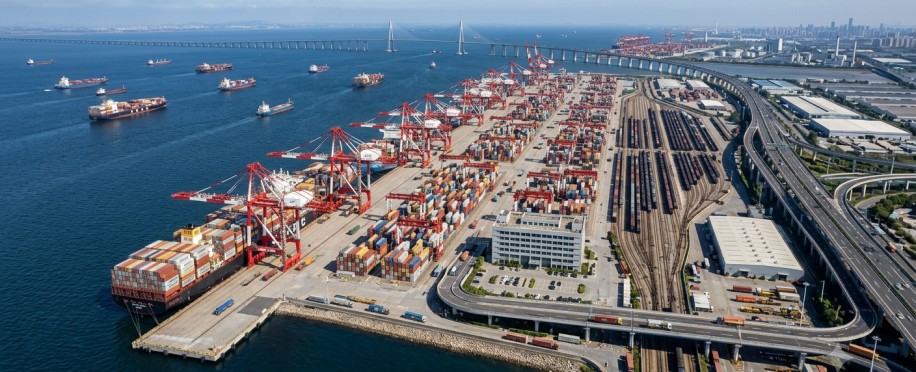
As shipping and port operations become increasingly dependent on connected technologies, maritime cybersecurity has become essential for protecting vessels, operational systems, and critical data from digital threats. This article explores the key cyber risks facing the maritime industry, the importance of vessel and port protection, and the practical measures organisations can adopt to strengthen resilience and ensure operational continuity.
Maritime cybersecurity is the coordinated protection of ships, port systems, operational technology (OT), business networks, data, and connected services from digital disruption, manipulation, or theft. Effective protection keeps cargo moving, supports safety, reduces losses, and helps leaders control connected maritime operations.
In this article, we explain the main risks, essential controls, regulatory expectations, and practical actions that shipping companies and port operators can implement.
Modern ships combine marine equipment with satellite communications, cloud applications, remote maintenance, and OT systems. Although such integration with technology improves efficiency but at the same time expands the cyber attack surface. Long service lives may as well be a development, however, can also leave unsupported software due to long travels at sea at a high risk of cyberattacks.
The 2017 NotPetya attack on A.P. Moller–Maersk showed the impact clearly. Information Technology (IT) systems failed across multiple sites, disrupting bookings and terminals which demonstrated to the entire world how attacks on shipping networks further fuel supply-chain crises.
According to the 2025 mariner study A Sea of Cyber Threats, officer-level interviews identified GPS spoofing, ransomware, weak training, and limited response as potential risk factors.
Now what’s most interesting is that these findings show that ship cyber risk is a leadership problem, not simply a technical one.
When analysing cybersecurity risks, it’s clear that effective maritime cybersecurity starts by identifying the most key systems; the ones that affect navigation, cargo, safety, continuity, or regulatory reporting.
| Area | Typical exposure | Business consequence |
| Bridge systems | Spoofed positioning, compromised ECDIS, weak access | Unsafe routing or delayed arrival |
| Machinery and OT | Remote access abuse, malware, unpatched controllers | Loss of propulsion, downtime, equipment damage |
| Port operations | Terminal platform failure, crane disruption, identity compromise | Congestion, missed slots, cargo delays |
| Corporate systems | Phishing, ransomware, stolen credentials | Booking failure, fraud, data loss |
| Third parties | Vendor access, software updates, shared links | Supply-chain compromise across partners |
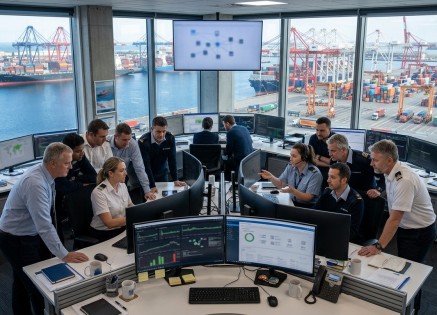
How do you truly protect your ship?
We start with the software department: Vessel IT security requires separation between business IT, crew networks, and safety-critical OT. In order to reduce the risk of any attack, operators should restrict administrative privileges, use multifactor authentication where supported, control removable media, maintain secure backups, and document every approved remote connection.
Moreover, Management teams also need a current inventory of hardware, software, data flows, owners, vendors, and support status. Without it, professionals won’t be able to identify unsupported systems, and therefore prioritize risk, or prepare realistic incident procedures.
The protection of connected ship systems also depends on procurement. Equipment should be designed with logging, secure configuration, access control, updates, and recovery requirements. Not only that, contracts should define vendor duties as well before an incident.
Ports involve shared infrastructure, time-sensitive cargo, contractors, federal agencies, and public services. Cyber safety maritime planning must cover stakeholders across the port community, not only the authority.
ENISA recommends structured risk assessment for port operators, aligned with established security processes; whose transport threat landscape identifies ransomware, malware, and phishing among key threats.
Port leaders should make five controls a priority:
The IMO defines cyber risk management as identifying, assessing, communicating, and treating cyber-related risk. But how should a framework actually look like?
A useful framework follows six steps:
It doesn’t stop there, however. The regulatory expectations for data protection and integrity should be translated into specific controls, evidence, and governance rather than treated as a documentation exercise.
Finally, Under IMO Resolution MSC.428(98), Administrations were required to ensure that cyber risks are appropriately addressed within the company's Safety Management System (SMS) in accordance with the requirements of the International Safety Management (ISM) Code, no later than the first annual verification of the company's Document of Compliance (DOC) after 1 January 2021
Bridge teams, engineers, terminal staff, contractors, and senior leaders need role-based training built around realistic scenarios: suspicious USB devices, navigation anomalies, phishing, vendor access requests, ransomware, and loss of digital services.
A structured maritime cybersecurity online course can help professionals learn threat patterns, guidelines, and response principles. Training should be reinforced through drills, interviews, reviews, and measurable recommendations.
Before approving the next security budget, executives should ask:
Maritime cybersecurity protects operational continuity, human safety, cargo flow, and commercial confidence. Strong programmes combine governance, asset visibility, controls, supplier discipline, training, response, and recovery.
Leaders must determine whether their organization can contain disruption and restore priority operations. Investment should follow consequence, with ships, ports, and partners managed as one risk environment.