Subscribe to our newsletter
Copyright © 2026 lmitac.com All Rights Reserved. Contact - Terms and Conditions - Privacy Policy - Quality Policy - Vacancies - Sitemap
London Maritime Academy is a trade name for London Premier Group
version: 2.9.0
Subscribe to our newsletter
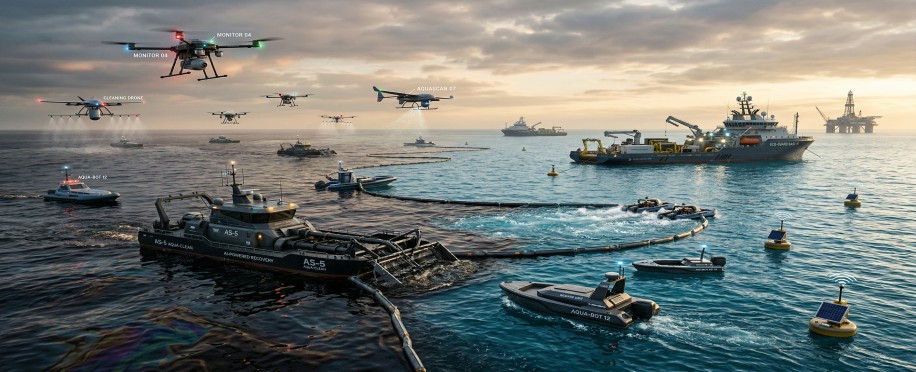
Oil spill response is evolving rapidly with the rise of innovative technologies that offer faster, more efficient, and environmentally sustainable cleanup solutions. As traditional methods face limitations, modern approaches are transforming how spills are managed and marine ecosystems are protected. This article highlights the latest advancements shaping the future of oil spill management.
Oil spills pose catastrophic risks to marine ecosystems, necessitating rapid, effective, and constantly innovative response technologies. Traditional mechanical cleanup methods—such as skimmers and floating booms—often struggle in harsh sea conditions or with low-concentration oil emulsions. To address these challenges, advanced solutions are revolutionizing oil spill management by providing faster, more sustainable, and more precise remediation, thus reducing environmental footprint and economic costs.
In this article, we will review key solutions and highlight the significant role of proper dealing with oil spill issues to maintain marine environment health.
The main goal of the below mentioned technologies, capable of >99% oil-water separation, is to significantly reduce hazardous consequences & ecological damage and improve recovery rates compared to conventional booms and skimmers.
Traditional oil spill response methods & equipment often fail or cause collateral impacts & secondary pollution, creating a need for innovative solutions like magnetic nanostructured sponges. These smart materials, engineered by coating porous substrates with hydrophobic, iron-oxide nanocomposites, selectively absorb up to 90 times their weight in oil while repelling water. They are durable, reusable, and can be squeezed to recover oil.
Crucially, they are remotely guided and retrieved using magnets, even in turbulent waters, addressing small droplets missed by traditional skimming services. This sustainable, high-efficiency technology offers a faster, eco-friendly approach to restoring ecosystems—particularly in vulnerable areas such as the Louisiana coast—surpassing conventional techniques in both performance and support of safe environment.
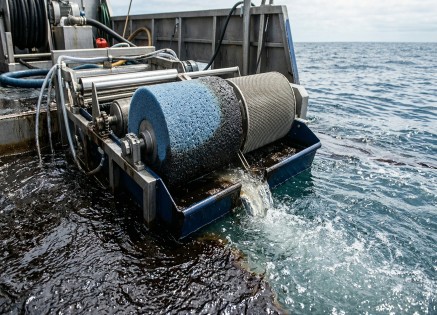
Scientific researchers at the University of Texas at Austin have developed a high-efficiency oil spill response-cleanup system using dual-layer, oleophilic gel-coated mesh rollers, achieving over 99% separation efficiency. By applying non-contact induction heating to the roller, the technology warms trapped oil to 90°C, reducing viscosity for swift collection into on-board storage.
This innovative method retrieves up to 1,400 kilograms of oil per square meter per hour, roughly ten times faster than conventional absorbent methods. The continuous, scalable, and reusable nature of the rollers offers a faster, more effective response to environmental disasters and improves emergency preparedness compared to traditional skimmers.
Innovative oil spill detection systems now support advanced response solutions using polymer-based sorbents such as aerogels and foams.
These highly porous materials are designed to be both hydrophobic (water-repelling) and oleophilic (oil-attracting), achieving impressive adsorption capacities often exceeding 70 times their weight, making them ideal for offshore applications. Advanced polymeric sponges can recover up to 200 tons of oil per ton of sorbent, significantly reducing waste compared to traditional methods. Key innovations include reusability, with materials capable of being squeezed or compressed hundreds of times.
Furthermore, research into biodegradable polymers provides eco-friendly options, while nanostructured surfaces enhance efficiency in harsh environmental conditions, such as those often found in the Louisiana coastal region.
Marine environmental engineering is advancing through Nano-enhanced bioremediation techniques, an eco-friendly, efficient method combining nanotechnology with natural bacteria to accelerate hydrocarbon degradation, particularly in challenging environments like California shoreline & the Gulf of Mexico. Engineered nanomaterials like silica or graphene act as selective sorbents and emulsion stabilizers, reducing oil into smaller droplets. This drastically increases the oil-water interface, boosting microbial attachment and biodegradation rates, which is crucial for accelerating restoration projects like in Louisiana coast.
Furthermore, these materials offer "smart" bio-stimulation, delivering nutrients directly to the oil interface to prevent runoff and secondary pollution, reducing the need for extensive specialized training in traditional application methods. By turning passive oil spill response - cleanup into active, accelerated restoration, Nano-bioremediation promises a sustainable future for marine conservation, transforming oil spill responses through innovative, targeted, and sustainable technology.
Next-generation skimmers are revolutionizing oil spill response, utilizing AI-driven autonomous vessels to boost recovery rates while minimizing ecological impact and effects on human's health. Moving beyond traditional methods, these advanced, AI-enhanced systems operate 30–40% faster by navigating, tracking, and collecting oil autonomously in offshore environments. Integrating cutting-edge Nano-filters and super-hydrophobic materials, they achieve 99% oil-water separation and adapt to variable sea conditions for continuous operation. Featuring technologies like grooved discs, these innovations improve efficiency by up to 90%, offering a sustainable 2025-standard solution for protecting fragile marine resources from long-term damage.
Basically, Future Perspectives of oil spill response techniques focus on automation, using drones, satellites, and AI to detect, track, and model oil spills in real-time, paired with enhanced preparedness planning to ensure rapid deployment. Furthermore, bioremediation using microbes to consume oil, combined with sustainable nanomaterials, promises to accelerate ecological recovery. These innovative, cost-effective technologies, along with specialized training for responders, are vital for a faster, sustainable, and less intrusive cleanup of environment.
We are not miles away! Let's get the job done!
Take a look at our LMA Oil Spill Crises Management courses in London. We have a set of related topics prepared by our top team of experts!
Always Remember: Preparedness is half the battle! Innovations - the weapon! Collaboration is essential!
Innovations require unified efforts at the local, national, regional and international levels to hit the highest scale of coordination among government officials, ports authorities, major agencies, coastline residents and stakeholders in general.
Innovative oil spill response technologies are transforming environmental safety & protection, moving beyond slow, traditional methods toward rapid, high-efficiency solutions.
By integrating cutting-edge materials with automated, eco-friendly systems, modern approaches offer a proactive way to provide chemical containment and remediation to mitigate severe damage.