Subscribe to our newsletter
Copyright © 2026 lmitac.com All Rights Reserved. Contact - Terms and Conditions - Privacy Policy - Quality Policy - Vacancies - Sitemap
London Maritime Academy is a trade name for London Premier Group
version: 2.9.0
Subscribe to our newsletter
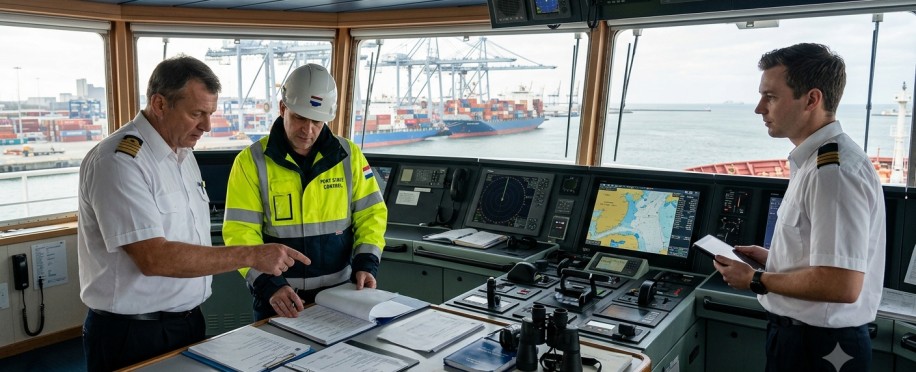
A successful Port State Control (PSC) inspection begins long before a vessel enters port. Through continuous maintenance, accurate documentation, and a well-prepared crew, shipping companies can ensure compliance, avoid detention, and maintain safe and efficient operations.
A port state control inspection is one of the clearest tests of how well a vessel is actually being managed. Certificates may be valid and checklists may be complete, but inspectors look beyond paperwork. They compare records, equipment condition, crew knowledge, and daily practice to see whether the ship is genuinely compliant.
In this article, we break down what happens during an inspection, where vessels commonly fail, and how crews and shore teams can prepare without relying on last-minute fixes.
A ship may be registered under its flag State, but port authorities can still inspect foreign vessels entering national ports in order to identify substandard ships that may endanger crews or the marine environment . In addition, the vessel should be seaworthy.
A port state control inspection is not simply a document review. During this process, officers compare certificates and records with the ship’s actual condition. When the paperwork says one thing and the vessel shows another, the inspection can quickly become more detailed.
An alignment is what officers expect, and it is what protects the company when questions become more serious.
A PSC inspection usually begins when the PSC officer boards, verifies the vessel’s identity, meets the master, and reviews statutory certificates. The officer may then inspect working areas, examine records, and ask crew members to demonstrate their duties.
Valid documents, good housekeeping, functioning equipment, and confident crew responses usually support a smoother inspection. Poor maintenance, inconsistent records, visible leaks, blocked escape routes, or uncertain answers can create grounds for a detailed examination.
| Inspection area | What officers verify | Common warning sign |
| Certificates | Validity, endorsements, surveys, manning | Expired or inconsistent records |
| Bridge | Updated Charts or updated Electronic Chart Display Information System (ECDIS), passage plans, alarms, navigation equipment | Missing updates or bypassed alarms |
| Engine room | Machinery, fire protection, leaks, cleanliness | Oil accumulation or unsafe repairs |
| Life-saving equipment | Lifeboats, Life rafts, Life Buoys, Life Jackets , Immersion suits , launching systems, drill records | Poor maintenance or crew uncertainty |
| Fire safety | Doors, pumps, detectors, escape routes | Blocked exits or defective equipment |
| Pollution prevention | Record books, separators, waste controls | Entries conflicting with conditions |
| Crew welfare | Rest hours, contracts, accommodation | Fatigue signs or inaccurate records |
 Preparing for a Vessel Compliance Check
The best preparation does not begin the night before arrival. It begins with daily control.
Shore teams should review inspection history, class items, audit findings, recurring defects, and delayed maintenance.
Before entering port, complete a structured vessel compliance check:
A port state control inspection becomes harder when the ship appears prepared only on paper. Inspectors expect the condition, records, and crew knowledge to support the same conclusion.
Major certificates receive attention, but smaller findings can reveal weak control.
A damaged fire-door seal, unsecured cylinder, missing safety sign, blocked route, defective light, or outdated chart correction may look minor. Several issues together can suggest weak maintenance and supervision.
Crew readiness matters just as much. An officer may ask someone to operate an emergency fire pump, explain enclosed-space entry procedures, identify muster duties, or demonstrate an emergency steering drill .
Drills should test communication, equipment use, timing, and decision-making.
An internal PSC inspection should resemble the real event and use a reviewer with fresh eyes.
Focus on four questions:
A checklist supports consistency, but it should not replace judgement.
Professionals can strengthen their wider understanding through maritime courses in Dubai, particularly when their role involves compliance, safety systems, or operational leadership.
What happens if the crew finds a defect before arrival?
Do not hide it, delay reporting it, or create a false record. That can turn a technical issue into evidence of poor safety management.
Assess the risk, notify shore management, apply permitted temporary controls, contact the flag Administration or recognised organisation when required, and arrange repair. Keep evidence of reports, orders, technical advice, attendance, and completion dates.
During a port state control inspection, transparent evidence shows that the company identified the problem and responded responsibly. It supports a more credible discussion.
Relevant Flag and Port State Control Courses in Dubai can help professionals improve inspection readiness, emergency response, regulatory awareness, and onboard leadership.
Detention is more likely when deficiencies make the ship unsafe to continue, create an unreasonable threat, or show that required systems are not controlled effectively.
After every port state control inspection, management should ask why the deficiency existed, why it was missed, whether sister ships share it, and who will verify the correction.
A proper response includes root-cause analysis, fleet-wide review, assigned actions, realistic deadlines, evidence checks, and follow-up verification.
A port state control inspection tests whether certificates, equipment, records, crew competence, and daily practices tell the same story. Strong preparation comes from continuous maintenance, honest documentation, realistic drills, and early reporting.
For leaders, PSC performance measures operational control. Effective preparation protects schedules, customer confidence, insurance relationships, crew safety, and the vessel’s commercial reputation.