
Subscribe to our newsletter
Copyright © 2026 lmitac.com All Rights Reserved. Contact - Terms and Conditions - Privacy Policy - Quality Policy - Vacancies - Sitemap
London Maritime Academy is a trade name for London Premier Group
version: 2.9.0
Subscribe to our newsletter
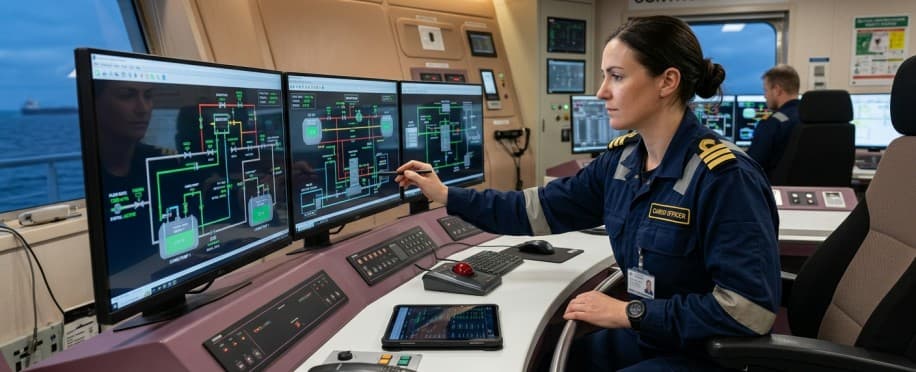
Ship pumping systems are critical for vessel operations, supporting fuel transfer, engine cooling, ballast, and firefighting. Proper selection and maintenance ensure safety and equipment reliability.
Pumping systems are essential to the safe and efficient operation of modern vessels. Ships rely on pumps for a wide range of functions, from transferring fuel and cargo to circulating cooling water, managing ballast, removing bilge water, and supporting firefighting systems. Because these activities are closely connected to vessel safety and machinery performance, reliable pumping arrangements are an important part of marine engineering.
Understanding ship pumping systems helps marine engineers and vessel operators identify the different types of pumps used onboard, their applications, and the maintenance practices required to keep them operating effectively. Proper pump selection, installation, monitoring, and maintenance can contribute to reliable vessel operations and reduce the risk of equipment failure.
Ship pumping systems are arrangements of pumps, pipes, valves, tanks, controls, and associated equipment used to move liquids throughout a vessel.
Different onboard systems handle different fluids and perform different functions. Pumps may transfer fuel between tanks, circulate cooling water through machinery, move ballast water, remove bilge water, or transport liquid cargo on tankers.
The design of a pumping system depends on factors such as the type of vessel, the liquid being handled, required flow rate, pressure, temperature, operating conditions, and applicable safety requirements.
A well-designed system should provide reliable fluid movement while allowing operators to control, isolate, inspect, and maintain individual components when required.
Marine pumps perform functions that are essential to both vessel operations and safety. A failure in the wrong pumping system can affect propulsion machinery, cargo operations, tank levels, cooling systems, or emergency response capabilities.
For example, cooling pumps help maintain suitable operating temperatures for engines and other machinery. Fuel pumps support the transfer and supply of fuel, while ballast pumps help control vessel stability and draft.
Pumps are therefore closely connected to the machinery that keeps a vessel operating. The role of ship engineers is particularly important because they are responsible for maintaining and monitoring many of the mechanical systems that support safe and efficient vessel operations.
Different types of pumps are selected according to the characteristics of the fluid and the required operating conditions.
Centrifugal pumps are widely used onboard ships. They use a rotating impeller to transfer energy to the fluid and generate flow.
These pumps are commonly used for applications such as seawater circulation, cooling systems, ballast operations, fire main systems, and general water transfer.
Their relatively simple design and ability to handle continuous flow make them suitable for many marine applications.
Positive displacement pumps move a defined volume of fluid during each operating cycle. They are useful for applications where controlled flow and pressure are important.
Common examples include gear pumps, screw pumps, and piston pumps. They may be used for fuel oil, lubricating oil, hydraulic fluids, and other liquids with specific handling requirements.
Gear pumps are a type of positive displacement pump that uses rotating gears to move fluid through the system.
They are commonly associated with oil-handling applications because they can provide consistent flow and are suitable for relatively viscous liquids.
Screw pumps use one or more rotating screws to move fluid through the pump. They can provide smooth and relatively low-pulsation flow, making them useful for certain fuel and cargo-handling applications.
Piston pumps use reciprocating pistons to move fluid. They can generate high pressures and may be used in specialised marine systems where high-pressure fluid movement is required.
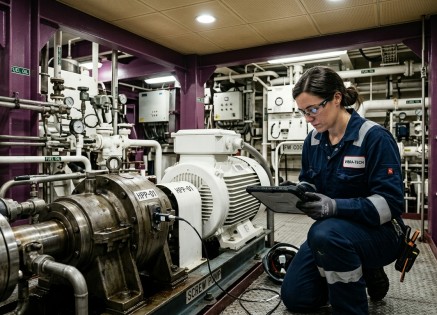
There are many pumps onboard ships, each serving a specific operational purpose.
Fuel pumps are used to move fuel between storage tanks, settling tanks, service tanks, and machinery. Reliable fuel transfer is important for maintaining continuous engine and generator operation.
The characteristics of the fuel, required flow rate, temperature, and pressure all influence the appropriate pump arrangement.
Lubricating oil pumps circulate oil through engines, gearboxes, bearings, and other mechanical components. Adequate lubrication reduces friction and helps protect machinery from excessive wear.
A failure in the lubrication system can have serious consequences for critical machinery, which makes pump reliability particularly important.
Cooling pumps circulate freshwater or seawater through heat exchangers and cooling circuits. They help remove heat generated by engines and other equipment.
Maintaining appropriate flow is essential for controlling operating temperatures and preventing machinery from overheating.
Ballast pumps transfer seawater into and out of ballast tanks to help control vessel stability, trim, and draft.
The ballast system must be carefully managed because changes in ballast distribution can affect the vessel's stability and operating condition.
Bilge pumps remove unwanted water and other liquids that accumulate in the lower parts of the vessel.
Reliable bilge pumping is important for maintaining safe conditions onboard and supporting the vessel's water-management systems.
Fire pumps supply water to the vessel's fire main and firefighting equipment. These systems need to remain available when required and are subject to specific safety and testing requirements.
On tankers, tanker cargo pumps are particularly important because they are responsible for transferring liquid cargo between cargo tanks and shore facilities or other destinations.
Cargo pumping arrangements need to account for the characteristics of the cargo, required transfer rates, pressure, tank configuration, piping arrangements, and operational safety.
The relationship between pumps, valves, pipelines, tanks, and cargo-handling procedures is therefore a major consideration in tanker operations. Properly designed Piping and Pumping Arrangements on Board Oil Tankers help support controlled and efficient cargo transfer.
Regular maintenance is essential for keeping ship pumping systems reliable. Pump problems can result from mechanical wear, corrosion, seal failure, vibration, cavitation, contamination, or incorrect operating conditions.
Mechanical seals, packing, and bearings should be inspected regularly. Leakage, abnormal noise, overheating, or excessive vibration can indicate a developing problem.
Changes in normal pressure or flow can provide early indications of pump or system problems. Operators should compare readings with expected operating conditions and investigate significant deviations.
Cavitation occurs when vapour bubbles form within a pump and subsequently collapse, potentially causing noise, vibration, and damage to internal components.
Maintaining appropriate suction conditions and ensuring that the pump operates within its intended parameters can help reduce the risk of cavitation.
A pump cannot operate effectively if the surrounding piping system has blockages, leaks, incorrect valve positions, or other restrictions.
Regular inspection of pipes, valves, strainers, and connections should therefore form part of an overall maintenance programme.
Traditional maintenance schedules are important, but modern vessels can also use condition-monitoring technologies to identify potential equipment problems before failure occurs.
Sensors and monitoring systems can track variables such as vibration, temperature, pressure, flow, and motor performance. Changes in these measurements may indicate wear or abnormal operating conditions.
This approach is part of predictive maintenance, which uses equipment data and analysis to support maintenance decisions based on actual equipment condition.
Predictive maintenance can be particularly valuable for critical pumps where unexpected failure could interrupt vessel operations or create safety risks.
Several problems can affect marine pumps during operation.
Leaks may develop around seals, flanges, valves, or pipe connections. Depending on the liquid involved, leakage can create operational, environmental, or safety concerns.
Unusual vibration may indicate misalignment, bearing problems, imbalance, cavitation, or other mechanical issues.
Reduced flow can result from blocked strainers, damaged impellers, incorrect valve positions, air entering the system, or other restrictions.
Pump or motor overheating may indicate excessive load, bearing problems, insufficient lubrication, or unsuitable operating conditions.
Early identification of these problems can help prevent more serious equipment failures.
Marine engineers play a central role in maintaining pumping systems and other machinery onboard vessels. Their responsibilities can include equipment inspection, maintenance planning, troubleshooting, performance monitoring, safety checks, and machinery operation.
A clear understanding of marine engineering responsibilities helps demonstrate how pumping systems fit within the wider network of mechanical and operational systems required for vessel performance.
Professionals working with ship machinery can also benefit from structured training that develops practical knowledge of pumping arrangements, piping systems, equipment maintenance, and operational procedures.
Ship pumping systems are fundamental to the safe and efficient operation of vessels. From fuel transfer and lubrication to cooling, ballast, bilge, firefighting, and cargo operations, pumps perform a wide range of essential functions onboard.
Different applications require different pump technologies, including centrifugal, positive displacement, gear, screw, and piston pumps. On tankers, specialised cargo pumps and carefully designed piping arrangements are particularly important for efficient liquid cargo transfer.
Regular inspection, performance monitoring, preventive maintenance, and predictive maintenance can help maintain pump reliability and identify developing problems before they cause major disruption. For marine engineers and vessel operators, understanding pump types, applications, operating principles, and maintenance requirements is therefore an important part of effective ship machinery management.