Subscribe to our newsletter
Copyright © 2026 lmitac.com All Rights Reserved. Contact - Terms and Conditions - Privacy Policy - Quality Policy - Vacancies - Sitemap
London Maritime Academy is a trade name for London Premier Group
version: 2.9.0
Subscribe to our newsletter
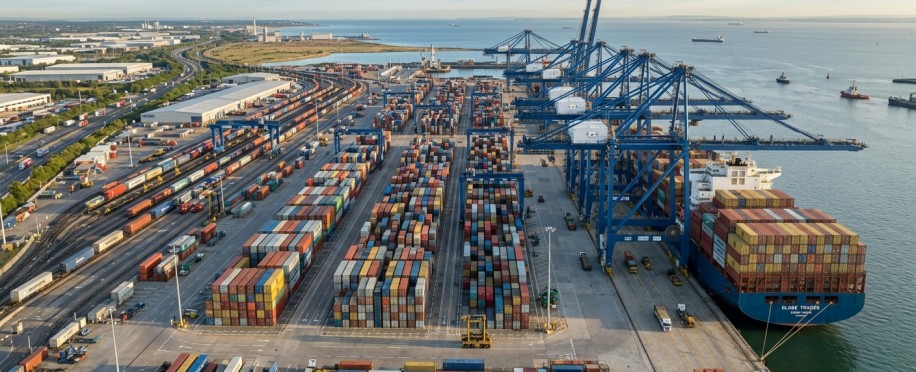
A port master plan is a strategic long-term framework that guides a port’s growth, infrastructure, and operational management. By aligning land use and resources with future trade and cargo demands, it ensures operational efficiency and informs sustainable investment decisions.
Ports are critical components of global trade, connecting ships, cargo owners, logistics providers, transport networks, and surrounding economies. As trade volumes change and maritime technologies develop, ports need a clear framework for managing growth, infrastructure, operations, and long-term investment. This is where a port master plan becomes important.
A well-developed master plan provides a structured approach to determining how a port should develop over time. It considers current operations, future demand, infrastructure requirements, land use, environmental considerations, technology, and financial priorities. Effective planning can help port authorities make informed decisions while maintaining operational efficiency and supporting sustainable growth.
A port master plan is a long-term strategic framework that guides the development, expansion, and management of a port and its surrounding facilities. It provides a vision for how land, infrastructure, equipment, transportation connections, and operational resources should be used to meet future requirements.
Rather than focusing only on individual construction projects, a master plan considers how different parts of the port work together. This can include container terminals, bulk cargo facilities, warehouses, road and rail connections, storage areas, navigation channels, and support services.
The planning process also considers expected changes in cargo volumes, vessel sizes, customer requirements, regulations, and technology. As a result, port master planning helps decision-makers establish priorities and coordinate development over different stages.
Ports operate within complex environments where infrastructure decisions can affect trade capacity, logistics performance, investment requirements, and surrounding communities. Without effective planning, infrastructure may become inefficient, capacity constraints may develop, and investment decisions may not support long-term demand.
A structured port development plan helps establish a clear relationship between current infrastructure and future requirements. It can identify capacity gaps, determine where additional facilities may be needed, and support decisions about the timing and scale of investment.
Infrastructure is particularly important as ports adopt automation, digital systems, advanced cargo-handling equipment, and other technologies. Modern port infrastructure innovations can influence how terminals are designed and how future capacity is planned.
A comprehensive port master plan normally brings together several areas of development and management.
Planning should begin with an understanding of the market in which the port operates. This includes analysing current cargo volumes, historical trends, trade patterns, vessel traffic, customer requirements, and potential future demand.
Demand forecasting helps planners estimate the capacity that may be required in the future. It can also support decisions about whether existing facilities should be upgraded, expanded, or replaced.
Accurate market analysis is particularly important because port infrastructure requires significant investment and often has a long development timeline.
Ports require significant amounts of land for terminals, cargo storage, equipment, warehouses, administration, transportation connections, and other activities.
A master plan should establish how available land can be allocated efficiently while allowing sufficient flexibility for future development. Spatial planning should also consider relationships between different terminal functions and the movement of cargo through the port.
The governance model can influence these decisions as well. For example, the landlord port model separates infrastructure ownership and management responsibilities from terminal operations, which can affect how development responsibilities and investments are structured.
Infrastructure is one of the central components of any port development plan. This may include berths, quay walls, cranes, storage areas, roads, rail connections, navigation channels, utilities, and other supporting facilities.
Planners need to assess existing capacity and determine where improvements may be necessary. Infrastructure decisions should also account for future vessel dimensions, cargo-handling requirements, technological developments, and changing logistics patterns.
Rather than developing facilities based only on current demand, strategic planning considers how infrastructure can support future growth without creating unnecessary capacity.
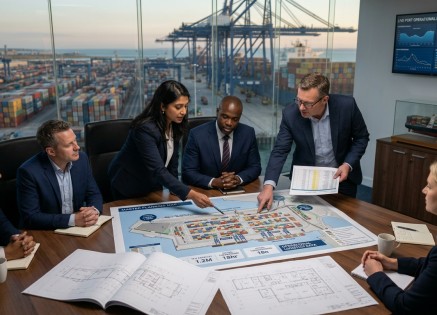
A successful port is not defined only by the amount of infrastructure it has. The way facilities and resources are organised can have a major impact on operational performance.
Strategic port planning therefore considers vessel turnaround times, cargo flows, yard utilisation, equipment deployment, gate operations, and connections with road and rail networks.
Planners may also examine opportunities for automation, digitalisation, and data-driven decision-making. These improvements can help ports use existing assets more effectively while preparing for future operational requirements.
Modern port development increasingly needs to consider environmental impacts alongside economic and operational objectives. Port projects can affect air quality, water resources, marine ecosystems, energy consumption, and surrounding communities.
Sustainability should therefore be integrated into the planning process rather than treated as a separate consideration. This may involve cleaner energy sources, efficient equipment, emissions reduction measures, improved waste management, and better use of land and resources.
Balancing commercial growth with environmental responsibilities is an important part of sustainable port development, particularly as ports respond to changing environmental expectations and regulations.
Although planning processes vary between ports, several common steps can provide a structured framework.
The process begins with an assessment of existing infrastructure, operations, land use, capacity, connectivity, equipment, and performance. This creates a baseline for identifying strengths, constraints, and development requirements.
Planners then assess expected changes in cargo volumes, vessel traffic, trade patterns, customer requirements, and logistics activity. Different growth scenarios can be considered to account for uncertainty.
The next stage is to determine which infrastructure, operational, technological, and land-use changes may be required to meet future demand. These requirements can then be prioritised according to their strategic importance.
A master plan can consider multiple development scenarios rather than relying on a single future assumption. Different options may involve phased expansion, infrastructure upgrades, new terminal facilities, improved connectivity, or technological investment.
Comparing these scenarios helps decision-makers understand potential costs, benefits, risks, and operational implications.
A master plan needs a practical implementation framework. This can include project priorities, development phases, investment requirements, responsibilities, timelines, and performance indicators.
Phased development can be particularly useful because port demand and market conditions may change over time. It allows investment to be aligned more closely with actual requirements.
A port master plan should not necessarily remain unchanged for decades. Changes in global trade, technology, regulations, environmental requirements, vessel design, and logistics networks can affect earlier assumptions.
Regular reviews allow port authorities and stakeholders to adjust development priorities and keep the plan aligned with changing conditions.
Effective strategic port planning requires a balance between long-term vision and practical decision-making. Port authorities and managers need to consider infrastructure, operations, commercial requirements, environmental responsibilities, technology, and stakeholder interests at the same time.
This requires professionals to understand not only how ports operate but also how strategic decisions influence investment, capacity, governance, and future competitiveness. Structured professional development in Port Management and Strategic Master Planning can help professionals build knowledge across these interconnected areas.
A port master plan provides a long-term framework for guiding port development, infrastructure investment, land use, operational improvements, and sustainability initiatives. By assessing current conditions, forecasting future demand, identifying development requirements, evaluating alternative scenarios, and establishing implementation priorities, ports can create a structured approach to long-term growth.
Effective port master planning also needs to remain adaptable. As trade patterns, technology, environmental expectations, and logistics requirements change, master plans may need to be reviewed and updated. A strategic approach can therefore help port organisations align infrastructure and operations with evolving maritime and commercial needs while supporting efficient and sustainable development.