Subscribe to our newsletter
Copyright © 2026 lmitac.com All Rights Reserved. Contact - Terms and Conditions - Privacy Policy - Quality Policy - Vacancies - Sitemap
London Maritime Academy is a trade name for London Premier Group
version: 2.9.0
Subscribe to our newsletter
Posted On: 9/30/2026, 11:09:07 AM
Last Update: 9/30/2026, 11:09:07 AM
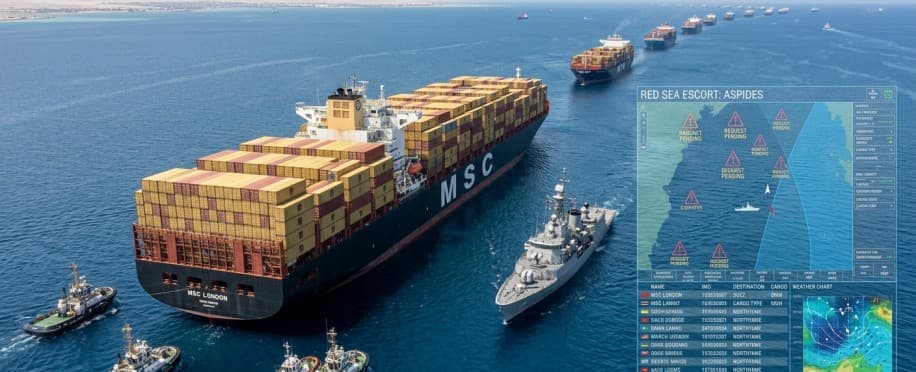
Merchant vessels are currently experiencing delays as they queue for naval escorts in the southern Red Sea. The European Union has acknowledged that the Aspides mission is insufficiently staffed with warships to fulfil the increasing demand for these escorts.
EU foreign policy chief Kaja Kallas acknowledged significant challenges faced by European defence during a meeting of defence ministers held in Brussels on Monday.
This admission is noted for its candid nature, reflecting the pressing issues within the framework of EU defence policy.
Kallas pointed out that commercial ships are presently waiting in queue to be escorted, stressing that the EU does not have enough frigates to provide these ships with the protection they require.
Moreover, containerships have made a significant return to the Suez route, with consultancy firm Linerlytica reporting over 140 boxships, totalling more than 2 million TEU, returning to this crucial shipping lane since May.
The last week was particularly noteworthy, marking the busiest week for containership transits through the Suez Canal since 2024, as 30 vessels, each with a capacity exceeding 4,000 TEU, successfully navigated through the canal.
Reporters disclosed that Italy is set to take independent action instead of waiting for Aspides to facilitate safe passage for Italian-linked ships through the Bab el-Mandeb Strait. Approximately 10 vessels under Italian control or flag were reported to be in need of protected passage during this period.
Maritime Professional Courses examine Red Sea naval deployments, emphasising the need to balance high-end missile defence capabilities with the significant financial and logistical costs associated with countering asymmetric land-based threats.
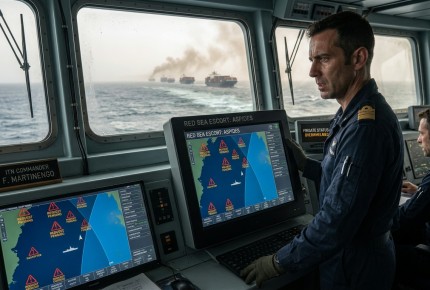
Aspides, established in 2024, functions as a defensive operation aimed at safeguarding merchant shipping from Houthi attacks. The core vessels for this initiative have been supplied by Italy and Greece, while Germany, France, Spain, the Netherlands, and Belgium periodically augment these deployments.
The mission, as stated by Kallas, was initially evaluated to require a minimum of 10 ships. However, the security environment has since become significantly more difficult, while the number of available assets is still far below the necessary level.
Furthermore, the recent intensification of Houthi activities has exacerbated the existing shortage, particularly following the group's takeover of strategic locations, such as Perim Island, which overlooks the crucial Bab el-Mandeb Strait. This territorial acquisition has significant implications for regional dynamics and resource availability.
Brussels is actively seeking to enhance its naval capabilities, with an emphasis on acquiring frigates and improved air-defence systems.
In simple terms, two EU nations have expressed the possibility of supplying more ships; however, the focus remains on specific types of vessels that can significantly bolster defence capabilities rather than merely increasing the number of ships in service.