Subscribe to our newsletter
Copyright © 2026 lmitac.com All Rights Reserved. Contact - Terms and Conditions - Privacy Policy - Quality Policy - Vacancies - Sitemap
London Maritime Academy is a trade name for London Premier Group
version: 2.9.0
Subscribe to our newsletter

Port concession agreements serve as a vital framework for modern maritime infrastructure, bridging the gap between public oversight and private operational efficiency. By defining investment obligations, operational boundaries, and risk-allocation mechanisms, these contracts enable port authorities to modernise terminals, expand capacity, and enhance service delivery without shouldering the entire financial burden.
Ports require significant investment in infrastructure, equipment, technology, and operational capabilities. At the same time, port authorities may not always operate every terminal or facility directly. Concession arrangements can provide a framework for allowing private companies to develop, finance, manage, or operate port facilities while the public authority retains defined regulatory and strategic responsibilities.
A port concession agreement establishes the rights, responsibilities, investment obligations, performance requirements, and commercial conditions that apply between the relevant parties. Understanding how these agreements work is important for port authorities, terminal operators, investors, logistics professionals, and other stakeholders involved in maritime infrastructure.
A port concession agreement is a legal and commercial arrangement under which a port authority grants a private company or other operator the right to develop, manage, maintain, or operate a port facility for a defined period.
The agreement typically specifies the scope of the concession, duration, investment commitments, operational responsibilities, fees, service standards, reporting requirements, and conditions for termination or renewal.
The exact structure can vary depending on the port, jurisdiction, infrastructure requirements, and commercial objectives. Some concessions may focus primarily on terminal operations, while others may involve substantial private investment in infrastructure development.
The legal framework surrounding concessions is therefore closely connected to legal aspects in port operations, particularly where contracts, regulatory requirements, trade obligations, and operational responsibilities overlap.
Port facilities require long-term investment and careful management. A concession can create a framework that allows private-sector expertise and capital to contribute to port development while establishing clear responsibilities for the port authority and operator.
A well-structured agreement can define who is responsible for infrastructure, equipment, maintenance, operations, environmental compliance, and service quality. It can also establish how revenues and fees are managed and what performance standards the operator is expected to meet.
These arrangements can become particularly important in landlord-style port structures, where the port authority typically retains responsibility for core infrastructure while private operators manage terminal activities. The relationship between ownership, regulation, and operations is central to understanding the landlord port model.
There are several port concession models, and the appropriate structure depends on the objectives of the port authority and the nature of the facility.
Under a terminal operating concession, a private operator is granted the right to manage and operate a specific terminal for an agreed period.
The operator may be responsible for cargo handling, equipment, staffing, maintenance, customer service, and operational performance. Depending on the agreement, the operator may also have investment obligations related to equipment or terminal improvements.
Some concessions involve a greater level of private-sector participation in infrastructure development. The private party may be required to finance, construct, operate, and maintain specific facilities.
This structure can be useful where a port requires substantial investment but wants to establish a long-term commercial arrangement with a private partner.
A port PPP, or public-private partnership, involves cooperation between public authorities and private-sector organisations to deliver infrastructure or services.
The allocation of responsibilities can vary considerably. The public authority may retain ownership or regulatory control while the private partner contributes financing, technical expertise, operational capabilities, or infrastructure development.
The commercial structure needs to clearly define risks and responsibilities so that both parties understand their obligations throughout the project lifecycle.
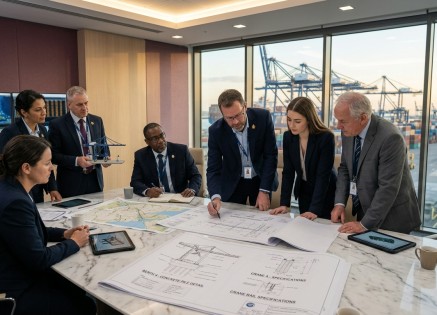
A terminal concession agreement normally contains several important components.
The agreement should establish the duration of the concession and explain the conditions under which it may be extended, renewed, or terminated.
The concession period needs to provide sufficient time for the operator to recover investments while also protecting the long-term interests of the port authority.
Investment requirements should be clearly defined. These may include cranes, terminal equipment, storage facilities, digital systems, infrastructure improvements, or other capital projects.
Clear investment obligations can help ensure that the terminal maintains appropriate capacity and operational standards throughout the concession period.
The agreement should identify which party is responsible for day-to-day operations, maintenance, safety, staffing, equipment, customer service, and other activities.
Clearly defined responsibilities can reduce disputes and create greater accountability for operational performance.
Concession agreements can include performance indicators relating to cargo-handling productivity, vessel turnaround, equipment availability, service quality, safety, environmental performance, and other operational measures.
These requirements provide a basis for monitoring whether the operator is meeting agreed standards.
Financial provisions may cover concession fees, revenue-sharing mechanisms, tariffs, investment requirements, penalties, and other commercial conditions.
Understanding the economic structure of a concession is particularly important because port infrastructure requires substantial capital and long-term financial planning. Factors such as investment returns, operating costs, market demand, and revenue expectations form part of broader port economics and investment considerations.
Although concessions can provide opportunities for investment and operational development, they also involve various risks.
Large infrastructure investments can be affected by changes in cargo volumes, market conditions, interest rates, operating costs, and other economic factors. Poorly structured financial obligations can create challenges for either party.
Terminal operations depend on equipment, labour, technology, infrastructure, and effective coordination. Operational disruptions can affect vessel schedules, cargo flows, customers, and wider supply chains.
Changes in laws, regulations, environmental requirements, customs procedures, or trade policies can affect the way a concession operates. Agreements therefore need appropriate mechanisms for managing regulatory changes.
Future cargo volumes may differ from initial forecasts. If demand is significantly lower than expected, the operator may face difficulties recovering its investment. Conversely, unexpected growth can create pressure for additional capacity.
Concessions involve multiple stakeholders, including port authorities, terminal operators, shipping lines, government agencies, logistics companies, employees, and local communities.
Clear governance arrangements and communication mechanisms can help reduce conflicts and clarify decision-making responsibilities.
Effective port concession policy and operations require careful planning before the agreement is signed and consistent management throughout its lifecycle.
Each party should understand its responsibilities for infrastructure, operations, maintenance, investment, safety, environmental compliance, and service delivery.
Ambiguous obligations can create disputes, particularly when unexpected costs or operational challenges arise.
Performance requirements should be specific and measurable. Indicators can cover productivity, service quality, safety, environmental performance, equipment availability, and customer-related outcomes.
Regular performance reviews can help identify issues before they become major operational problems.
Investment requirements should reflect realistic expectations about future cargo volumes and market conditions. Phased investment can provide flexibility while reducing the risk of committing substantial capital too early.
A strong concession should allocate risks to the party best positioned to manage them. This may involve defining responsibilities for demand changes, construction delays, regulatory changes, infrastructure failures, or extraordinary events.
Ongoing monitoring is essential because signing a concession agreement is only the beginning of the relationship. Port authorities need appropriate systems for reviewing compliance, investment commitments, service quality, and operational performance.
Efficient port operations management can also contribute to better resource utilisation, service performance, and commercial sustainability.
A port concession agreement should support more than the short-term operation of a terminal. It should fit within the wider strategic objectives of the port, including infrastructure development, capacity planning, connectivity, sustainability, technology adoption, and commercial growth.
For this reason, concession planning should be coordinated with the port's broader development strategy. Decisions about terminal investment, operating models, infrastructure, and governance can have consequences that extend well beyond the concession period.
Professionals involved in these decisions need an understanding of both commercial and operational considerations. Training in port concession policy and operations can help develop knowledge of concession structures, contractual responsibilities, legal considerations, and operational requirements.
A port concession agreement provides a structured framework for managing the relationship between port authorities and private operators. By defining concession periods, investment commitments, operational responsibilities, performance standards, financial terms, and risk allocation, these agreements can establish clearer expectations for all parties.
Different port concession models can be adapted to different infrastructure and operational requirements, from terminal operating arrangements to more complex PPP structures. However, effective concessions require careful contract design, realistic investment planning, measurable performance requirements, appropriate risk allocation, and ongoing governance.
As ports continue to respond to changing trade patterns, technology, sustainability requirements, and infrastructure needs, well-managed concession arrangements remain an important part of modern port development and operations.