Subscribe to our newsletter
Copyright © 2026 lmitac.com All Rights Reserved. Contact - Terms and Conditions - Privacy Policy - Quality Policy - Vacancies - Sitemap
London Maritime Academy is a trade name for London Premier Group
version: 2.9.0
Subscribe to our newsletter
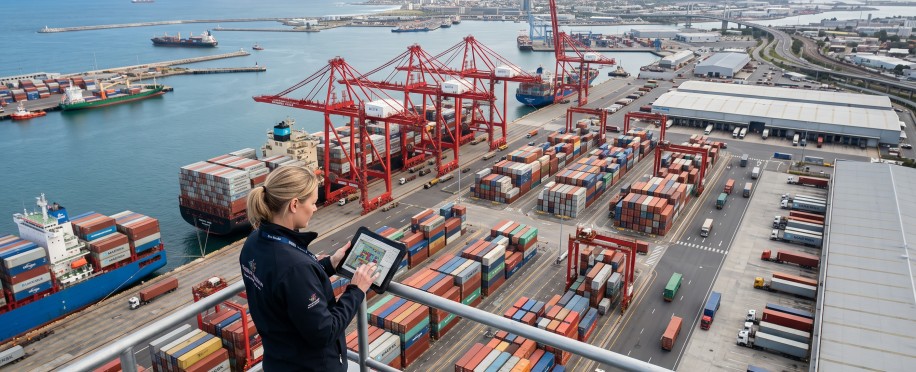
A port management career brings together vessel operations, cargo handling, logistics, safety, and leadership. With the right skills and training, professionals can move from operational roles into supervisory and senior management positions across the global maritime industry.
A port management career is a professional route that is focused on coordinating vessels, cargo, people, infrastructure, safety, and commercial services across a port. It can lead from entry-level operations into supervisory, specialist, director, and executive positions with direct responsibility for global trade.
In this article, the author explained the main jobs, required skills, training programs, and practical steps professionals can follow to move into port leadership.
Ports are active business ecosystems. How? Well, shipping lines, terminal operators, customs agencies, freight companies, engineers, security teams, and logistics providers must coordinate their activities around vessel schedules and cargo demand.
All this complexity creates port operations jobs in vessel planning, cargo handling, maritime services, compliance, customer service, construction, safety, and commercial development. But who is this work for? Professionals with the ability to make accurate decisions under pressure.
Exactly because port performance affects much more than the quay. One tiny vessel delay will disrupt all the warehouses, road transportation, retail supply, and international customer commitments. Therefore are reliability and operational coordination critical to business success.
Now what is most interesting is that even through all the development, performance still depends on people as much as technology. Even automated cranes, digital gates, and tracking platforms still require a capable team that understands service priorities and risk.
What does the work actually involve?
Responsibility varies by port size, cargo type, authority structure, and employer. Most careers begin in coordination, engineering, safety, or logistics before progressing into broader management.
| Role | Main focus | Typical advancement |
| Operations coordinator | Berth, yard, gate, and vessel activities | Operations supervisor |
| Terminal supervisor | Labour, equipment, productivity, and safety | Terminal manager |
| Marine services officer | Vessel movement, pilotage, towage, and harbour control | Marine manager |
| Asset manager | Equipment, maintenance, and reliability | Engineering director |
| Commercial manager | Contracts, customers, and pricing | Commercial director |
| Port manager | Governance, people, performance, and strategy | Executive leadership |
A typical job description may include shift duty, contractor control, regulatory reporting, incident response, resource allocation, and maintaining service levels.
However, senior managers may be responsible for capital planning, facility development, digital transformation, and representing the organisation on behalf of the port community.
A successful port management career requires more than technical knowledge. Employers look for professionals who connect operational decisions with safety, cost, compliance, service quality, and commercial outcomes.
Important skills include:
Professionals should also understand how to improve port efficiency and profitability, because everyday decisions influence turnaround time, equipment use, labour cost, customer satisfaction, and revenue.
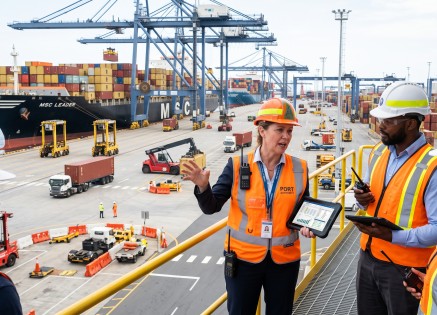
Terminal management converts plans into daily execution. A manager may allocate labour, confirm equipment readiness, monitor cargo flow, coordinate vessel activity, and ensure that safety controls remain functional throughout the day.
Consider a container terminal facing a crane breakdown during a major vessel call. The manager must revise the work sequence, communicate expected delays, protect employees, reassign equipment, and maintain customer service without creating additional operational risk.
Leadership becomes visible in these situations. Employers notice managers who remain calm, take charge, communicate clearly, and restore operations while protecting compliance.
Although port and airport environments are different, both rely on secure facilities, regulated operations, coordinated passenger or cargo movements, and time-critical services. Airports distinguish between airside and landside duties, while ports divide work across terminal, gate, and logistics functions.
There is no single entry route into a port management career. Professionals may begin in maritime studies, engineering, transport, administration, cargo handling, logistics, or business services.
According to ILO port-sector training guidelines, competency-based development should improve safety, capability, cargo-handling efficiency, and service quality. This approach focuses on what employees can perform in the workplace, not only the competencies they hold.
UNCTAD’s Port Management Programme covers international trade, operational planning, legal frameworks, technical management, commercial development, and human resources. It demonstrates why comprehensive port education must combine practical knowledge with management ability.
It does not stop there, however. A structured maritime human element online course can help professionals learn communication, teamwork, leadership, human performance, and safety culture.
These capabilities become increasingly important when a coordinator moves from completing assigned duties to managing people, risk, and organisational performance.
The fundamentals behind effective port leadership also explain how governance, infrastructure, services, people, and commercial priorities work together.
A logistics career path can lead naturally into port leadership. Experience in freight coordination, warehousing, customs, vessel planning, intermodal transport, or customer operations provides a practical understanding of cargo flow.
Professionals seeking advancement should:
Creating a record of results is particularly important. Reducing truck waiting time, improving equipment availability, or supporting a terminal expansion gives an employer clear evidence of professional value.
Before investing in training, ask:
The strongest pathway combines formal learning with practical experience. Training should prepare professionals to oversee people, facilities, contractors, and operations rather than simply provide theoretical knowledge.
A port management career combines operations, logistics, safety, infrastructure, customer service, and leadership. Progress comes from building frontline credibility, developing commercial awareness, and selecting training that improves real workplace decisions.
For organisations, stronger talent pipelines support reliability, compliance, expansion, and customer confidence. For individuals, the best route turns practical experience into measurable responsibility and prepares them to manage people, assets, projects, and growth.