
Subscribe to our newsletter
Copyright © 2026 lmitac.com All Rights Reserved. Contact - Terms and Conditions - Privacy Policy - Quality Policy - Vacancies - Sitemap
London Maritime Academy is a trade name for London Premier Group
version: 2.9.0
Subscribe to our newsletter
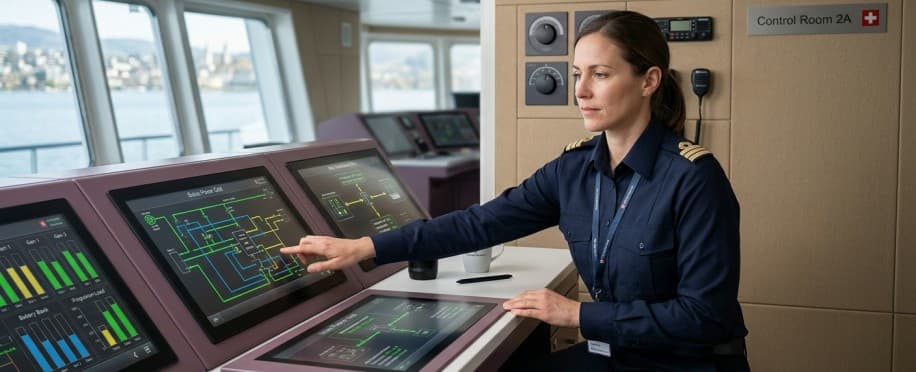
Ship propulsion systems determine how modern vessels generate thrust, direct power, and achieve operational efficiency. From conventional diesel engines and gas turbines to electric drives and hybrid arrangements, selecting the right propulsion configuration impacts fuel consumption, performance, maintenance needs, and environmental compliance.
Ship propulsion is one of the most important aspects of marine engineering because it determines how a vessel generates thrust and moves through water. From conventional diesel engines to electric drives, gas turbines, hybrid systems, and emerging alternative technologies, propulsion systems have developed significantly in response to changing operational, economic, and environmental requirements.
Understanding the different ship propulsion systems is important for marine engineers, vessel operators, technical managers, and professionals involved in ship design and maintenance. The choice of propulsion technology can affect fuel consumption, vessel performance, operating costs, maintenance requirements, emissions, and overall efficiency.
Ship propulsion systems are the combination of machinery, equipment, and components responsible for generating and transmitting the force required to move a vessel through water.
A typical propulsion arrangement may include an engine or other power source, transmission components, shafts, propellers, and control systems. The exact configuration depends on the vessel's size, purpose, speed requirements, operating environment, and fuel or energy source.
The propulsion system must convert available energy into useful thrust while operating reliably under different marine conditions. Engineers therefore consider factors such as power output, efficiency, torque, speed, manoeuvrability, reliability, and maintenance when selecting or designing a propulsion arrangement.
There are several types of marine propulsion, ranging from traditional mechanical systems to more advanced electric and hybrid configurations.
Diesel engines are among the most widely used propulsion technologies in commercial shipping. They can provide high levels of power and efficiency, making them suitable for cargo ships, tankers, container vessels, bulk carriers, and many other types of ships.
In a conventional diesel propulsion system, the engine generates mechanical power that is transferred through a shaft to a propeller. Large marine diesel engines are often designed to operate efficiently at relatively low rotational speeds, allowing them to drive large propellers effectively.
The performance of diesel propulsion is closely connected to fuel selection and fuel-management practices. Marine operators therefore need to understand the characteristics and operational considerations associated with different marine fuels.
Steam turbine propulsion uses steam generated by a boiler to drive a turbine connected to the propulsion system. Steam turbines were historically important in commercial and naval vessels, although their use in many modern commercial applications has declined because of the efficiency advantages offered by modern internal-combustion engines.
The system can still be relevant in specific applications where steam generation is integrated with other onboard processes.
Gas turbines generate mechanical power by using high-temperature gases produced through combustion. They can provide high power output relative to their size and weight.
Gas turbine propulsion has been used particularly in naval vessels and high-speed ships where rapid acceleration and high power density are important considerations.
However, fuel consumption and operating economics need to be carefully considered when evaluating this type of propulsion.
Electric propulsion uses electric motors to generate the mechanical force required to turn the propeller or other propulsion device. Electricity can be supplied by generators, batteries, fuel cells, or a combination of energy sources.
One advantage of electric propulsion is the flexibility it provides in arranging power-generation and propulsion machinery. Electric systems can also work effectively with hybrid configurations in which multiple energy sources are combined.
Battery-electric propulsion uses stored electrical energy to power electric motors. It can be particularly suitable for vessels operating on shorter routes where charging infrastructure and battery capacity can support the required voyage.
Ferries, harbour vessels, workboats, and other short-distance vessels are among the applications where battery-electric technology may be considered.
The wider development of alternative fuels and energy technologies is also influencing the maritime sector. For example, hydrogen fuel is being investigated as a potential energy source for certain marine applications.
Hybrid propulsion combines two or more propulsion or energy technologies. A vessel may, for example, combine a conventional engine with batteries and electric motors.
The objective is to use different power sources according to operational requirements. A vessel might use conventional engines during high-power operations while relying on electric power during lower-demand activities.
Hybrid systems can provide greater operational flexibility and may help reduce fuel consumption and emissions in suitable operating conditions.
The propeller remains one of the most common methods of converting engine or motor power into thrust.
A marine propeller consists of blades designed to generate a pressure difference as they rotate through water, producing forward or reverse thrust. Propeller design needs to take into account vessel speed, hull characteristics, engine power, operating conditions, and efficiency requirements.
Different propeller configurations can be used depending on vessel type and operational requirements. Engineers may also use controllable-pitch propellers to adjust blade pitch and optimise thrust under different conditions.
Azimuth propulsion systems allow the propeller or propulsion unit to rotate around a vertical axis, providing both propulsion and steering functions.
Podded systems place the electric motor and propeller in a streamlined pod located outside the hull. These systems can improve manoeuvrability and provide flexibility in vessel design.
Such propulsion arrangements are particularly relevant for vessels where precise manoeuvring is important, including cruise ships, offshore vessels, ferries, and specialised marine craft.
Wind-powered technologies are receiving renewed attention as the maritime industry looks for ways to reduce fuel consumption and emissions.
Modern systems may use rigid sails, rotor sails, kites, or other technologies to generate additional thrust from wind. These technologies are generally considered as an assistance mechanism rather than a complete replacement for conventional propulsion on many commercial vessels.
The renewed interest in wind-powered shipping reflects the broader effort to combine traditional marine concepts with modern engineering and operational technologies.
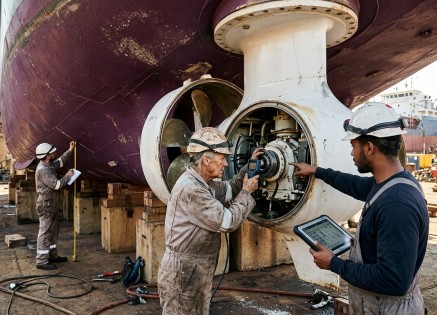
Selecting a ship’s propulsion system requires an integrated assessment of technical performance, safety, commercial viability, and environmental requirements. The system includes the energy source, engines or motors, transmission, shafts, propellers or thrusters, and control systems. These components must be matched to the vessel’s operational needs throughout its intended service life.
The vessel’s purpose and operating profile are the starting points for propulsion selection. Container ships, tankers, and bulk carriers typically require efficient propulsion for sustained ocean passages, whereas ferries, tugs, and offshore support vessels may need frequent speed changes, rapid thrust response, and greater manoeuvrability. Hull resistance, displacement, draught, available machinery space, and propeller clearance influence the configuration. Engineers should also consider time spent at cruising speed, manoeuvring, waiting, and operating at low loads, together with electrical demand from cargo equipment and accommodation services.
Required propulsion power is determined from hull resistance at the intended service speed and the efficiency of the complete propulsion arrangement. Suitable allowances are needed for adverse weather, hull fouling, machinery deterioration, and operational demands. Engine power, rotational speed, gearing, and propeller characteristics must be matched to avoid inefficient operation, excessive vibration, and cavitation. Higher speed generally requires a substantial increase in power, so selecting a realistic service speed is an important commercial decision. Tugs require particular attention to bollard pull, while offshore vessels may require accurate station keeping and dynamic positioning capability.
The choice between mechanical, electric, and hybrid propulsion should reflect the vessel’s operating profile. Direct mechanical propulsion can provide high efficiency during steady operation, while electric propulsion offers flexibility in machinery arrangement and power distribution. Hybrid systems can combine engines, electric motors, and batteries to manage changing loads and reduce unnecessary engine running. Fixed-pitch propellers, controllable-pitch propellers, azimuth thrusters, and waterjets offer different advantages in efficiency, thrust control, shallow-water operation, and manoeuvrability. Electric propulsion’s environmental performance depends on how its electricity is generated.
Fuel selection must consider reliable supply along the vessel’s intended routes, bunkering infrastructure, fuel quality, price uncertainty, and required endurance. Alternative fuels also affect tank size, storage conditions, machinery arrangements, and the space available for cargo. Batteries require sufficient capacity, charging infrastructure, and charging time. Dual-fuel arrangements can provide operational flexibility, but their benefits depend on the availability and cost of both fuels. Selection should include fuel-specific safety measures, crew competence, and the practicality of future conversion.
Propulsion options should be compared using total lifecycle cost, rather than purchase price or fuel consumption alone. The assessment should include installation, maintenance, spare parts, lubricants, crew training, equipment replacement, downtime, and any loss of revenue resulting from reduced cargo capacity. Performance should be evaluated across the expected operating profile, particularly at partial loads. Hull and propeller condition also influence energy consumption, making maintenance planning part of the propulsion decision. Financial comparisons should test different fuel-price, utilisation, and service-life assumptions.
The propulsion arrangement must provide the reliability and redundancy appropriate to the vessel’s service. Engineers should assess the consequences of engine failure, loss of electrical power, control-system faults, and damage to fuel or cooling systems. Multiple propulsion units do not automatically provide effective redundancy if they share essential equipment vulnerable to a single failure. Safe access for maintenance, availability of technical support, and the crew’s ability to operate and troubleshoot the system are also important. Alternative fuels and batteries require additional attention to fire protection, ventilation, detection, containment, and emergency response.
Propulsion selection must account for applicable air-pollution, energy-efficiency, and carbon-intensity requirements, including MARPOL Annex VI and, where applicable, EEDI, EEXI, and CII. Technical compliance and operational performance should be assessed separately: an efficient propulsion design does not by itself guarantee a favourable annual carbon-intensity rating.
Environmental comparisons should consider the full fuel lifecycle, including production, transport, and onboard use. Alternative fuels are not automatically low-carbon; their benefits depend on production pathways and emissions during operation. Electrification, hybridisation, waste-heat recovery, and wind-assisted propulsion should therefore be assessed against the vessel’s route and operating conditions. The preferred system should meet current requirements while providing a practical basis for future adaptation
The development of modern ship propulsion is closely connected to broader changes in marine engineering. Advances in electric motors, batteries, alternative fuels, digital monitoring, automation, and energy-management systems are creating new possibilities for vessel propulsion.
At the same time, conventional propulsion technologies continue to evolve through improvements in engine efficiency, fuel systems, emissions control, and digital performance monitoring.
Marine engineers therefore need to understand both established propulsion principles and emerging technologies. Professional training in Advanced Ship Propulsion Systems training can help develop knowledge of propulsion technologies, system components, operational principles, and modern engineering considerations.
Ship propulsion systems are fundamental to vessel performance, efficiency, reliability, and environmental performance. From diesel engines and gas turbines to electric motors, hybrid systems, azimuth drives, and wind-assisted technologies, different propulsion solutions are suited to different vessel types and operational requirements.
The selection of a propulsion system involves more than choosing an engine. Engineers must consider vessel characteristics, power requirements, fuel availability, operating costs, maintenance, manoeuvrability, and environmental requirements.
As marine technology continues to develop, propulsion systems are likely to become increasingly diverse and integrated. Understanding the principles behind different types of marine propulsion can help maritime professionals evaluate these technologies and contribute to more efficient and adaptable vessel operations.