Subscribe to our newsletter
Copyright © 2026 lmitac.com All Rights Reserved. Contact - Terms and Conditions - Privacy Policy - Quality Policy - Vacancies - Sitemap
London Maritime Academy is a trade name for London Premier Group
version: 2.9.0
Subscribe to our newsletter
Posted On: 9/3/2026, 2:30:04 PM
Last Update: 9/3/2026, 2:30:04 PM
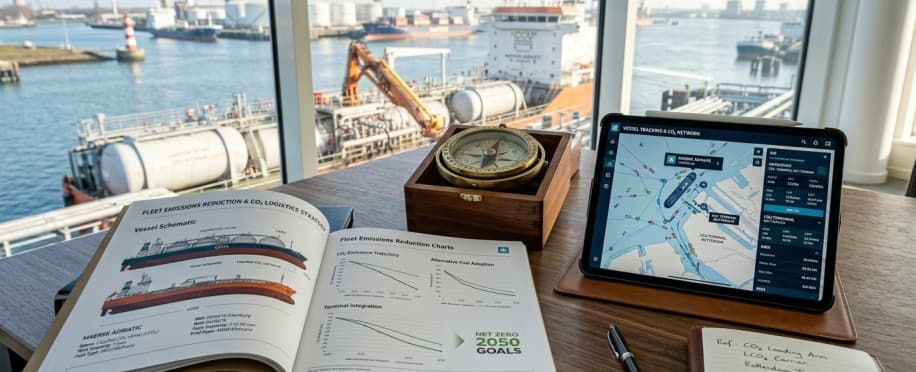
Onboard carbon capture and storage systems (oCCS) may significantly aid in reducing CO2 emissions in shipping, as noted in a recent Lloyd’s Register report, while alternative fuel supply chains are still being developed.
The report highlights the challenge shipowners face in decarbonising and reducing CO₂ emissions. By 2030, only 4% of the required near-zero GHG emission fuel production capacity has been finalised for investment.
Additionally, orders for alternative fuel-capable vessels dropped from 45% in 2024 to 37% in 2025.
The report indicates that a significant portion of the fleet currently ordered or in operation will depend on traditional petroleum fuels until the 2030s. It suggests that oCCS provides a supplementary method for decreasing CO₂ emissions in addition to alternative fuels and energy efficiency technologies.
According to the report, several oCCS technologies are making the transition to commercial deployment, with bigger pilots aiming for capture rates of about 70% and full-scale installations absorbing 30–40% of CO2 emissions.
Moreover, LR’s analysis highlights oCCS as a feasible retrofit for vessels over ten years old that face carbon pricing, have access to a credible CO₂ offloading chain, and possess adequate onboard space for capture equipment. This technology may enhance their commercial viability as environmental regulations and carbon costs escalate.
Remarkably, the report identifies three key market segments poised for near-term deployment of operational Carbon Capture and Storage (oCCS). These include:
Senior VP of Shipping Strategy at Lloyd's Register, Panos Mitrou, emphasised the long-term operational timeline of many vessels, which will continue into the 2030s. He noted that while alternative fuels are essential for shipping's decarbonisation, there is an immediate need for practical CO₂ reduction measures for existing ships.
Further, Mitrou pointed out onboard carbon capture as a potentially vital tool for reducing emissions and managing carbon costs, particularly for suitable vessel types and trade routes, as the industry adapts to evolving fuel supply chains and regulations.
While the report identifies substantial opportunities, it warns that oCCS technology is not universally applicable. Current systems may lead to fuel consumption increases of 15% to 30% and necessitate considerable onboard space for capture and storage.
Retrofit evaluations should be conducted for each vessel, considering trading patterns, asset lifespan, carbon pricing, and CO₂ offloading infrastructure availability.
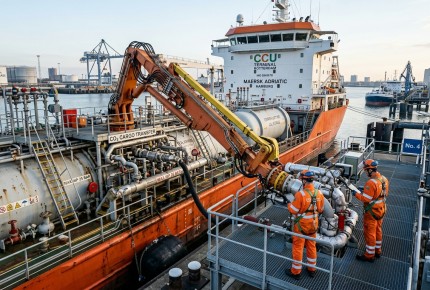
The primary obstacle to broader implementation is the insufficient availability of ports and infrastructure for receiving captured CO₂. Although significant carbon storage initiatives are advancing in north-west Europe, particularly with North Sea storage networks, port reception facilities are underlined as the weakest link in the developing carbon value chain.
The report stresses the necessity for enhanced regulatory clarity, noting that while the EU ETS permits reductions in compliance obligations through captured and permanently stored CO₂, frameworks like FuelEU Maritime and future IMO regulations are still in development.
Overall, broader deployment will rely on three key developments: the outcome of FuelEU Maritime’s Article 30 review, IMO recognition of captured CO₂ in a global pricing framework, and the expansion of CO₂ offloading infrastructure.
Maritime Training Academy in the UK specialises in Mastering Onboard Carbon Capture and Storage (oCCS), underscoring the importance of balancing chemical absorption technology with onboard space and energy constraints. Successful implementation requires maintaining ship stability, ensuring chemical safety, and implementing efficient port unloading procedures for captured carbon.