Subscribe to our newsletter
Copyright © 2026 lmitac.com All Rights Reserved. Contact - Terms and Conditions - Privacy Policy - Quality Policy - Vacancies - Sitemap
London Maritime Academy is a trade name for London Premier Group
version: 2.9.0
Subscribe to our newsletter
Posted On: 9/1/2026, 8:16:29 PM
Last Update: 9/1/2026, 8:16:29 PM
The shipping sector is gaining attention from long-term financial investors due to the Middle East crisis, which enhances prospects for vessel prices and freight rates.
Asset managers note growing interest from pension funds and large institutional investors seeking exposure to hard assets through shipping portfolios.
According to the CEO of Tufton Investment Management, Nicolas Tirogalas, Investment interest in shipping is increasing. Major capital allocators are directing funds into shipping, leading to greater investor engagement, as evidenced by meetings over the last two quarters where investors have raised their stakes in Tufton, which invests in ships.
Andreas Povlsen, head of maritime at Hayfin, noted that long-term investors are increasingly aware of the cash-generative real assets linked to global trade. He highlighted a trend where investors are moving away from traditional hard assets like aviation and real estate due to heightened competition.
Moreover, Hayfin is in the process of raising a new maritime fund, targeting to double capital commitments from its previous $620 million maritime fund.
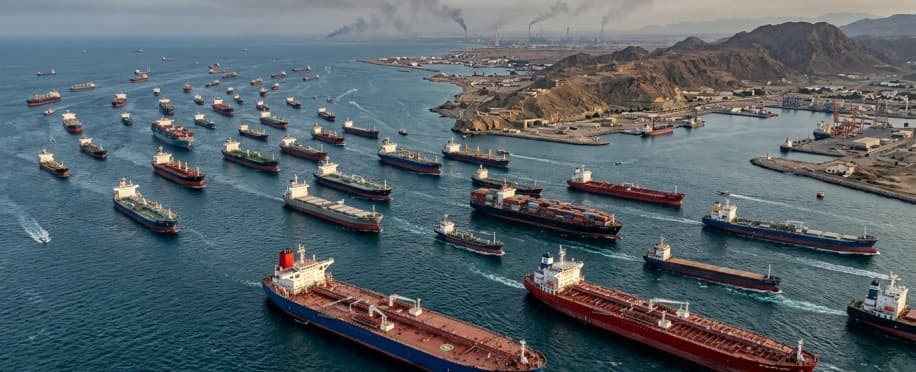
Likewise, 'HALO' investments are defined as tangible assets with low obsolescence, regardless of the stock market's AI hype. Shipowners expected a slump due to an oversupply of new ships, but recent delays in the Strait of Hormuz and Red Sea have demanded longer shipping routes, reducing fleet availability.
Shipbrokers and investment managers have indicated that asset prices and freight rates in several maritime sectors are at historic highs as a result of continuous Middle Eastern tensions.
The Breakwave Tanker Shipping fund, which focuses on tanker rates that have risen due to increasing demand for transportation through the Strait of Hormuz, has grown in value by more than 23 times this year.
According to Veson Nautical, equity investments in publicly traded maritime companies by US and UK investment firms have been consistent since last year's 20-year high.
Besides, an asset manager stated that institutional investors are drawn to the peak market, but cautioned that potential hazards outweigh rewards, notwithstanding shipowners' optimism about prolonged high rates due to Middle Eastern rebuilding demands and refilling oil inventories following the conflict.
Tirogalas expressed a strong belief that the market for dry-bulk cargo ships, used for commodities like iron ore and grain, has not yet peaked. He noted that asset prices for various ships, especially tankers, are currently unexpectedly high, approaching the records from 2008, a trend that Olivia Watkins, associate director at Veson, did not anticipate revisiting.
Remarkably, Watkins noted that a significant factor driving ship purchases is the exceptionally high earnings from chartered vessels. She explained that due to the current lucrative charter market, ship owners can quickly recoup their investments within a few years.
Furthermore, asset managers are actively purchasing ships, with Hayfin ordering seven oil product tankers and two liquefied natural gas carriers this year. Additionally, JPMorgan Asset Management has ordered at least eight new oil supertankers for approximately $1.26 billion, with options for two more vessels, as reported by Argus.
Maritime Shipping Courses cover essential aspects such as maritime operations, commercial chartering, international trade law, and vessel management. Education ranges from practical certifications to advanced degrees in global trade economics. Key focus areas include voyage planning, regulatory compliance, and supply chain logistics, with an emphasis on expertise in voyage data analysis, customs documentation, and international carrier standards to enhance global trade efficiency.