Subscribe to our newsletter
Copyright © 2026 lmitac.com All Rights Reserved. Contact - Terms and Conditions - Privacy Policy - Quality Policy - Vacancies - Sitemap
London Maritime Academy is a trade name for London Premier Group
version: 2.9.0
Subscribe to our newsletter
Posted On: 8/19/2026, 1:44:13 PM
Last Update: 8/19/2026, 1:44:13 PM
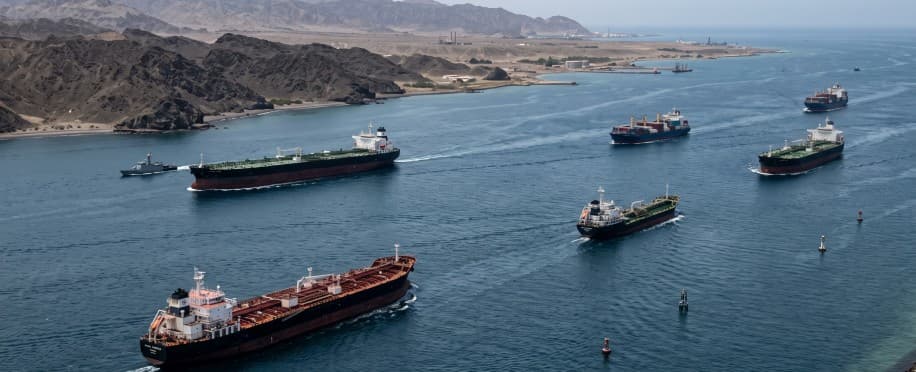
President Donald Trump announced plans to declare the Strait of Hormuz a 'territory of the United States,' emphasising U.S. control over the waterway amidst ongoing tensions with Iran.
He stated that after defeating Iran, which he claimed is currently facing significant challenges, the U.S. would effectively make the strait a territory where only authorised ships could pass.
U.S. sovereign control faces practical challenges, notably a lack of presence and tactical vulnerability. Israeli intelligence reports that Iran is quickly rebuilding its ballistic missile capabilities and regularly targets merchant tankers in the southern strait, with a recent attack on a UAE state oil company vessel marking the 19th incident.
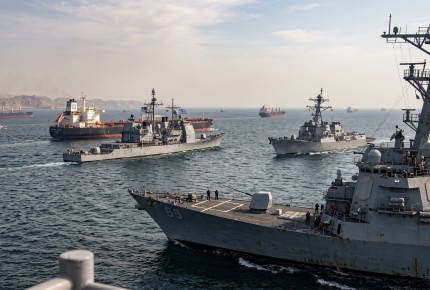
U.S. Navy warships have not operated in the Strait of Hormuz for four months, focusing instead on a blockade of Iranian traffic in the Gulf of Oman. Navy leaders have identified limited access to Bahrain's resources as a challenge for resupply missions to the Arabian Sea task force. Al Jazeera reporter Kimberly Halkett noted that while the U.S. president downplays the situation, he affirms the active naval blockade by the U.S.
Moreover, Iran asserts its right to control navigation in the Strait of Hormuz, seeking to levy passage fees and negotiate joint management with Oman. Iranian deputy foreign minister Kazem Gharibabadi underlined that the strait is under Iranian command and will remain so, urging the U.S. to accept this reality.
Likewise, Iranian Foreign Minister Abbas Araghchi stated that talks with Oman could conclude soon, despite Tehran's prior warnings that its forces are on high alert for possible US actions.
Despite the Iranian blockade, oil continues to flow from the strait at a reduced rate, with U.S. Energy Secretary Chris Wright estimating 9 million barrels per day, while independent analysts estimate 4-5 million. Adnoc manages logistics for its own oil and Iraqi volumes via a trans-Hormuz shuttle programme.
Maritime Online Courses investigate ways to defend the Strait of Hormuz by examining a combination of military strategy, international law, and global trade. Recent events demonstrate that keeping this energy gateway open requires far more than simply putting warships on the water.
Bloomberg's Javier Blas attributes the lower oil prices, remaining below $100 per barrel, to covert flows, demand destruction, decreased Chinese imports, and increased pipeline volumes to Fujairah and Yanbu, all amidst Iranian efforts to disrupt its GCC neighbours' access to the sea.
From a legal and constitutional standpoint, former associate deputy attorney general Bruce Fein explained that “A treaty ratified by the Senate or statute is constitutionally required to annex territory, as with the Louisiana Purchase or annexation of Hawaii or Panama Canal or acquisition of Puerto Rico or the Philippines in ending the Spanish-American War.”
Remarkably, international law expert Natalie Klein noted that Trump's claim would be plausible only if the US were asserting control over the Strait as an occupying power, similar to its authority over Japan after World War II. She pointed out that this would require the US to have military control over Iran or its coastal areas.
Furthermore, customary rules under UNCLOS assert that passage through international straits cannot be impeded, limiting Iran's control over a 21-nautical-mile stretch.
Domestically, with US petrol prices above $4 and mounting munitions shortages, public approval for the war is 35% ahead of the November midterms.
At some point, Paul Musgrave from Georgetown University characterised the president's comments as a blend of serious stance and political showmanship aimed at demonstrating resolve without escalation.