
Subscribe to our newsletter
Copyright © 2026 lmitac.com All Rights Reserved. Contact - Terms and Conditions - Privacy Policy - Quality Policy - Vacancies - Sitemap
London Maritime Academy is a trade name for London Premier Group
version: 2.9.0
Subscribe to our newsletter
Posted On: 8/7/2026, 1:39:42 PM
Last Update: 8/7/2026, 1:39:42 PM
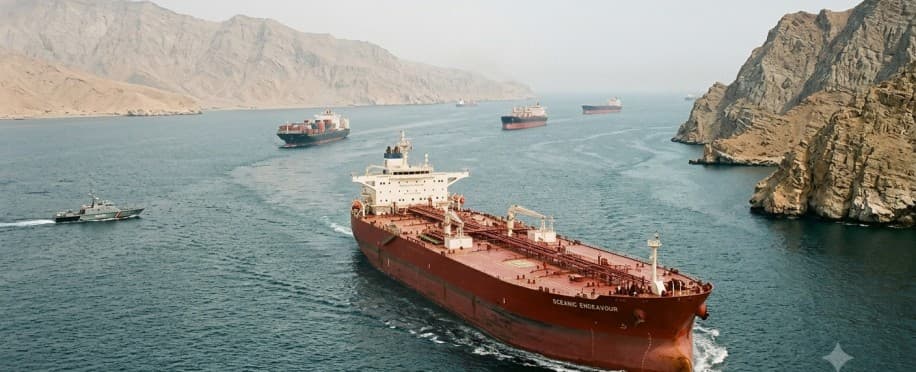
According to industry sources, U.S. sanctions and tight insurance provisions pose obstacles to a potential agreement between Iran and Oman that would give Tehran authority over ships entering the Gulf via the Strait of Hormuz.
Before the escalation of U.S.-Israeli airstrikes in late February, this waterway served as a crucial route for approximately 20% of global oil supplies, allowing ships to pass freely. Control of the strait remains the main challenge in conflict resolution efforts.
Under the new proposal, Tehran can manage inbound traffic, while outbound traffic must pass through Oman and obtain exit clearance after notifying Iran. Shipping associations highlighted the need for safe navigation in international waterways to ensure resilient supply chains and economic stability.
Introducing compulsory charges for transit or service fees through the strait could be seen as a 'toll in all but name,' risking the established legal framework for international navigation and transit passage, according to a letter sent to the UN’s shipping agency.
In 1968, the UN's shipping agency implemented a two-way traffic separation scheme, establishing a ship routing system that divided sailing corridors in Iranian and Omani waters with regional countries' consensus.
Notably, Iran is now proposing fees ranging from 5% to 7% of cargo prices for vessels navigating through the strait, while Oman is considering a fee of about 3%. In contrast, Washington opposes any fees altogether.
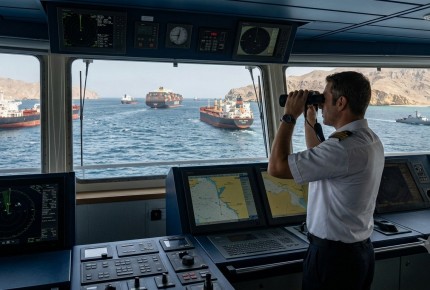
Meanwhile, the UN’s International Maritime Organisation refrained from commenting on proposal reports. In July, its governing council stated that countries near the strait must ensure the non-discriminatory and unimpeded right of transit passage for all ships through the traffic separation scheme, maintaining that passage should be free of tolls and charges.
Shipping Training Courses in Dubai encompass the study of international ships, focusing on maritime law, global economics, engineering technology, and operational safety standards. Key topics include international regulatory frameworks, ship design and classification, maritime commerce, and environmental compliance.
Imposition of fees by the U.S. creates significant compliance challenges for shipping companies and oil traders due to sanctions on the Persian Gulf Strait Authority, established by Iran to manage the waterway. Additionally, U.S. persons are barred from receiving services from the Iranian government concerning a “guarantee of safe passage.”
According to industry sources who wish to remain anonymous due to the sensitive nature of the issue, any payment may trigger asset freezes. Additionally, the Lloyd’s Market Association introduced a clause in late July stating that war underwriters will terminate insurance for a vessel if it pays any transit fee, toll, or charge for passage through the Strait of Hormuz.
Furthermore, ships sailing through the Strait must pay an additional war risk premium for insurance coverage against potential damage during transit. The LMA clarified that insurers are not liable to indemnify such payments, which discharges them from obligations related to the vessel involved.
In closing, the LMA advocates for underwriting businesses in the Lloyd’s of London insurance market, while shipping companies face a dilemma; the LMA's wording restricts insurers from covering shipowners who pay, coinciding with Iran's intention to impose a toll.