Subscribe to our newsletter
Copyright © 2026 lmitac.com All Rights Reserved. Contact - Terms and Conditions - Privacy Policy - Quality Policy - Vacancies - Sitemap
London Maritime Academy is a trade name for London Premier Group
version: 2.9.0
Subscribe to our newsletter
Posted On: 8/6/2026, 8:58:20 PM
Last Update: 8/6/2026, 8:58:20 PM
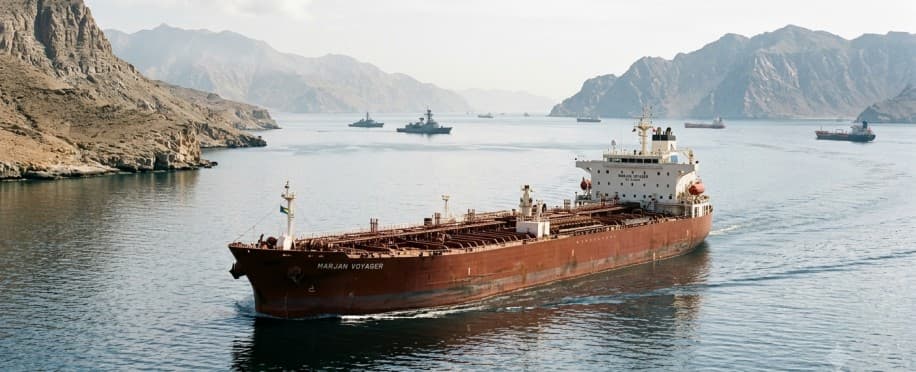
Eight prominent maritime organisations have warned that forced tolls or service fees in the Strait of Hormuz might have a cascading effect, urging the United Nations and the International Maritime Organization to reject such measures.
In a joint open letter dated August 3, associations cautioned UN Secretary General António Guterres and IMO Secretary General Arsenio Dominguez that introducing transit tolls or service fees could set a precedent undermining the internationally recognised legal framework for straits used in international navigation and transit passage.
The letter went on, “Once such a precedent is established, it becomes increasingly difficult to resist similar measures elsewhere, creating uncertainty for international shipping and global commerce.”
Compulsory transit or service fees, similar to tolls, would be a major departure from accepted international standards and have ramifications beyond shipping expenses, including higher energy costs, inflation, and economic instability.
Moreover, they warned of the direct financial ramifications for international trade, stating that “any additional costs imposed on maritime transport inevitably flow through international supply chains.”
These effects will have a human cost, impacting livelihoods worldwide, according to eight maritime organisations: the Asian Shipowners Association, BIMCO, Cruise Lines International Association, European Shipowners | ECSA, International Chamber of Shipping (ICS), INTERCARGO, INTERTANKO, and World Shipping Council.
The groups stated in the letter, “We must ensure that internationally recognised rights of navigation are not compromised or used as part of broader political negotiations as discussions regarding regional security and conflict resolution take place.”
Further, the groups emphasised their commitment to collaborate with the IMO and the broader United Nations to preserve long-established legal principles regarding international straits, as protected under international law, particularly by the United Nations Convention on the Law of the Sea (UNCLOS).
The letter continued by underlining the need for safe and predictable passage for merchant ships on international waterways, citing resilient supply chains, economic stability, and energy security.
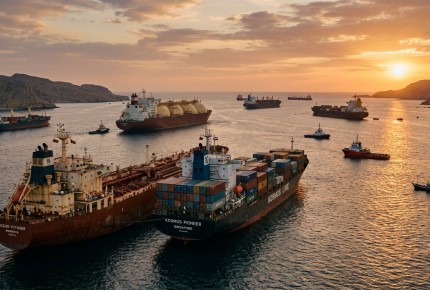
The potential tolls or service fees in the Strait of Hormuz highlight the vulnerability of global supply chains and raise concerns about the management of maritime chokepoints in the future.
US President Donald Trump stated that the latest negotiations with Iran represent the “last chance” to resolve the conflict. He stressed that any deal would not permit Iran to charge tolls on shipping in the strait, affirming the administration's stance against allowing Iranian control over this previously open international waterway, which is now seeing significantly reduced traffic.
Besides, the Trump administration's stance on freedom of navigation in its agreement with Iran has been inconsistent. CENTCOM reports that the “southern route” is open for commercial vessels, stating that U.S. forces have supported over 1,000 vessels in safely passing through the strait amidst Iranian aggression over the last three months.
Despite rising hopes for a deal, attacks on shipping in the Strait of Hormuz persist. The Iranian-backed Houthis reported having fired ballistic missiles at a Saudi oil tanker in the Red Sea.
Notably, Yahya Saree, spokesman for the Yemeni Armed Forces, stated that a vessel was targeted in the northern Red Sea near Yanbu, without providing evidence. There was no immediate response from Saudi Arabia. Meanwhile, Trump has warned of severe action against Iran if the Strait of Hormuz remains closed.
Maritime Law Courses explore shipping tolls through the lens of UNCLOS, which governs international transit rights and canal pricing. These fees impact global supply chains, route choices, energy costs, and inflation. Plus, geopolitical sites such as the Panama and Suez Canals illustrate how security concerns and industry resistance can influence global maritime toll policies.