Subscribe to our newsletter
Copyright © 2026 lmitac.com All Rights Reserved. Contact - Terms and Conditions - Privacy Policy - Quality Policy - Vacancies - Sitemap
London Maritime Academy is a trade name for London Premier Group
version: 2.9.0
Subscribe to our newsletter
Posted On: 7/14/2026, 2:43:44 PM
Last Update: 7/14/2026, 2:43:44 PM
The conflict over control of the world's most significant oil corridor has escalated dramatically after President Donald Trump announced on Monday that the United States will reinstate its naval blockade of Iranian shipping and impose a 20 per cent fee on all other cargo passing through the Strait of Hormuz.
Remarkably, Trump described the tax as compensation for the costs of protecting the waterway, thereby positioning the United States as the guardian of a dangerous strait. He promised to implement the fee immediately for all cargo passing through the strait.
Trump announced on Truth Social and in a Fox News interview that, alongside the blockade and regular shipping traffic, only Iranian ships and their clients would be barred from entering or departing the strait, while other countries would maintain unrestricted access.
Almost 20% of global energy exports transited through the Strait of Hormuz before the US-Israel-Iran conflict. This crucial maritime route separates Iran from Oman and is the primary sea passage for most regional oil exporters.
The International Maritime Organisation stated that under current international law, passage through international straits must remain free of tolls or charges. Additionally, a UN shipping agency spokesman noted that there is no legal ground to impose mandatory tolls solely for transiting a strait.
Secretary of State Marco Rubio stated that no country can impose tolls on international waterways, a stance previously taken by the Trump administration, while criticising Iran's plans to levy such fees.
Iran, which has discussed a joint service fee arrangement with Muscat that some reports value at up to $40 billion annually, disagrees with Oman's formal declaration to the IMO earlier this month that it opposes transit fees in the strait.
Meanwhile, Trump's announcement followed a sharp increase over the weekend. On July 12, Iran launched missile and drone attacks on Jordan, Bahrain, Kuwait, Qatar, and Oman. On that day, the United Arab Emirates issued a missile alert; however, it later declared that the threats were outside its borders and that the situation was stable.
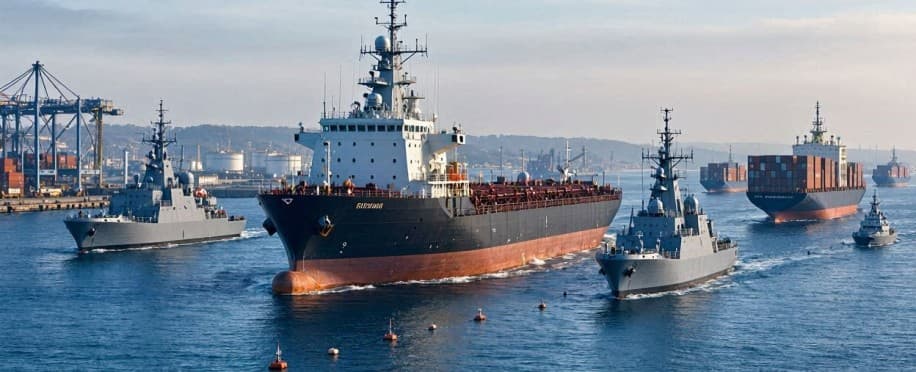
The barrage followed the third round of US airstrikes on Iran, which Central Command said targeted approximately 140 sites, including missile and drone launch sites, ammunition depots, and coastal surveillance equipment. The strikes came after Iran's Revolutionary Guard fired on a Cyprus-flagged container ship that was attempting an unauthorised route through the strait, setting it ablaze and forcing its crew to abandon ship.
According to Iran's state news agency IRNA, the Revolutionary Guard announced on Sunday that the strait would remain closed until US military involvement in the region ended. Central Command denied the claim, stating that the strait remains open to traffic via a southern transit corridor through Omani waters.
Furthermore, the conflict began with a US naval blockade of Iranian ports on April 13, which Iran claimed violated a ceasefire that had been announced five days prior. A memorandum of understanding signed in mid-June was intended to lift the blockade and allow unrestricted shipping across the strait for 60 days of negotiations; however, subsequent strikes by both parties have put pressure on the agreement.
Shipping across the strait has drastically decreased as the conflict has escalated. As both Washington and Tehran assert control over the strait, ships are increasingly being diverted or rerouted through Oman's southern corridor, adding to the uncertainty surrounding war-risk premiums and voyage planning for shipowners and insurers.
Maritime Law Courses examine fees for international straits, which must be balanced against sovereign revenue under UNCLOS rules that prohibit mandatory tolls but permit non-mandatory fees. The Strait of Hormuz crisis exemplifies this tension, with Iran's proposed charges meeting strong opposition. Natural straits have stricter transit protections than artificial canals, raising global supply chain costs and forcing the shipping industry to seek costly alternative routes.
Read more news: