Subscribe to our newsletter
Copyright © 2026 lmitac.com All Rights Reserved. Contact - Terms and Conditions - Privacy Policy - Quality Policy - Vacancies - Sitemap
London Maritime Academy is a trade name for London Premier Group
version: 2.9.0
Subscribe to our newsletter
Posted On: 7/9/2026, 8:21:56 PM
Last Update: 7/9/2026, 8:21:56 PM
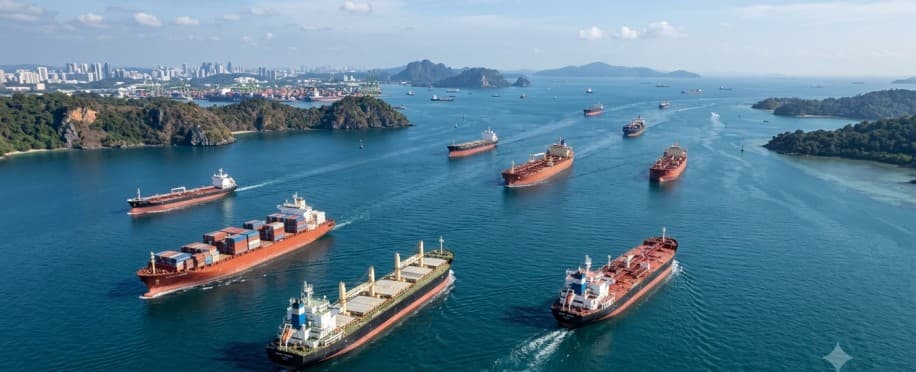
After the United States launched fresh strikes on Iranian military targets in response to attacks on commercial shipping, the security situation in the Strait of Hormuz dramatically deteriorated. The International Maritime Organisation advises the industry to avoid the waterway unless crew safety is assured.
Notably, US Central Command (CENTCOM) bombed over 80 Iranian targets, including air defence systems, command-and-control networks, coastal radar sites, anti-ship missile capabilities, and more than 60 Islamic Revolutionary Guard Corps (IRGC) small boats in the Strait of Hormuz.
After Iran attacked three merchant ships—the Al Rekayyat, Wedyan, and Cyprus Prosperity—the United States launched strikes. CENTCOM classified these acts as grave violations of the ceasefire and a threat to freedom of navigation. When Iran violates the agreement, U.S. forces are prepared to hold it responsible.
The Trump administration has revoked a temporary sanctions waiver for Iranian oil exports, replacing it with a 10-day suspension of existing transactions. The new licence allows only the activities required to wind down previously permitted business until 17 July, and it prohibits new purchases or loadings of Iranian crude and petrochemicals after 7 July.
Likewise, U.S. strikes and sanctions rollback signify a major escalation following a recent memorandum of understanding between Washington and Tehran aimed at resolving conflict and reopening a crucial maritime chokepoint. President Trump has indicated that this agreement might now be over.
Trump declared that the interim agreement with Iran is effectively “over” following recent attacks by Iran, stating that engaging with them is a “waste of time.”
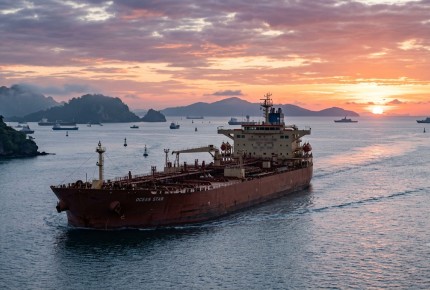
IMO Secretary-General Arsenio Dominguez condemned recent attacks on ships in the Strait of Hormuz, emphasising the need for shipowners and operators to protect crews from unnecessary risk. He highlighted the danger posed to innocent seafarers and asserted that no one should risk their life while performing their duties.
Moreover, Dominguez urged flag States, shipowners, and relevant authorities to avoid risking seafarers' safety by transiting the Strait amid recent attacks, which have heightened fear for the nearly 6,000 stranded seafarers in the Persian Gulf.
He called for immediate restraint, de-escalation, and actions to ensure the safe departure of the trapped vessels, stressing that the safety of seafarers should be the top priority.
Meanwhile, the statement marks a significant change from the cautious optimism seen after last month's ceasefire, during which industry groups and naval forces started to support a gradual resumption of commercial traffic through specific shipping corridors.
The United States has accused Iran of violating an agreement, which Iran has denied. Mohammad Bagher Ghalibaf, Speaker of the Parliament and lead negotiator for Iran, asserted that the U.S. has repeatedly breached the memorandum through various actions, including attacks on southern Iran, reinstating oil sanctions, meddling in Iran's control of the Strait of Hormuz, renewing military strikes, and supporting Israeli military activities in Lebanon.
Furthermore, Ghalibaf stated, “The era of bullying and extortion is over,” highlighting that such tactics are ineffective. This statement casts uncertainty on the future of the U.S.-Iran agreement and raises concerns regarding the security of a crucial global waterway.
Maritime Safety Courses in London address the global shipping crisis, driven by geopolitical shocks and macroeconomic pressures. This situation results in vessel detours, capacity strains, supply-demand mismatches, increased operational costs, spot rate volatility, and inflation of essential goods. Operators are urged to implement maritime intelligence and risk-mitigation strategies to stabilise global trade in the post-pandemic environment.
Read more news: