Subscribe to our newsletter
Copyright © 2026 lmitac.com All Rights Reserved. Contact - Terms and Conditions - Privacy Policy - Quality Policy - Vacancies - Sitemap
London Maritime Academy is a trade name for London Premier Group
version: 2.9.0
Subscribe to our newsletter
Posted On: 6/25/2026, 7:22:58 PM
Last Update: 6/25/2026, 7:22:58 PM
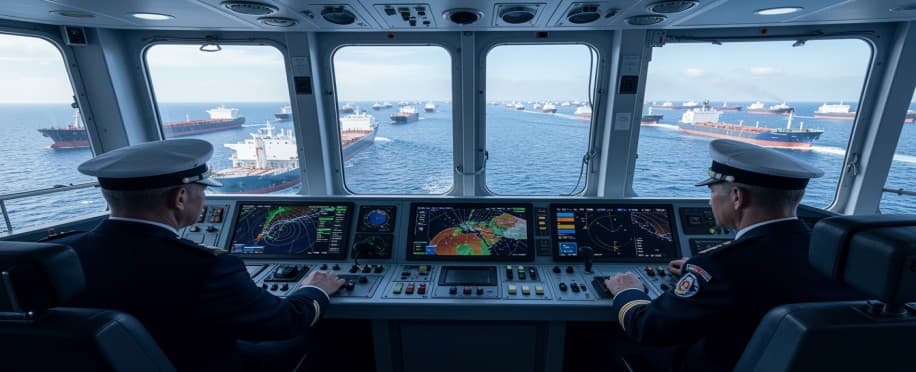
After months of severe disruption brought on by the U.S.-Iran conflict, commercial shipping through the Strait of Hormuz, one of the world's most important chokepoints for global energy flows, has started to cautiously recover.
Vessel movements decreased from a pre-war average of 120–130 ships per day to less than 10, and in some cases, just one vessel, after the war began in late February. This resulted in a traffic collapse of up to 95%.
The June 14 memorandum between Washington and Tehran, which contained clauses to reopen the waterway and loosen restrictions that had virtually stopped maritime activity, marked a turning point.
Shipping data from Kpler, MarineTraffic, and AXSMarine clearly shows an upward trend in the days after the agreement. A total of 144 vessels crossed the strait between June 18 and June 22, with daily counts ranging from 19 to 39.
Moreover, the five-day average increased to almost 29 vessels per day, which is still a considerable improvement over the worst of the crisis but only slightly more than 20% of pre-war levels.
Monday was the busiest day since the start of the conflict, with Kpler reporting at least 37 commodity carriers and AXSMarine reporting 42 crossings.
The movement of crude oil, petroleum products, and liquefied natural gas (LNG) is where the recovery is most noticeable. Due to increased security risks, LNG carriers had mostly avoided the strait before the agreement.
The ISPS Code Course in London offers an overview of maritime security, explaining how ships and ports assess risks, implement protective measures, and adhere to international security standards. It outlines security officers' responsibilities, threat identification, and coordinated responses to suspicious activity or emergencies.
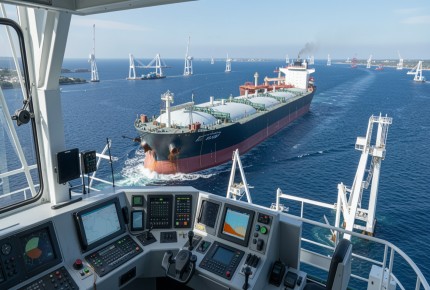
Five empty LNG carriers crossed on Monday, marking their return, which analysts refer to as an early indication of “tentative normalisation.” Additionally, flows of crude oil have increased. More than 13 million barrels of Iranian crude have left the Persian Gulf in the last five days, including at least four supertankers that carried at least 7 million barrels in total.
Meanwhile, other exporters are resuming activities, with tankers from Saudi Arabia, Iraq, Qatar, and the UAE navigating the strait again. Notable vessels include the Universal Glory, carrying two million barrels of Saudi crude to South Korea, and the Monte Urbasa, delivering one million barrels to India.
Previously, many ships remained in the Gulf with full loads during the conflict, taking advantage of the partial reopening to access international markets.
Traffic is still far below average despite the improvement. The 37–42 crossings on Monday amount to about one-third of normal peacetime levels. Analysts warn that the recovery is precarious and reliant on both the stability of the political accord and the state of security.
While vessel movements are rising, the long-term status of the Strait of Hormuz is uncertain. Iran's chief negotiator, Mohammad Bagher Ghalibaf, asserted that the strait “will never return to its pre-war conditions” and will be managed by Iran per international law. The administration of the waterway remains a key unresolved issue in ongoing negotiations expected to last for two months.
Furthermore, initial agreements on the implementation of the 14-point memorandum, including working groups on sanctions relief, nuclear issues, reconstruction, and economic development, have been reached through technical talks between the United States and Iran, mediated by Qatar and Pakistan.
In brief, Iran is now can produce and export crude oil since the United States has temporarily lifted some sanctions until August 21. The outcome of these negotiations and the changing regional security environment will determine the strait's future course, even though shipping activity is increasing.
Read more news: