
Subscribe to our newsletter
Copyright © 2026 lmitac.com All Rights Reserved. Contact - Terms and Conditions - Privacy Policy - Quality Policy - Vacancies - Sitemap
London Maritime Academy is a trade name for London Premier Group
version: 2.9.0
Subscribe to our newsletter
Posted On: 7/27/2026, 7:54:03 PM
Last Update: 7/27/2026, 7:54:03 PM
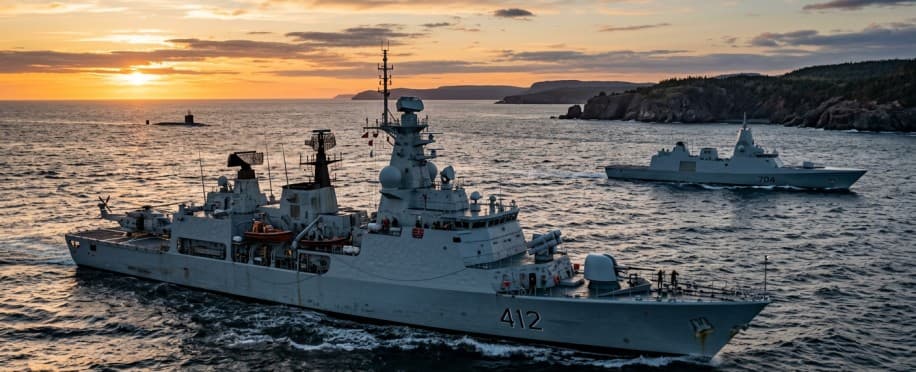
The Indian Navy currently operates about 150 ships and submarines, of which about 135 are counted as frontline combatants such as frigates, destroyers, and submarines, with nearly 50 more hulls under construction in Indian yards.
New Delhi has presented two commissionings within a fortnight as proof that the goal is now within reach. The Indian Navy is working toward a fleet of more than 200 ships by 2035.
On July 22, NS Malvan, the second Mahe-class Anti-Submarine Warfare Shallow Water Craft (ASW-SWC), was put into service in Karwar, Karnataka.
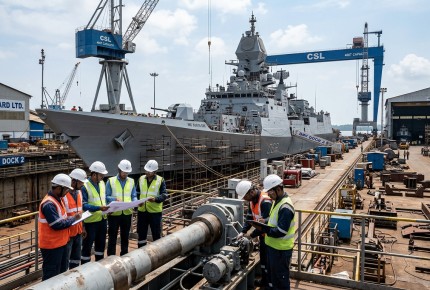
Constructed by Cochin Shipyard Limited using over 80% indigenous materials, the 78-metre vessel has a displacement of approximately 1,100 tonnes and is powered by three diesel engines that drive waterjets at a maximum speed of 25 knots.
According to the Ministry of Defence, the ship is outfitted with sensors from DRDO and Bharat Electronics Limited and lightweight torpedoes from DRDO and Bharat Dynamics Limited for use in underwater surveillance, anti-submarine warfare, low-intensity maritime operations, and mine laying.
Moreover, Malvan is the second of the eight vessels assigned to Cochin Shipyard under a Rs 13,000 crore project divided with Garden Reach Shipbuilders and Engineers, work on which started in 2019. Malvan is the sixth of 16 ASW-SWCs to go into service.
Recently, the Defence Minister commissioned INS Mahendragiri, the sixth Nilgiri-class stealth frigate, in Visakhapatnam, India. Designed by the Navy’s Warship Design Bureau and built by Mazagon Dock Shipbuilders Limited, it features over 75% indigenous content. The final ship of the class, Vindhyagiri, will be delivered soon, with more next-generation frigates under Project 17B planned for production.
The Chief of the Naval Staff reported that one indigenously built warship or submarine is entering service approximately every 40 days, with 12 warships and one submarine commissioned in 2025.
The Defence Acquisition Council has approved a pipeline for an additional 74 warships, totalling Rs 2.35 lakh crore, which includes 65 surface vessels and nine submarines. This plan also encompasses the long-awaited Project 75(I) for six air-independent propulsion submarines.
Meanwhile, the Pentagon's annual assessment of Chinese military power highlights a significant expansion of the People’s Liberation Army Navy, now boasting over 370 vessels, making it the largest fleet globally. This growth is increasingly observed in the Indian Ocean, where China has been enhancing its presence through port access, survey vessels, and submarine deployments.
On 30 April in Sanya, China, Pakistan commissioned the first of eight Chinese-built Hangor-class attack submarines, named PNS/M Hangor. Four submarines will be assembled in Wuchang Shipbuilding and four at Karachi Shipyard and Engineering Works under a technology-transfer arrangement.
Further, shallow-water hunters like Malvan provide the Indian Navy with a solution for coastal security, effectively screening ports, anchorages, and offshore infrastructure where deep-water frigates are less effective and conventional submarines can remain undetected.
In closing, India's conventional submarine fleet faces significant challenges in meeting future goals, with only six Scorpène submarines delivered compared to a target of 24 by 2030. The INS Tamal, received from Russia in July 2025, marks the last foreign vessel the Indian Navy plans to acquire, emphasising that all additional ships towards the 200-ship aim will be constructed domestically.
Maritime Online Courses examine naval architecture, marine engineering, and ocean engineering to construct ships and submarines. Fundamental concepts, including buoyancy, fluid physics, and structural strength, are covered in these subjects.