Subscribe to our newsletter
Copyright © 2026 lmitac.com All Rights Reserved. Contact - Terms and Conditions - Privacy Policy - Quality Policy - Vacancies - Sitemap
London Maritime Academy is a trade name for London Premier Group
version: 2.9.0
Subscribe to our newsletter
Posted On: 7/24/2026, 7:11:12 PM
Last Update: 7/24/2026, 7:11:12 PM
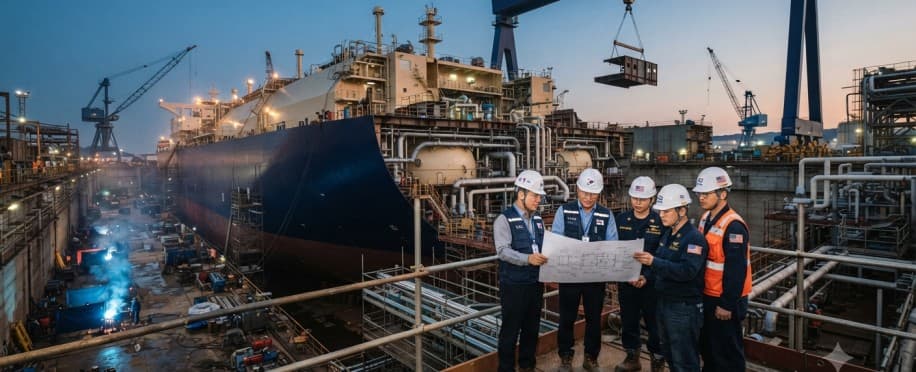
With the opening of the Korea–US Shipbuilding Partnership Centre (KUSPC) in Washington, South Korea and the US officially began a broad bilateral project to revitalise and modernise the US shipbuilding sector.
The centre will supervise South Korea's $150 billion investment package agreed upon during 2025 tariff discussions and acts as the operational hub of the “Make America Shipbuilding Great Again” (MASGA) programme.
Senior officials, parliamentarians, and industry executives from both countries attended the ceremony, highlighting the initiative's strategic importance.
“Korea strongly supports President (Donald) Trump's maritime action plan,” said South Korean Industry Minister Kim Jung Kwan, highlighting Seoul's willingness to collaborate closely with Washington. “We are ready to work side by side with the US.”
He promised that Korea would assist in the construction of naval ships and LNG carriers “here in America” and referred to the launch as “the beginning of a new chapter” for both nations' marine sectors. Kim called on the US to maintain orders, incentives, and regulatory assistance to guarantee quick advancement throughout the investment portfolio.
According to US Commerce Secretary Howard Lutnick, the initiative's success will be measured by the number of ships built in the US. “The centre is not an outcome. It is the most important work that produces the outcome of how many ships are built,” he said. “Talking is not a thing. America needs to produce ships... actually building ships in America.”
At the launch, South Korean and US corporations and universities signed 15 memorandums of understanding addressing supply chain collaboration, workforce development, joint technology research, and the formation of a unified “Team Korea.”
Under this framework, South Korea's major shipbuilders—HD Hyundai Heavy Industries, Hanwha Ocean, and Samsung Heavy Industries—will work with Korean research institutions and US partners to modernise American shipyards and strengthen the broader industrial ecosystem, including equipment and component manufacturing.
Moreover, Korea's Industry Ministry has committed 120 billion won ($82 million) over five years to bilateral shipbuilding research and development, highlighting the partnership's long-term nature.
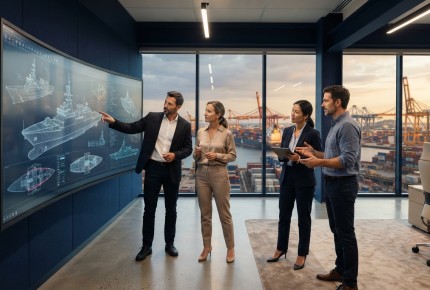
Several major agreements were disclosed in conjunction with the centre's debut. Hanwha Ocean has inked a professional services contract with US naval architectural company Leidos Gibbs & Cox to collaborate on the design of a strategic sealift vessel for the worldwide market. Additionally, it worked with the Greater Philadelphia Chamber of Commerce to increase regional participation in the shipbuilding supply chain.
Likewise, HD Korea Shipbuilding & Offshore Engineering has struck a deal with Siemens Industry Software to create and commercialise digital technologies for next-generation ship design and manufacture.
Samsung Heavy Industries received preliminary approval from the American Bureau of Shipping (ABS) for a 12,000 cubic meter LNG bunkering vessel developed in collaboration with Conrad Shipyard, as well as an agreement with Vigour Marine Group to establish a joint workforce training centre with virtual reality welding systems.
ABS joined the program through a separate Memorandum of Understanding (MOU) with the Korea Research Institute of Ships and Ocean Engineering (KRISO), the Korea Institute for Advancement of Technology (KIAT), and Texas A&M.
Remarkably, ABS Chairman and CEO John McDonald stressed the significance of connecting research, industry knowledge, and practical application, saying, “Innovation succeeds when research, industry insight, and practical application come together.” The agreement seeks to advance next-generation technology, strengthen bilateral R&D capabilities, and increase long-term competitiveness in both countries' maritime industries.
These activities reflect a holistic plan for rebuilding US shipbuilding capacity, deepening Korea-US industrial cooperation, and accelerating innovation across the global marine scene.
In essence, a new age of bilateral maritime partnership is about to begin as the KUSPC emerges as a major force in manpower development, industry modernisation, and technological advancement.
Maritime Engineering Courses examine the shipbuilding industry with an emphasis on fundamental topics such as supply chain logistics, steel manufacturing, and naval design. Important subjects include shipyard project management, marine systems, and structural engineering.