Subscribe to our newsletter
Copyright © 2026 lmitac.com All Rights Reserved. Contact - Terms and Conditions - Privacy Policy - Quality Policy - Vacancies - Sitemap
London Maritime Academy is a trade name for London Premier Group
version: 2.9.0
Subscribe to our newsletter
Posted On: 5/22/2026, 8:43:03 PM
Last Update: 5/22/2026, 8:43:03 PM
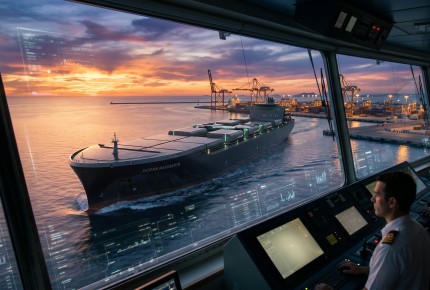
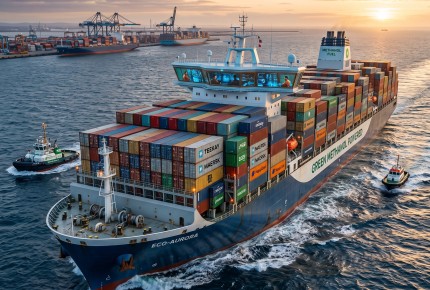
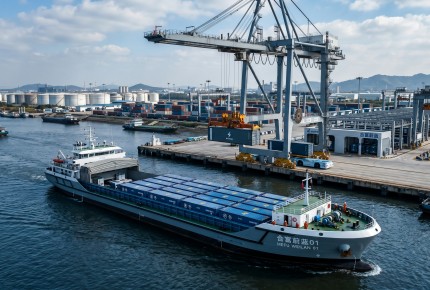
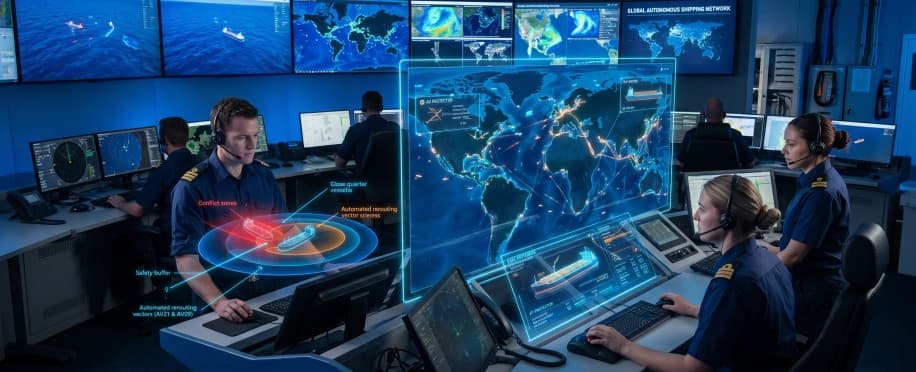
Building on years of discussion and meticulous research work, the IMO has taken a major step toward comprehensive regulation of unmanned shipping.
A final draft of the non-mandatory Maritime Autonomous Surface Ships code (MASS code), which codifies a set of safety requirements for unmanned vessels in international trade, was adopted by delegates at the most recent meeting of the Marine Safety Committee.
Although the code is currently simply a guideline, it is expected to become necessary as early as 2028 and provides an idea of what the operational requirements for autonomous shipping might eventually look like.
The IMO states that the code's goals are to control new technologies, uphold safety, and foster innovation. This is the first set of guidelines that apply worldwide to the development of autonomous ships, which are still in their infancy and include increased size and risk in comparison to autonomous boats.
Notably, a marked-up final draft from February makes clear the committee's goal; nevertheless, the MASS Code wording has not yet been released to the public.
As of the present, the regulations are mostly goal-based and lack the prescriptive clarity of a VDR installation or a SOLAS regulation on lifeboat construction.
The primary consideration when assessing autonomous shipping is safe navigation. The well-known COLREGS collision avoidance rules, which have human-focused recognition requirements for sounds, lights, forms, and vessel classes, are incorporated into the MASS code by reference.
Moreover, the MASS code establishes a situational awareness requirement that the ship's self-navigation system “continuously monitor all information necessary for safe navigation” in addition to the standard COLREGS lookout requirement.
Yet, the code does not include more precise requirements, such as the capacity to assess VHF hails and audible sounds, which the majority of autonomous navigation systems are currently unable to do.
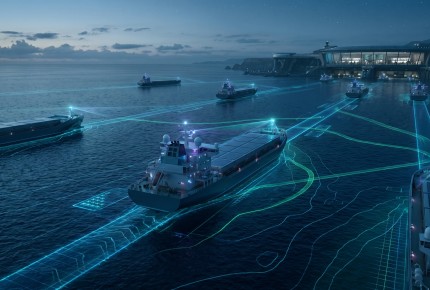
The regulations do specify a lengthy list of equipment needs that would be particular to unmanned ships and possibly technically difficult. Unmanned vessels would have to be built differently for emergency response and safety in the absence of personnel, including backup plans for “reasonably foreseeable degraded states.”
Further, this implies various requirements for “structure, subdivision, stability and watertight integrity; fire protection, fire detection and fire extinction; life-saving appliances and arrangements; security, search and rescue, cargo handling, towing and mooring; machinery installations, electrical installations and external support systems.”
As with existing equipment, several of these requirements may be difficult to meet and uphold in a hostile sea environment. Anchor windlasses must be able to raise and lower themselves, or remotely in an emergency, without the need for the crew to fan the windlass brake or remove the devil's claw.
Without a crew to manage hawsers and heaving lines in choppy waters, emergency tow procedures must be set up. For years to come, a large portion of the supplier R&D effort required to achieve the standards will continue.
Maritime Engineering Courses tackle autonomous ships (MASS – Maritime Autonomous Surface Ships), which necessitates a multidisciplinary approach that includes naval architecture, artificial intelligence, maritime law, and control systems. The primary goal is to learn how to construct, regulate, and operate crewless or remote-controlled vessels.
Read more news: