Subscribe to our newsletter
Copyright © 2026 lmitac.com All Rights Reserved. Contact - Terms and Conditions - Privacy Policy - Quality Policy - Vacancies - Sitemap
London Maritime Academy is a trade name for London Premier Group
version: 2.9.0
Subscribe to our newsletter
Posted On: 8/4/2026, 9:45:59 AM
Last Update: 8/4/2026, 9:45:59 AM
With the introduction of a sovereign-backed liability coverage designed to lessen the industry's reliance on foreign protection, India's maritime insurance architecture has undergone a significant change.
The new policy is intended to provide shipowners and trade participants with a domestic alternative for one of the most specialised and capital-intensive types of marine insurance. It was launched under the Bharat Maritime Insurance Pool (BMIP).
The Department of Financial Services launched a new Protection and Indemnity (P&I) insurance product by New India Assurance Company, which is part of the Bharat Maritime Insurance Pool (BMIP) to strengthen India's ability to underwrite maritime risks domestically.
During the launch, Financial Services Secretary Sanjay Lohia presented the first policy document to Shipping Corporation of India Ltd, marking its initial issuance. The event included senior officials from the maritime and insurance sectors, such as Director General of Shipping Shyam Jagannathan, Additional Secretary Debasish Prusty, and leaders from General Insurance Corporation of India, New India Assurance Company, and Shipping Corporation of India.
P&I insurance is essential in global shipping, covering third-party liabilities from maritime operations. The new coverage includes crew and cargo liability, pollution liability, and wreck removal, along with a 24x7 port correspondent network.
Additionally, a combined capacity supports an indemnity limit of up to $1.5 billion, enhancing domestic support for high-value maritime risks for Indian operators.
For a country reliant on maritime trade, the strategic significance of specialised liability coverage transcends a single policy sale. During global stress, shipping companies often face challenges in sourcing such coverage, making a sovereign-backed domestic pool essential for facilitating access and enhancing India's insurance underwriting capabilities.
BMIP's Affecting War-Risk Rate
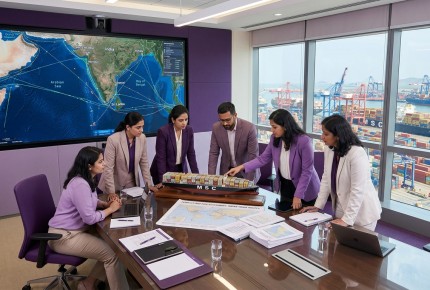
The pool, operational since May 12, 2026, with support from the Department of Financial Services, has gained strong market acceptance. Its main goal is to provide reliable war-risk insurance for Indian stakeholders in light of rising costs and uncertainties in marine coverage due to geopolitical tensions.
As reported by the finance ministry, war-risk premium rates under the Bharat Maritime Insurance Pool have decreased by approximately 35 to 40 per cent from their highs during the West Asia conflict. By July 20, 2026, the pool had issued 1,608 policies covering cargo and hull war risks.
Likewise, shipping relies on continuity, making a strong track record crucial. If war-risk capacity diminishes, it affects cargo movements, vessel operations, and trade financing. Early engagement indicates Indian insurers and shipping users are keen to utilise domestic frameworks for managing risk when pricing and capacity are reliable.
The government has introduced a new P&I product to enhance domestic insurance capabilities in a segment traditionally reliant on foreign markets. The finance ministry aims to bolster India's maritime risk management, improve the marine insurance ecosystem, and retain more value from maritime trade.
This initiative aligns with the Atmanirbhar Bharat policy, focusing on creating a system for local pricing, underwriting, and retention of specialised maritime risks.
Besides, India aims to enhance its shipping, ports, and trade logistics by developing financial infrastructure. This initiative may prompt public sector insurers and maritime institutions to engage more actively in managing complex liability risks, gradually decreasing Indian shipowners' dependence on foreign markets for coverage amid fluctuating global conditions.
The entry of P&I cover under the Bharat Maritime Insurance Pool signals India's intention to take on more maritime risk. This benefits the shipping ecosystem with a sovereign-backed domestic policy option and could also strengthen the insurance sector if the pool evolves into a robust platform for complex marine business.
Furthermore, India's recent launch enhances its resilience in critical trade-linked services against external shocks. If capacity expands and pricing remains competitive, it may serve as a key reference for managing niche insurance segments in the future.
Maritime Safety Courses in London focus on P&I insurance, which runs through non-profit mutual clubs within the International Group to cover third-party liabilities such as crew injury, cargo loss, pollution, and wreck disposal rather than physical vessel damage. Aside from liability coverage, it emphasises operational risk management, ship surveys, and localised claims handling.