
Subscribe to our newsletter
Copyright © 2026 lmitac.com All Rights Reserved. Contact - Terms and Conditions - Privacy Policy - Quality Policy - Vacancies - Sitemap
London Maritime Academy is a trade name for London Premier Group
version: 2.9.0
Subscribe to our newsletter
Posted On: 8/14/2026, 10:17:10 AM
Last Update: 8/14/2026, 10:17:10 AM
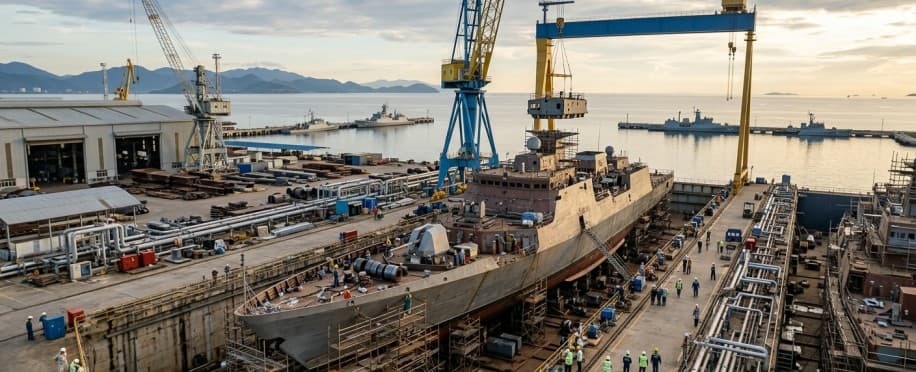
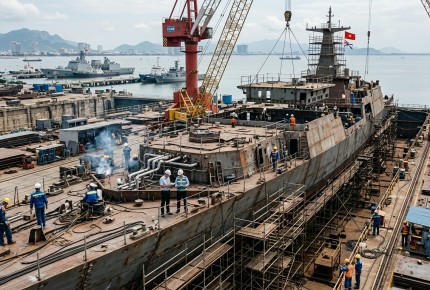
Vietnam has begun construction of what it claims to be its biggest and most sophisticated domestic warship, an anti-submarine frigate that will mostly use Vietnamese armaments and technology.
Notably, Sông Thu Corporation in Da Nang is building the multipurpose frigate, which should be finished in 36 months. Its purpose is to find and eliminate submarines.
The project is a component of Vietnam's initiative to develop its own defence sector and lessen its reliance on military hardware imports, the majority of which have historically come from Russia.
Vietnam is engaged in ongoing maritime conflicts in the South China Sea with China and other nations. Concurrently, the country is modernising its navy, including the acquisition of Gepard-class frigates and Kilo-class submarines from Russia.
According to Vietnamese officials, the ship is being planned and constructed with domestic technology and experience. They stated that Vietnam has produced the majority of the armaments and equipment that will be installed on board and has attained self-reliance in the ship's design and construction.
Likewise, the frigate will be equipped with an active electronically scanned array (AESA) radar, air-defence missiles, and advanced anti-ship missiles, developed by Viettel Military Industry and Telecoms Group and other factories under Vietnam's General Department of Defence Industry.
Viettel and defence research organisations will collaborate with the navy and Sông Thu during the construction process, focusing on the development, manufacturing, and installation of weapons and technical systems.
On Monday, a steel-cutting ceremony in Da Nang signalled the formal commencement of construction, organised by Sông Thu Corporation and the Vietnam People’s Navy.
Senior Lieutenant General Phạm Hoài Nam, Vietnam’s deputy minister of national defence, emphasised that the project is crucial for the nation’s defence industry and military shipbuilding, enabling Vietnam to enhance key technologies and its capabilities in weapon and military equipment development.
Nam highlighted a resolution from Vietnam’s 14th Party Central Committee regarding the development of the nation as a strong maritime power. He stressed the necessity of a capable navy to protect Vietnam's sovereignty over its seas and islands, as well as to safeguard national interests at sea.
Vietnam's defence industry policy highlights self-reliance, resilience, dual-use capabilities, and modernisation. Notably, the navy has enhanced its domestic shipbuilding capacity, which includes the construction of missile boats and patrol vessels.
Besides, Vietnam's defence industry policy underlined self-reliance, resilience, dual-use capabilities, and modernisation. Remarkably, the navy has enhanced its domestic shipbuilding capacity, which includes the construction of missile boats and patrol vessels.
The new frigate, Vietnam's largest domestically built warship, is the latest project in this ongoing effort, as stated by Vietnamese authorities.
The Vietnam People’s Navy will oversee the shipbuilding process, including design, manufacturing, system integration, testing, acceptance, and handover. Defence authorities are tasked with enhancing inspections and supervision to promptly address any issues that could impact construction.
Furthermore, Sông Thu is instructed to optimise resources, enhance production methods, foster technological advancement, and expedite digital transformation in construction. Compliance with technical procedures and safety standards is also essential to ensure the vessel meets both technical and aesthetic criteria.
Viettel and other organisations involved in the development and installation of the ship's weapons and systems must ensure their work aligns with the shipbuilding schedule.
At last, the third Vietnam International Defence Expo will take place in Hanoi, Vietnam, in December. This event demonstrates the nation's efforts to diversify its suppliers of military equipment and increase local defence manufacture.
The Maritime Training Academy covers anti-submarine warfare (ASW) in a variety of technical and tactical areas, with a concentration on underwater acoustics, sonar systems, tactical coordination, and weapon delivery systems. Because naval combat relies heavily on stealth and hidden signatures, mastery of ASW is critical.