
Subscribe to our newsletter
Copyright © 2026 lmitac.com All Rights Reserved. Contact - Terms and Conditions - Privacy Policy - Quality Policy - Vacancies - Sitemap
London Maritime Academy is a trade name for London Premier Group
version: 2.9.0
Subscribe to our newsletter
Posted On: 8/10/2026, 2:07:32 PM
Last Update: 8/10/2026, 2:07:32 PM
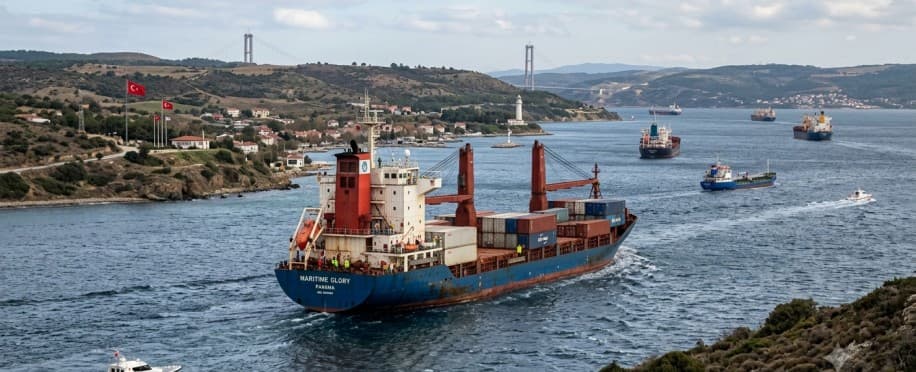
Turkey is limiting commercial ship traffic into the Black Sea due to increasing concerns from the government over a rise in Russian and Ukrainian attacks on vessels in the region.
The Directorate General of Coastal Safety has notified several ships bound for Russia's Novorossiysk, a critical oil and grain export hub, that it is not currently giving transit permits for these voyages and requires further time to assess applications via the Dardanelles Strait.
Authorities have not provided reasons for the decision, which restricts vessel traffic into the Black Sea amid increased attacks on commercial shipping, notably affecting Turkish-owned vessels, prompting Ankara to demand enhanced security.
The Directorate General of Coastal Safety enquired with the Transport and Infrastructure Ministry in Ankara but received no response to requests outside business hours.
Recently, the Foreign Ministry reported that crew members, including Turkish citizens, were injured in drone attacks on two Turkish-owned vessels.
Last Tuesday, the Foreign Ministry issued a statement urging all relevant stakeholders, particularly the warring parties, to take immediate and concrete actions to guarantee navigational safety in the Black Sea.
Moreover, the statement emphasised that any escalation of the situation could lead to "multifaceted negative consequences," notably affecting food security. According to anonymous sources, some vessels have been informed that the restriction extends to ships heading to Ukraine.
The ISPS Code Course in London concentrates primarily on maritime security threats, vulnerability assessments, security levels, and protective measures for ships and port infrastructure, rather than traffic analysis or vessel routing management.
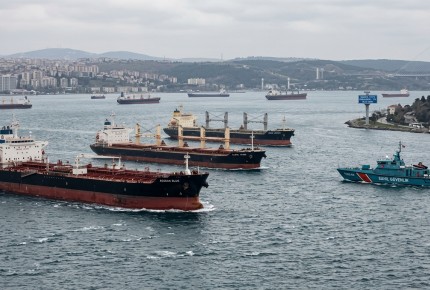
The ongoing conflict poses new challenges for global trade, notably affecting oil supply disruptions due to the war in Iran and decreased volumes through the Strait of Hormuz.
Additionally, escalating Russian and Ukrainian attacks have raised concerns about grain supplies from the Black Sea region, contributing to wheat prices reaching a two-year high in July.
As of 1 p.m. local time on Saturday, vessels heading to Bulgarian or Turkish ports were still navigating north through the Dardanelles, according to Bloomberg's ship-tracking data.
Despite concerns over recent attacks on vessels in the Black Sea, Turkish officials affirm that transit through the Turkish straits is unaffected by the Montreux Convention.
This follows claims that permits for ships heading to Russian and Ukrainian ports were temporarily suspended due to security issues, including those concerning Turkish vessels.
Traffic has resumed, with commercial ships like the Aegean Dream and Mehmet Kahveci A moving through the Dardanelles Strait to Russian terminals after unexplained delays.
Furthermore, Turkish Foreign Minister Hakan Fidan urged Moscow and Kyiv to implement a moratorium on Black Sea attacks, highlighting the dangers to commercial shipping and regional safety. Türkiye has presented security measures to President Erdoğan and sent a proposed moratorium mechanism from Ukraine to Russia.
Eventually, Turkey hopes to preserve diplomatic relations with both nations while upholding the 1936 Montreux Convention and preventing drone and missile attacks on vital maritime commerce routes.


