Subscribe to our newsletter
Copyright © 2026 lmitac.com All Rights Reserved. Contact - Terms and Conditions - Privacy Policy - Quality Policy - Vacancies - Sitemap
London Maritime Academy is a trade name for London Premier Group
version: 2.9.0
Subscribe to our newsletter
Posted On: 8/27/2026, 1:24:18 PM
Last Update: 8/27/2026, 1:24:18 PM
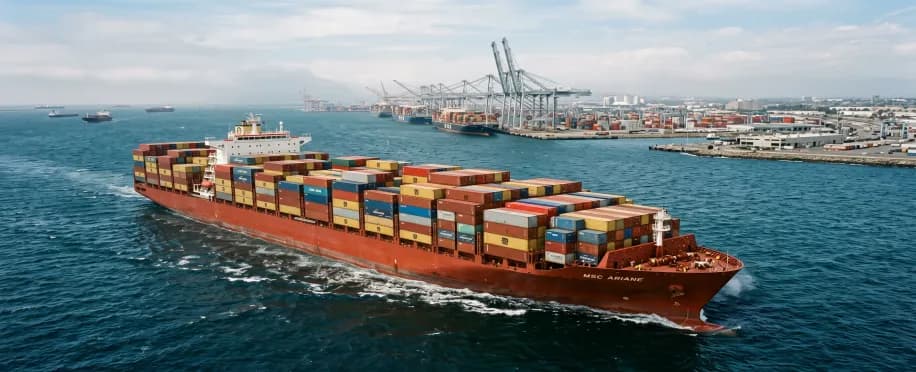
According to Drewry, tighter capacity and strong demand drove Transpacific prices considerably higher, resulting in a second consecutive week of higher global container spot rates.
This week, the Drewry World Container Index rose 4% to $4,526 per 40-foot container (€3,860), with advances on routes from Asia to the US balancing lower rates on routes between Asia and Europe.
Shanghai-New York spot rates increased by 9% to $9,507 per 40-foot container, while Shanghai-Los Angeles spot rates increased by 9% to $6,802.
Transpacific demand remains resilient according to Drewry, as carriers manage supply through blank sailings and capacity reductions. Next week, seven blank sailings have been announced.
In August, capacity from Asia to the U.S. East Coast decreased by 9% month over month, while capacity to the U.S. West Coast saw a slight decline of 0.4%, further tightening the availability of space.
The combination of factors has enabled carriers to sustain upward pressure on rates, even amidst the ongoing peak shipping season. Drewry predicts that Transpacific rates will stabilise next week, primarily due to constrained capacity.
However, additional costs are anticipated for cargo heading to the East and Gulf coasts, as several carriers have introduced Panama Canal surcharges for services between Asia and the U.S. East and Gulf Coasts starting in September, potentially exacerbating shipping costs.
The Asia-Europe trade showed a slight easing this week, with Shanghai-Genoa spot rates declining by 2% to $4,955 for a 40-foot container. Similarly, Shanghai-Rotterdam rates decreased by 1%, settling at $4,401.
Meanwhile, carriers are reducing capacity on the trade, with two blank sailings planned for next week. Although port congestion has eased, it remains elevated, with average vessel waiting times of 32.3 hours in Shanghai and 25 hours in Rotterdam during week 33. Drewry anticipates that Asia-Europe freight rates will stay broadly stable next week.
The East-West container market is currently affected by geopolitical and operational uncertainties. The expiration of the U.S.-Iran memorandum regarding the Strait of Hormuz has left the situation unresolved, despite some container carriers resuming specific transits through the Red Sea and Suez Canal due to better security assessments.
Furthermore, congestion at key Asian and European ports, coupled with labour disruptions in Germany, is adversely affecting schedule reliability for shipments.
In response, carriers are employing capacity management strategies and implementing surcharges to help maintain pricing stability. Drewry recommends that shippers make early bookings and add extra lead time to their supply chains to mitigate the risks of cargo rollovers and transit delays.
Shipping Courses in Dubai emphasise transpacific container logistics between Asian producers and North American ports. The research highlights spot rate standards and carrier initiatives, such as blank sailings. Intermodal transitions and port productivity are critical components, but tariff changes and bottlenecks cause freight rate volatility and transit delays.