Subscribe to our newsletter
Copyright © 2026 lmitac.com All Rights Reserved. Contact - Terms and Conditions - Privacy Policy - Quality Policy - Vacancies - Sitemap
London Maritime Academy is a trade name for London Premier Group
version: 2.9.0
Subscribe to our newsletter
Posted On: 5/13/2026, 4:50:07 PM
Last Update: 5/13/2026, 4:50:07 PM
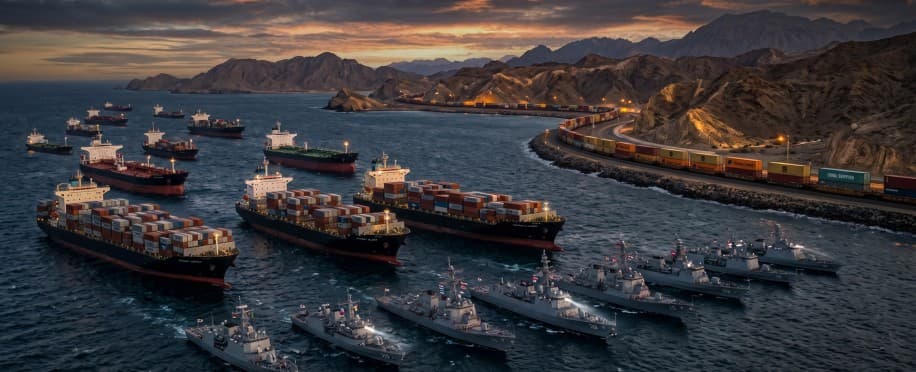
Due to the 2026 Strait of Hormuz Crisis and the implementation of a United States naval blockade on Iranian ports, China-Iran's overland rail project has become a lifeline for trade.
Tehran has turned to the rail system, which has offered some respite, since shipping oil and other goods by water has become nearly impossible.
Experts estimate that the China-Iran economic corridor crosses more than 10,000 km throughout Eurasia.
Through Kazakhstan and Turkmenistan, the railways link Tehran with Chinese manufacturing hubs such as Xi'an and Yiwu.
Compared to water-borne trade, which can take nearly a month, trains loaded with electronics, machinery, and industrial items can now complete a journey in just 12 to 15 days.
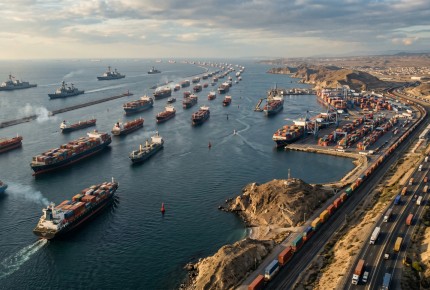
However, railroads can hold about 50 containers or a little more, whereas mega-max container ships can transport about 20,000 containers in a single voyage.
Currently, there are two trains per week, with intentions to raise that number as the project progresses, with additional extensions anticipated for the foreseeable future.
The SWIFT system, which Iran was prohibited from using in 2012 due to US sanctions, is no longer required because the payment for the items is made in Yuan.
Now, Tehran has begun shipping bitumen and petrochemicals straight to China via train.
This is a significant development because Beijing and Tehran are expanding economic ties and establishing the groundwork for a trading network that will minimise their reliance on Western-controlled maritime chokepoints.
After President Trump initiated Operation Project Freedom in May 2026 to combat the Iranian blockade of the Hormuz Strait, the rail network accelerated.
The rail link has emerged as Iran's main economic conduit, with insurance prices for Gulf shipping surging by nearly 600% and the Strait being blocked to most commercial traffic.
A more ambitious Five Nations Railway Corridor (FNRC) involving China, Kyrgyzstan, Tajikistan, Afghanistan, and Iran is being considered in addition to the current line.
In addition to avoiding US naval warships, the project seeks to lessen reliance on Russian-controlled northern channels by establishing a well-connected overland commercial network.
In order to meet the pressing need for inland connectivity, a feasibility study for the Afghan sections was expedited and completed in March 2026.
Maritime Online Courses explore emerging trade routes that depend on integrated infrastructure, scalable cargo demand, and the avoidance of key chokepoints. Successful implementation requires managing geopolitical risks, enhancing supply-chain resilience, and harmonising regulations, with sustainability and balanced investment crucial for long-term viability.
Read more news: