
Posted On: 11/13/2026, 11:16:50 AM
Last Update: 11/13/2026, 11:16:50 AM
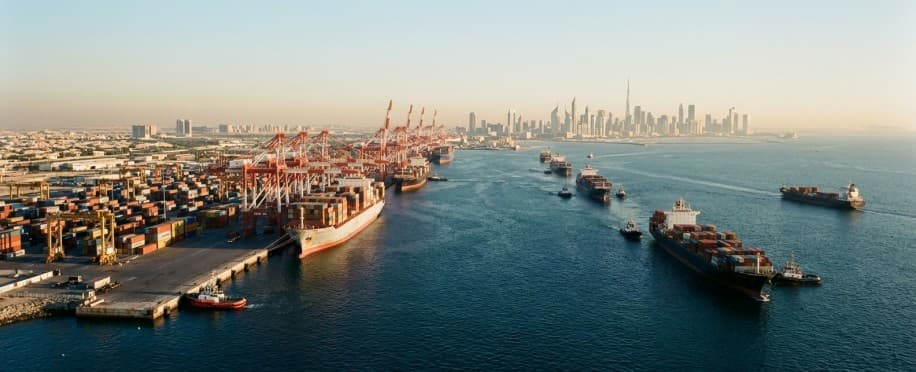
Dubai has maintained its status as the premier maritime city in the Middle East and has been ranked 12th globally in the 2026 Leading Maritime Cities (LMC) report by DNV and Menon Economics, while Abu Dhabi has made its debut appearance in the top 15 worldwide.
This ranking reinforces the emirate's status as a leading maritime hub, achieved despite a challenging year for regional shipping marked by trade route disruptions affecting Middle Eastern supply chains.
Considering this, an integrated network of bonded corridors, road and rail connections, and free zones, as well as strong industry-government collaboration, allowed Dubai's maritime sector and Jebel Ali Port to continue operating and enable cargo transportation.
Published by DNV and Menon Economics, the report benchmarks 50 maritime cities globally, chosen from over 15,000, across five key pillars: shipping centres, maritime finance and law, maritime technology, ports and logistics, and attractiveness and competitiveness.
Also, it merges objective data with insights from 208 senior maritime industry experts worldwide. This year, a new maritime resilience assessment ranked Dubai fifth globally, positioning it alongside top maritime centres such as Singapore, Rotterdam, Shanghai, and London. The report highlights Dubai's advanced infrastructure, strategic location, and diverse maritime business ecosystem, stressing that the ability to coordinate, recover, and redirect activities is increasingly vital for a maritime city's competitiveness.
Notably, Chairman of the Ports, Customs and Free Zone Corporation (PCFC), Abdulla bin Damithan, emphasised Dubai's status as the premier maritime city in the Middle East, highlighting the leadership's vision and dedication to enhancing the maritime sector. He noted that industry experts now rank Dubai among the top global locations for establishing maritime headquarters.
This acknowledgement, particularly during challenging regional shipping conditions, underscores international maritime companies' ongoing trust in Dubai as their operational base. Damithan reaffirmed the commitment to bolstering these foundations, ensuring that Dubai effectively supports businesses and facilitates global trade in all circumstances.
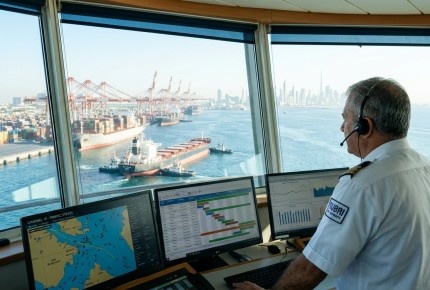
CEO and Managing Director of DP World GCC, Ahmad Yousef Al-Hassan, pointed out the adaptability of a maritime hub amid changing circumstances, particularly during a challenging year for regional trade. DP World successfully maintained trade flow in Dubai by transporting nearly 1 million TEUs through newly established routes and a robust multimodal network.
He added that the company is now enhancing its capabilities by investing in additional terminal capacity in Fujairah and reinforcing its regional network, thereby increasing options and connectivity for customers accessing Dubai.
Dubai has made significant strides in the Attractiveness and Competitiveness pillar, moving from 15th to 6th place—representing the largest improvement among the top 15 cities in both the 2024 and 2026 assessments. The city jointly leads the entrepreneurship indicator with Abu Dhabi and ranks second globally for human capital, as well as fourth for world competitiveness.
Additionally, Dubai is recognised as the second most attractive city worldwide for relocating maritime headquarters, thanks to its strategic location and international connectivity.
Overall, Dubai is projected to rank third among cities leading the global maritime sector in the next five years, surpassing Rotterdam and London. This forecast was presented in the 2026 Leading Maritime Cities report during the Seatrade Maritime UAE Summit, which focused on the UAE's role in global maritime leadership and featured prominent leaders from the shipping and logistics industry.
Maritime Shipping Training Courses in Dubai discusses the 2026 Leading Maritime Cities Report, which assesses 50 global maritime hubs based on 48 indicators, highlighting decarbonisation, alternative fuels, and artificial intelligence. Singapore remains first, Shanghai rises to second, and Tokyo enters the top five, reflecting the growth of Asian and Middle Eastern maritime centres.


