
Subscribe to our newsletter
Copyright © 2026 lmitac.com All Rights Reserved. Contact - Terms and Conditions - Privacy Policy - Quality Policy - Vacancies - Sitemap
London Maritime Academy is a trade name for London Premier Group
version: 2.9.0
Subscribe to our newsletter
Posted On: 10/6/2026, 10:41:34 AM
Last Update: 10/6/2026, 10:41:34 AM
sShipping data from Kpler and Vortexa revealed on Monday that Middle East oil exports in September surpassed pre-war levels as Gulf producers increased cargoes despite attacks on ships traversing the Strait of Hormuz.
Marisks, a shipping intelligence organisation, stated on Saturday that merchant ships passing through the crucial chokepoint face a “heightened and increasingly unpredictable kinetic threat” due to the recent sharp spike in traffic.
The seven-day moving average for crude exports was 18.3 million bpd as of September 30, with cargoes exceeding pre-war levels on 14 days in September, including transits through Hormuz and the Red Sea, as well as exports from terminals.
Before September, oil shipments from the region occasionally matched or surpassed pre-war levels, particularly on a few days in June and July, according to Kpler data. This increase followed a memorandum of understanding between Washington and Tehran, which has since expired.
In the year preceding the US-Israeli conflict with Iran, the region's crude oil exports averaged approximately 18 million barrels per day (bpd). This increase was primarily attributed to Saudi Arabia's loading operations from the Red Sea and the Gulf, following an attack on its East-West pipeline on September 10.
Moreover, Baghdad has obtained Iranian permission for Iraqi oil tankers to pass through the Strait of Hormuz, allowing Iraq's state-owned Oil Tanker Company and several refiners to charter tankers for loading Basrah crude.
Vortexa reported that the 14-day moving average for Middle East crude and condensate exports reached 18.6 million bpd, surpassing the 10-year seasonal average and returning to pre-conflict levels.
According to senior market analyst Xavier Tang, September's month-over-month oil supply increase is primarily attributed to Saudi Arabia, which is boosting exports to reclaim market share from other Middle Eastern nations. This rise in supply is expected to ease tightness in the oil market, particularly benefiting Asian refiners.
In September, liquefied natural gas (LNG) cargoes departing from the Strait of Hormuz experienced an increase, reaching levels not seen since February.

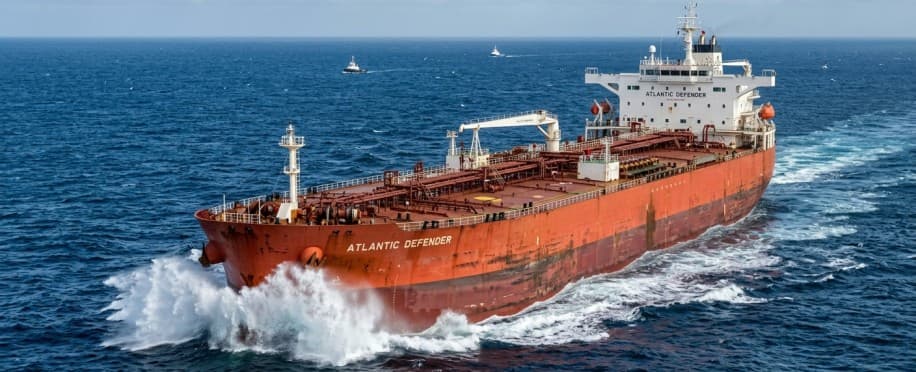
Attacks on tankers persisted, with Marisks reporting at least seven incidents in the last week. Notably, the very large crude carrier (VLCC) Kazimah III was hit by an unidentified projectile on October 1 while transiting the strait, resulting in a fire onboard. The vessel's owner, Kuwait Oil Tanker Company, has not yet commented on the situation.
On October 4, the Liberian-flagged Aframax tanker Lipsi was reportedly hit by an unknown projectile while navigating approximately 3.9 nautical miles northeast of Jazirat Um Al Fayarin, Oman, in the Strait of Hormuz.
The incident caused damage to its engine room, according to Marisks. Dynacom, the manager of the vessel, has not yet provided a response to inquiries regarding the event.
Notably, the crews of both tankers are safe, with no casualties reported, according to Marisks. The UK Maritime Trade Operations agency has noted at least one attack daily in the Strait of Hormuz or the Gulf of Aden since October 2.
Further, the recent incidents appear not to involve deliberate targeting of specific merchant vessels. Instead, intelligence suggests that Iranian forces may be launching missiles into a designated area, referred to as a 'kill box,' where the weapons could be acquiring and locking onto radar signatures present in that region.
Before the Iran war on February 28, the strait managed around 125 large commercial vessels daily, comprising tankers, gas carriers, bulkers, and container ships, representing approximately 20% of global crude and LNG supply.
Maritime Professional Courses cover the formation and classification of crude oil based on API gravity and sulfur content. The upstream extraction and refining processes convert raw crude into fuels and petrochemicals, with market pricing influenced by global supply, geopolitical factors, and benchmarks such as Brent and WTI.