
Subscribe to our newsletter
Copyright © 2026 lmitac.com All Rights Reserved. Contact - Terms and Conditions - Privacy Policy - Quality Policy - Vacancies - Sitemap
London Maritime Academy is a trade name for London Premier Group
version: 2.9.0
Subscribe to our newsletter
Posted On: 6/2/2026, 6:44:26 PM
Last Update: 6/2/2026, 6:44:26 PM
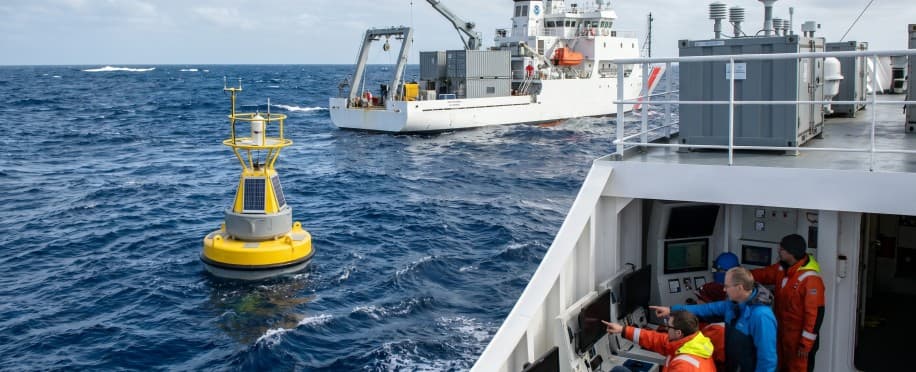
The National Science Foundation (NSF) is removing 900 ocean data collection buoys that cost more than $370 million to build, bringing Project 2025's aims one step closer to completion.
If the buoys had remained in situ, they would have continued to supply climate-related data to scientists for another 15 years, which the NSF's proposal will avoid, saving taxpayers approximately $50 million per year.
However, it will undo decades of efforts by American oceanographers, technicians, and professional mariners who established and maintained the network.
According to the Ocean Observatories Initiative (OOI), the first to go is the Coastal Endurance Array off the Pacific Northwest, where removal activities are already underway.
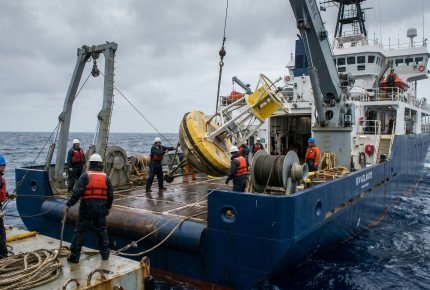
Instead of leaving the buoys and undersea landers, the NSF will schedule ship days to physically remove OOI equipment from remote regions around the world, including the North Pacific, Greenland, and the Southern Ocean, according to the New York Times.
Remarkably, Jim Edson, head scientist for the NSF Ocean Observatories Initiative, stated that over a decade, the OOI has provided advanced ocean observing systems benefiting science, engineering, education, and workforce development in ocean sciences.
He expressed gratitude to the scientists, engineers, operators, educators, students, and partners who contributed to the facility and continue to enhance its legacy through data usage.
Maritime Professional Training Courses cover ocean research equipment, including buoys, landers, and autonomous vehicles that measure temperature, salinity, currents, and chemistry; deployment systems that anchor and power arrays in harsh environments; and data pipelines that transmit, process, and validate measurements for climate models and forecasting.
 Project 2025 Reduces Climate-Ocean Monitoring
The initiative to stop collecting climate-related ocean data aligns with Project 2025's "Mandate for Leadership," which serves as a transition guide for the current administration.
In 2024, project authors indicated that the National Oceanic and Atmospheric Administration (NOAA), a key user of OOI ocean data and a supporter of the Woods Hole Institute, was a significant contributor to NOAA’s climate alarmism, claiming that much of its climate-change research should be disbanded.
Besides, this vision was partially realised in the administration's first year, where NOAA laid off about 20% of its workforce, primarily at OAR. The initial budget proposed by Russell Vought aimed to eliminate OAR as a line office, terminating its cooperation agreements with 80 universities and reallocating its functions. However, Congress rejected this proposal, allocating $630 million to OAR for FY2026.
According to the NSF, the descoping plan involves a phased recovery and removal of in-water infrastructure from the Endurance, Pioneer, Irminger Sea, and Station Papa Arrays over the next 15 months.
Eventually, recovery operations at the Endurance Array are underway, with final operations scheduled for June 2026, while the Pioneer Array is expected to be recovered by June 2027, depending on ship availability and operational factors.
Scientists utilised data from observatories to examine ocean carbon dioxide absorption, monitor ocean circulation changes, track marine heat waves affecting fisheries, and assess coastal flooding risks on the East Coast.
Read more news: