
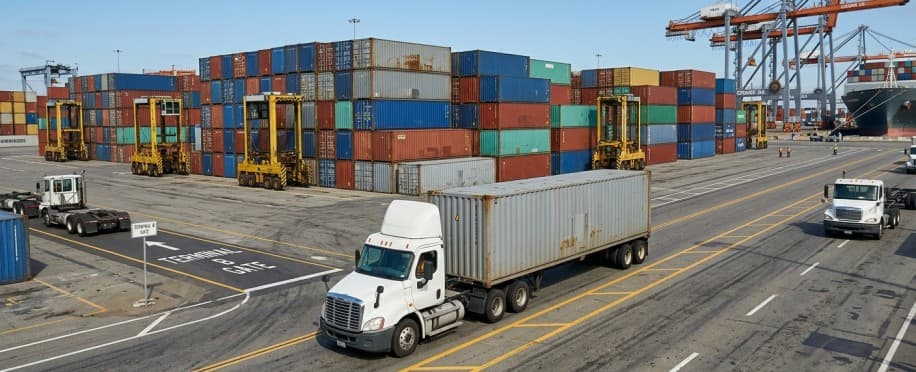
Container yard planning is essential for reducing port congestion and maintaining smooth terminal operations. By strategically managing storage space, container dwell times, equipment access, and stacking arrangements, terminals can minimize unnecessary moves, improve turnaround times, and boost overall supply chain efficiency.
Container terminals handle thousands of containers moving between vessels, storage yards, trucks, rail services, and inland logistics networks. As container volumes increase, the efficient use of yard space becomes essential for maintaining smooth terminal operations. Poorly organised storage can lead to unnecessary container moves, equipment congestion, longer truck waiting times, and delays across the supply chain.
Container yard planning provides a structured approach to organising storage areas, equipment, container movements, and operational resources. By combining accurate information, efficient layouts, appropriate storage strategies, and effective planning processes, terminals can improve yard utilisation and reduce operational bottlenecks.
Container yard planning is the process of organising and managing the space, resources, and activities within a container terminal's storage yard. It involves determining where containers should be placed, how long they are expected to remain in the yard, how equipment will access them, and how containers can be moved efficiently between different areas.
A container yard must accommodate different types of cargo, including import containers, export containers, transshipment containers, empty containers, refrigerated units, and special cargo. Each category may have different storage and handling requirements.
Effective planning therefore requires terminals to consider container characteristics, vessel schedules, expected arrivals and departures, available yard capacity, equipment availability, and transport requirements.
Yard space is a limited resource. When containers are not positioned efficiently, equipment may need to perform additional movements to access the required units. These unnecessary moves consume time and equipment capacity while increasing operational costs.
Strong container yard management helps terminals make better use of available space and reduce avoidable handling activities. It can also improve the coordination between the yard, quay, gate, and other operational areas.
Efficient planning becomes particularly important during periods of high container volumes. If yard occupancy becomes too high, the terminal may have less flexibility to accommodate incoming containers and respond to changing vessel schedules.
Several factors influence how a terminal should organise its container yard.
Containers are not all handled in the same way. Standard dry containers may have different requirements from refrigerated containers, hazardous cargo, empty containers, or oversized units.
Yard planners need to allocate appropriate areas for each category while ensuring that containers remain accessible to the equipment and transport services responsible for moving them.
The length of time a container remains in the terminal can have a significant effect on yard capacity. Containers with long dwell times occupy valuable space for extended periods and can contribute to higher yard occupancy.
Managing container dwell time can therefore support better yard utilisation and help terminals maintain sufficient capacity for incoming cargo.
Yard planning must also consider vessel arrival and departure schedules. Export containers need to be positioned so they can be efficiently transferred to the appropriate vessel, while import containers need to be accessible for collection.
Changes in vessel schedules can require planners to adjust storage strategies and equipment allocation quickly.
Container yards depend on equipment such as rubber-tyred gantry cranes, rail-mounted gantry cranes, reach stackers, terminal tractors, and other handling systems.
The location of containers should take equipment capabilities and availability into account. Poor coordination can result in equipment travelling longer distances or waiting for access to specific containers.
Container stacking is a key factor in container yard planning, directly affecting storage capacity, cargo accessibility, operational efficiency, and safety. Containers should be arranged in designated blocks according to their size, type, weight, destination, import or export status, and expected collection or loading sequence. Stack height and density must consider the capabilities of yard-handling equipment, ground-bearing capacity, wind conditions, and terminal safety requirements.
Effective stacking plans minimise unnecessary container rehandling, reduce equipment travel distances, prevent congestion, and improve truck turnaround times. Adequate access lanes, safe separation distances, and dedicated areas for refrigerated containers, dangerous goods, and special cargo must also be provided. Well-organised container stacks maximise yard utilisation while ensuring safe, efficient, and reliable cargo operations.
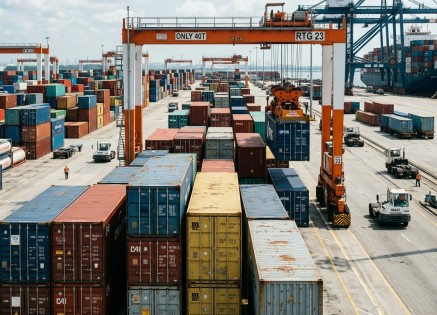
Terminal yard optimisation involves using available space and resources as efficiently as possible while maintaining operational flexibility.
Grouping containers according to their destination, vessel, cargo type, expected departure time, or other relevant characteristics can make retrieval and movement more efficient.
However, excessive grouping can also reduce flexibility if demand changes. Yard planners therefore need to balance accessibility with efficient space utilisation.
High yard density can increase storage capacity, but excessive density may make containers more difficult to access. This can lead to additional re-handling movements and equipment congestion.
Effective planning seeks an appropriate balance between maximising available space and maintaining efficient container accessibility.
A rehandle occurs when a container must be moved temporarily to access another container. Frequent rehandles increase equipment movements and consume valuable operational time.
Better container positioning and accurate information about expected pickup or loading sequences can help reduce these unnecessary movements.
Yard operations are closely connected to truck arrivals and departures. If trucks arrive when containers are difficult to retrieve, waiting times can increase and congestion can spread to terminal gates.
Coordinating yard availability with truck appointments, container readiness, and collection schedules can help create a smoother flow between the yard and landside operations.
Reduce port congestion strategies often need to address problems inside the terminal as well as external traffic and vessel-related constraints.
When yard operations become inefficient, delays can affect trucks, cranes, vessels, and cargo owners. Containers may remain in the terminal for longer periods, increasing occupancy and reducing available capacity.
Understanding the relationship between terminal operations and wider supply-chain disruption is important because port congestion can create consequences that extend well beyond the terminal itself.
By improving yard organisation, terminals can increase the speed at which containers move through the facility and reduce pressure on limited storage areas.
Technology has become increasingly important in modern container yard management. Terminal operating systems can provide information about container locations, vessel schedules, equipment movements, gate transactions, and yard capacity.
Automated equipment and real-time tracking technologies can further improve visibility and support more accurate planning. Data can help planners identify high-density areas, monitor container dwell times, predict demand, and adjust storage strategies.
Digital tools can also support communication between different operational teams, reducing information gaps that may otherwise contribute to delays.
Despite careful planning, terminals can face several challenges that affect yard performance.
When storage areas approach maximum capacity, operational flexibility decreases. Containers may need to be stored in less convenient locations, while equipment may have to travel further to retrieve them.
Changes in vessel schedules, customs clearance, trucking activity, or cargo availability can make it difficult to predict exactly when containers will enter or leave the yard.
When multiple operations require the same handling equipment or access routes, equipment waiting times can increase. Effective resource planning is therefore essential.
Empty containers can occupy valuable yard space even though they do not generate the same cargo-handling activity as full containers. Efficient empty container management can help terminals use storage capacity more effectively.
Weather events, equipment failures, labour constraints, vessel delays, and other unexpected events can quickly affect yard operations. Terminals need contingency plans that allow them to respond without creating further congestion.
A practical approach to container yard planning should combine operational discipline with accurate information and continuous monitoring.
Terminals can begin by establishing clear yard zones based on cargo characteristics and operational requirements. They can then use reliable data to monitor occupancy, dwell times, container movements, and equipment utilisation.
Regular performance reviews can help identify recurring bottlenecks and areas where storage or handling strategies need adjustment.
It is also important to integrate yard planning with wider terminal processes. Quay operations, gate activities, vessel schedules, equipment allocation, and landside transportation all influence yard performance.
Professionals responsible for these activities can strengthen their operational knowledge through Container Terminal Operations and Management training, particularly in areas such as terminal processes, equipment coordination, yard management, and operational efficiency.
Effective container yard planning is not simply about fitting more containers into a limited area. It is about creating a storage and movement strategy that supports reliable cargo flows while making efficient use of space, equipment, and labour.
When yard planning is integrated with terminal operating processes, terminals can reduce unnecessary movements, improve container accessibility, manage capacity more effectively, and respond more efficiently to changes in cargo demand.
The approach also needs to remain flexible. As vessel sizes, cargo volumes, automation technologies, and supply-chain requirements change, terminals may need to adapt their yard strategies and operational processes.
Container yard planning plays an important role in helping terminals manage limited storage capacity while maintaining efficient cargo flows. By considering container type, dwell time, vessel schedules, equipment availability, yard density, and gate activity, terminals can improve the way containers are stored and moved.
Effective container yard management can reduce unnecessary rehandles, improve equipment utilisation, support smoother truck operations, and reduce the risk of congestion. Technology and real-time data can further strengthen planning by providing better visibility into container locations, capacity, and operational activity.
As container terminals continue to face changing cargo volumes and increasingly complex logistics requirements, structured yard planning will remain an important part of efficient and resilient terminal operations.