Subscribe to our newsletter
Copyright © 2026 lmitac.com All Rights Reserved. Contact - Terms and Conditions - Privacy Policy - Quality Policy - Vacancies - Sitemap
London Maritime Academy is a trade name for London Premier Group
version: 2.9.0
Subscribe to our newsletter
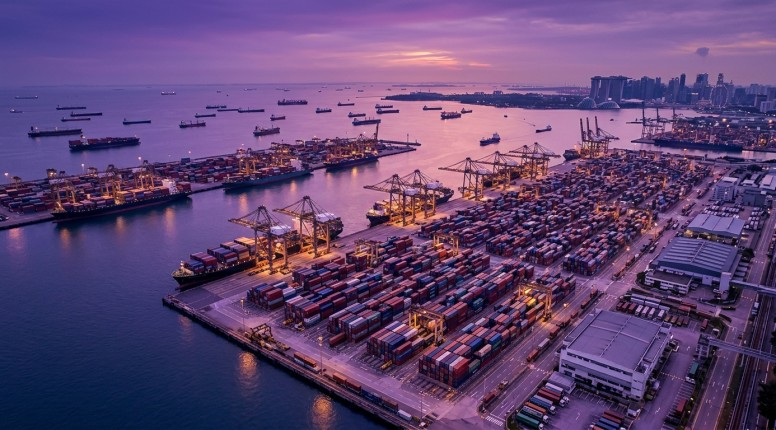
Singapore's maritime sector demands more than just paper credentials—it requires proven risk management and decision-making under pressure. Whether you are a seafarer pursuing CoC advancement or an officer transitioning ashore, selecting the right MPA-recognized program is critical to turning technical training into genuine career progression.
Maritime training Singapore is a challenge to ensure that Maritime education improves decisions at sea and ashore. A certificate may look impressive on paper. The real value appears when a professional can manage risks. It also appears when that person can communicate under pressure. Strong learning should improve performance.
In this article, we explain available pathways and course quality. You will learn how to match training with your role and how to avoid programmes that offer little career value.
Singapore is an international shipping centre with shipowners that has plenty of port operators but also has marine service firms and regulatory institutions. This concentration gives professionals access to relevant education.
The Maritime and Port Authority of Singapore administers seafarer certification under STCW requirements. It also evaluates foreign certification systems. This makes certification status important before enrolment.
Maritime training Singapore can support people at different career stages.Now how does that happen? A cadet may need a structured route towards a Certificate of Competency (COC). An officer, however, may need revalidation, whereas a shore specialist may need updated knowledge in management .
Not every course serves the same purpose. Start with the workplace decision you need to improve.
| Career objective | Suitable focus | Practical outcome |
| Work at sea | Nautical studies or marine engineering | Route towards shipboard duties |
| Gain senior certification | CoC preparation | Eligibility for higher officer responsibility |
| Move ashore | Maritime business or shipping operations | Stronger commercial understanding |
| Lead technical work | Maintenance or naval architecture | Better asset decisions |
| Manage change | Leadership or maritime economics | Wider business judgement |
Professionals often need continuing education without leaving employment for years. Maritime training Singapore therefore includes classroom study as part of shipping management training as well as part-time formats and practical exercises.
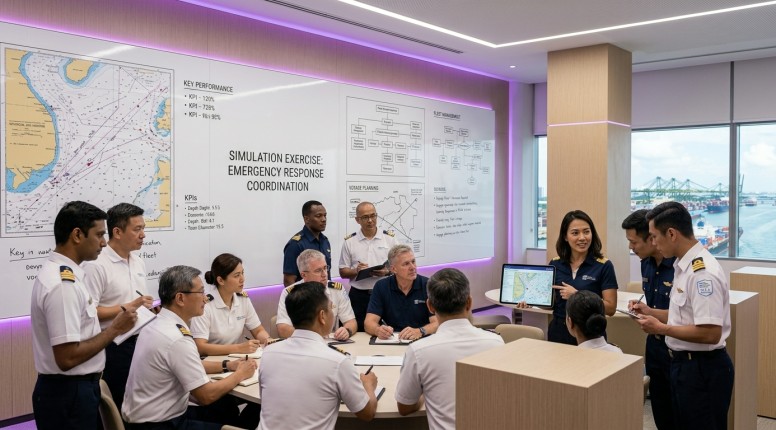
Simulation is especially valuable when it tests judgement rather than button pressing. Simulators can recreate navigation pressure. They can also assess communication or machinery failures. The debrief should explain where the points of weakness and the points of strength are.
Consider a chief officer preparing for command. Technical competence may already be strong. The training needed may involve leadership or emergency coordination. Repeating entry-level content would waste time.
A polished brochure does not prove educational quality. Look beyond the title and ask how the institution turns information into professional ability.
Check the following:
For regulated seafaring routes, verify whether the provider and course meet MPA Maritime Port Authority requirements. For business education, compare the syllabus with your target role. Do not assume that every academy uses the same standards.
Singapore’s location gives learners a view of Asian trade routes and regional operations. Professionals may work with teams from Indonesia. They may also work with colleagues across wider international markets. This builds awareness of different practices.
However, port city training is not automatically better. Location adds value only when the programme uses relevant cases. It should connect experienced teaching to shipping decisions.
Before registering, define the learning outcomes you expect. Do you need a licence? Do you need management capability? Are you preparing for a shore role? Each answer points towards a different pathway.
Relevant maritime courses in Singapore can support professionals seeking structured development in a shipping centre. Selection should depend on depth and recognised outcomes.
Ask the provider for the timetable. Confirm the assessment method. Check prerequisites and total study time. Verify whether simulation or workplace assignments are included.
Training becomes valuable when other people can see the improvement. After completing maritime training Singapore, apply one lesson to a real problem.
You might improve the handover process. You could strengthen a voyage report. You could reduce maintenance delay or clarify a safety procedure.
Record the original problem. Explain the action. Measure the result. This creates evidence for an appraisal. It also supports promotion or a future application.
Avoid a programme that promises guaranteed advancement. Be cautious when instructor experience is unclear. Weak courses often use broad descriptions without explaining assessment or workplace application.
Also check whether an old provider name still reflects current availability. WMI Wavelink Maritime Institute stopped enrolling cadets in 2022. Current information matters when planning a CoC route.
Maritime training Singapore should prepare professionals for better decisions. It should also support safer operations and clearer career progression. The right maritime training Singapore choice depends on role requirements. It also depends on certification needs and practical relevance.
For employers, strong education improves capability and succession planning. For individuals, the best course is the one that turns knowledge into trusted responsibility.