
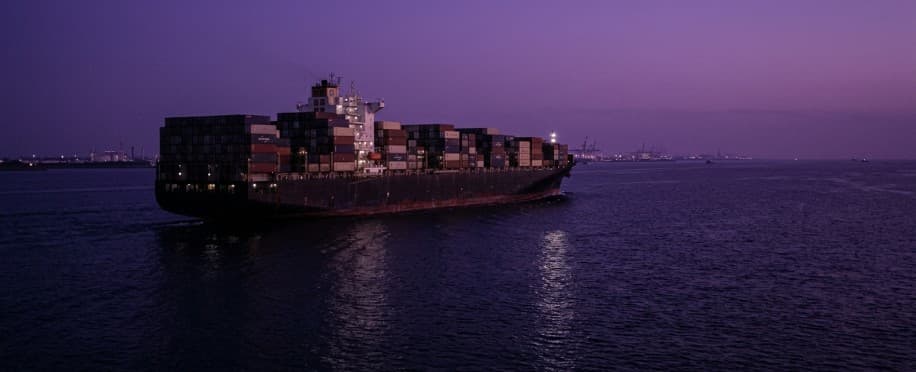
Choosing between open-loop and closed-loop scrubbers requires balancing route restrictions, fuel price spreads, and operational complexity. While open-loop systems offer simplicity for deep-sea routes, closed-loop solutions provide essential flexibility in ports with strict discharge controls. Assessing lifecycle economics and crew capability helps shipowners select the most compliant and cost-effective configuration for their fleet.
Choosing between an open-loop vs closed-loop scrubber comes down to one practical question: where will the vessel operate, and what restrictions will it face? Both systems reduce sulphur oxide emissions, but they differ significantly in water use, waste handling, operating complexity, and flexibility in ports where washwater discharge is restricted.
So which option makes more sense commercially? The answer depends on the vessel’s trading pattern, fuel strategy, compliance exposure, and crew capability.
In this article, we compare the two systems from an operational and investment perspective, so owners and technical managers can assess which configuration fits their fleet more effectively.
Both technologies reduce SOx emissions so ships can achieve equivalent compliance while using higher-sulphur fuel, subject to approval. IMO permits scrubbers as an alternative method, with testing, monitoring, certification, and discharge-water requirements.
Since the IMO 2020 sulphur shift, owners have had to compare fuel strategy, retrofit economics, route exposure, and environmental restrictions together. A cheaper system loses value when its normal mode cannot be used on key routes.
Open-loop equipment uses seawater alkalinity to neutralise sulphur compounds, then discharges compliant washwater. Closed-loop operation recirculates freshwater, normally with an alkaline chemical, while separating residues and controlling a smaller bleed-off stream.
| Decision factor | Open-loop | Closed-loop |
| Water use | High seawater flow | Recirculated freshwater |
| Chemical demand | Usually low | Alkaline reagent required |
| Waste handling | Less retained onboard | More residue management |
| Discharge flexibility | Route dependent | Greater control |
| Complexity | Generally simpler | More treatment equipment |
Where does the vessel actually trade? Local washwater restrictions can alter the economics quickly. IMO permits compliant EGCS operation, while states and ports may impose tighter discharge controls in their waters.
The Mediterranean applies a 0.10% sulphur limit, while the Canadian Arctic and Norwegian Sea became ECAs in March 2026. Understanding how Emission Control Areas affect ship operations therefore belongs in retrofit assessment.
A bulk carrier spending long periods at sea may favour open-loop operation where discharge is allowed. A ferry making frequent port calls may value closed-loop capability more. Before comparing prices, map likely ports and future routes.
Why install SOx scrubbers at all? The business case often depends on the price spread between high-sulphur and compliant lower-sulphur fuels. A wider spread can improve payback; a narrower spread can extend it.
This is why the evolution of marine fuel oil matters. Fuel availability, quality, compatibility, and bunker pricing can shift economics over the vessel’s life. Test several price scenarios rather than assuming today’s differential will continue.
For the open-loop vs closed-loop scrubber choice, add chemicals, electrical load, maintenance, sludge disposal, freshwater, and reception costs. A lower retrofit quotation can produce a different lifetime cost.

Where do the captured substances go after SOx is removed from the exhaust? That question sits at the centre of the environmental debate.
According to the 2026 Frontiers study “Marine scrubber technologies as a transitional solution within the Earth system after IMO 2020,” both systems reduce atmospheric SO2, but their environmental pathways differ. The paper describes open-loop discharge as creating additional marine burden, while closed-loop operation concentrates residues that require controlled management.
Closed-loop operation is not impact-free; it changes where treatment and waste-management responsibilities sit. For an owner comparing open-loop vs closed-loop scrubber options, ask: which controls can the vessel operate reliably across its routes?
A scrubber creates value only when it works consistently. Pumps, sensors, treatment units, tanks, and controls all require inspection and maintenance.
Closed-loop arrangements generally require more active water treatment and chemical management. Open-loop systems can be simpler, yet they still depend on water chemistry, monitoring accuracy, corrosion control, and compliant discharge.
What if a sensor fails during an ECA transit or dosing becomes unreliable before arrival? Such failures can force fuel switching, maintenance, or voyage changes.
A ship with predictable deep-sea routes may prioritise simplicity. A vessel trading across changing jurisdictions may value flexibility more. That is why the open-loop vs closed-loop scrubber debate can lead owners toward hybrid arrangements capable of switching mode.
Flexibility has a price: more components, space, integration work, training, and maintenance. Which capabilities will the vessel use often enough to justify them?
For retrofit teams, the SOx Scrubber Retrofit training develops the engineering, compliance, and operational understanding needed to assess projects.
The final open-loop vs closed-loop scrubber decision should combine route restrictions, fuel-price scenarios, retrofit costs, environmental controls, and crew capability. None should be assessed alone.
A low installation price matters less if a vessel frequently enters waters where discharge is restricted. Greater treatment capability may also add little value on stable routes.
Before approving investment, ask: can the vessel operate the chosen system compliantly, economically, and reliably throughout its expected trading life? That answer matters more than purchase price alone.
There is no universal winner in the open-loop vs closed-loop scrubber comparison. Open-loop suits vessels spending substantial time at sea where washwater discharge is accepted. Closed-loop provides greater control on routes with tighter discharge requirements.
For owners and technical managers, route flexibility, fuel economics, waste handling, maintenance capability, and regulatory exposure determine whether the retrofit continues delivering value.