
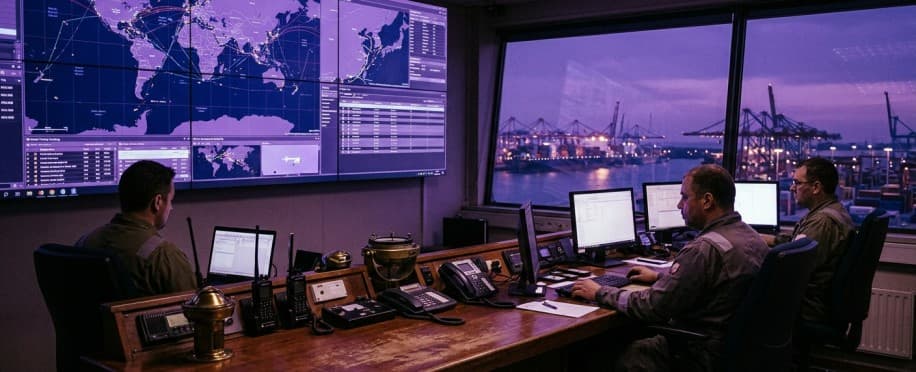
Modern maritime logistics relies as much on seamless data exchange as it does on physical infrastructure. A Port Community System (PCS) serves as a centralized digital platform that connects shipping lines, terminal operators, customs, and transport providers in real time. By replacing fragmented, manual communication with transparent data visibility, a PCS eliminates bottlenecks, streamlines regulatory compliance, and significantly accelerates cargo flow across global supply chains.
Modern ports handle large volumes of information alongside physical cargo. Shipping lines, terminal operators, customs authorities, freight forwarders, transport companies, port authorities, and other stakeholders need to exchange accurate information to coordinate vessel arrivals, cargo movements, documentation, inspections, and deliveries. When these activities depend on disconnected systems and manual communication, delays and information gaps can affect the wider supply chain.
A Port Community System provides a digital platform that helps different stakeholders exchange and coordinate information through a shared environment. By improving data visibility and communication, a PCS can support more efficient cargo handling, reduce unnecessary administrative processes, and strengthen coordination across port operations.
A port community system (PCS) is a digital platform that facilitates the secure exchange of information between organisations involved in port and logistics activities. Instead of requiring each stakeholder to communicate separately with multiple parties, a PCS can connect different systems and users through a common information-sharing environment.
The information managed through a PCS may include vessel schedules, cargo declarations, customs information, transport details, documentation, terminal status, and other operational data.
The objective is not necessarily to replace every system used by individual organisations. Instead, the system helps connect stakeholders and improve the flow of information between them.
This makes a PCS an important component of modern port digitalisation, particularly as ports move toward more connected and data-driven operations.
A PCS brings together information from different participants in the port community. Shipping lines may provide vessel and cargo information, terminals can share cargo status and operational data, customs authorities can process relevant declarations, and logistics companies can coordinate transport activities.
The platform can then make relevant information available to authorised users according to their roles and responsibilities.
For example, when a vessel is scheduled to arrive, several parties may need information about the expected arrival time, cargo, documentation, berth allocation, customs requirements, and inland transport. A shared digital environment can reduce the need for repetitive communication and help stakeholders work from more consistent information.
The effectiveness of a PCS therefore depends on data quality, system integration, cybersecurity, user adoption, and clearly defined information-sharing processes.
A PCS can support a wide range of activities across the maritime logistics chain.
Port calls involve multiple activities that need to be coordinated before, during, and after a vessel's arrival. A PCS can facilitate the exchange of vessel schedules, arrival information, berth-related data, and other operational details.
Better information coordination can help stakeholders prepare resources and reduce avoidable delays during port calls.
Cargo often passes through several stages and organisations before reaching its final destination. A PCS can provide authorised stakeholders with relevant cargo information, helping improve visibility throughout the process.
This can be particularly valuable when multiple organisations are involved in documentation, customs clearance, terminal handling, and inland transportation.
Digital information exchange can also support customs and regulatory procedures. Electronic submission and sharing of relevant documentation can reduce reliance on paper-based processes and improve the speed of information handling.
In this context, the concept of a maritime single window is also important. It provides a structured approach to submitting required information electronically to relevant authorities, supporting more efficient communication between vessels and public agencies.
Port operations are closely connected to road, rail, and other inland transportation networks. A PCS can help coordinate information between terminals and transport operators, allowing stakeholders to better understand cargo availability, collection requirements, and delivery schedules.
Improved coordination can help reduce unnecessary waiting times and contribute to smoother cargo movement beyond the terminal.
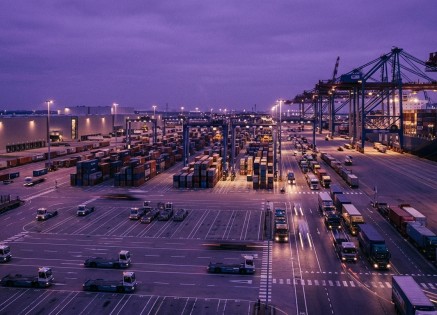
One of the main benefits of a PCS is its potential to improve the flow of both information and physical cargo.
Cargo delays can occur when different parties do not have access to the information they need at the right time. A shared digital platform can improve visibility by providing relevant stakeholders with more consistent and timely information.
This can help organisations coordinate their activities more effectively and reduce uncertainty around cargo movements.
Traditional port processes may involve emails, phone calls, spreadsheets, paper documents, and repeated data entry. These activities can consume time and increase the risk of errors.
A PCS can automate or simplify selected information-sharing processes, reducing repetitive administrative work and allowing employees to focus on higher-value operational activities.
Ports involve many independent organisations, each with different systems, responsibilities, and operational priorities. PCS can provide a common digital environment that supports communication between these stakeholders.
Better coordination can contribute to more efficient cargo handling and help reduce delays caused by information gaps.
Access to timely operational data can support faster decisions. Port managers and other stakeholders can use available information to identify potential bottlenecks, monitor cargo status, and coordinate resources.
This is particularly relevant as ports adopt technologies associated with port technology and automation, including connected equipment, automated processes, sensors, and data-driven operational tools.
A PCS does not operate in isolation from terminal systems. Terminals typically use dedicated platforms to manage container movements, equipment, yard operations, gate processes, and other activities.
A terminal operating system can manage many of these internal processes, while the PCS focuses more broadly on information exchange between organisations within the port community. Understanding the relationship between a terminal operating system and wider port information systems is important when designing an integrated digital environment.
Integration between systems can allow information to move more efficiently between terminal operators, shipping companies, authorities, transport providers, and other stakeholders.
The development of a PCS forms part of the wider shift toward digitalisation across the maritime sector. Modern ports increasingly rely on connected systems, cloud platforms, automation, data analytics, artificial intelligence, and digital communication tools.
Data can support operational planning by helping organisations understand cargo flows, vessel movements, equipment utilisation, transport activity, and potential bottlenecks.
The wider digital transformation of maritime logistics demonstrates why connected information systems are becoming increasingly relevant to the way ports and supply chains operate.
Despite its potential benefits, implementing a PCS can involve several challenges.
Different organisations may use different software platforms, data formats, and technical standards. Integrating these systems requires appropriate technology and agreed approaches to data exchange.
A PCS can handle commercially and operationally sensitive information. Strong access controls, authentication, cybersecurity measures, and data-management procedures are therefore important.
A PCS creates greater value when relevant stakeholders actively participate. If important organisations continue to rely on disconnected processes, information gaps may remain.
Digital systems are only as reliable as the information they receive. Inaccurate, incomplete, or outdated data can affect operational decisions and reduce the value of shared information.
Introducing a new digital platform can change established workflows and responsibilities. Training, communication, user support, and clear implementation plans can help organisations adapt to new processes.
A PCS can contribute to the development of smarter and more connected ports by creating a foundation for information sharing and digital coordination.
Smart ports increasingly combine digital platforms with automation, analytics, connected infrastructure, and sustainable technologies. These developments require organisations to consider technology not simply as an operational tool but as part of a broader strategy for improving efficiency, resilience, and environmental performance.
Professionals involved in these developments need to understand how digital systems, operational processes, sustainability, and stakeholder coordination interact. Training in Smart and Green Ports can support professionals in developing a broader understanding of the technologies and strategies shaping modern port operations.
A PCS provides a digital framework for connecting organisations involved in port and maritime logistics activities. By improving information visibility, reducing manual processes, supporting stakeholder coordination, and facilitating faster access to operational data, a PCS can contribute to smoother cargo flows and more efficient port operations.
Its value depends on more than technology alone. Successful implementation requires system integration, reliable data, cybersecurity, stakeholder participation, and effective change management.
As ports continue their digital transformation, PCS platforms can play an important role in connecting terminals, shipping lines, authorities, transport providers, and other stakeholders. Combined with automation, data-driven operations, and sustainable technologies, they can form an important part of the digital infrastructure supporting the future of maritime logistics.


