
Posted On: 10/27/2026, 7:54:33 PM
Last Update: 10/27/2026, 7:54:33 PM
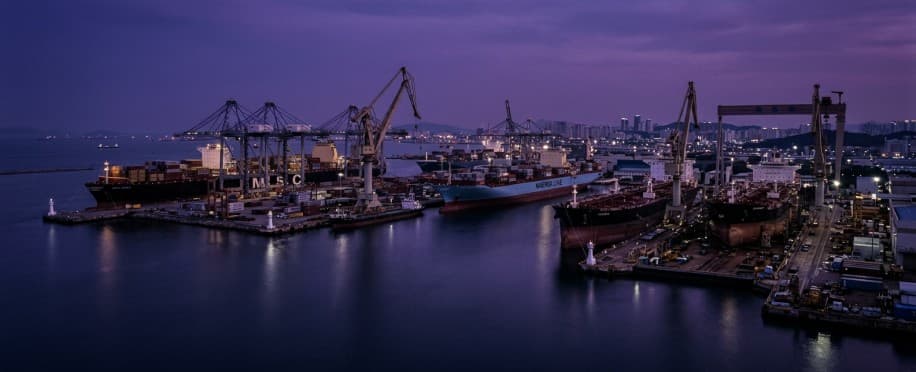
China has emerged as the global leader in new ship orders, with its shipyards obtaining approximately 81.8% of the total orders in the first nine months of 2026, as reported by the Ministry of Industry and Information Technology.
This significant growth in demand is largely driven by the ongoing geopolitical tensions in the Gulf region, contributing to an increased need for crude tankers, particularly due to the rise in ship-to-ship transfers outside the Strait of Hormuz.
By the end of the last month, total orders in the Chinese shipbuilding industry reached 399.13 million deadweight tonnes (DWT), reflecting a significant increase of 64.8% year-on-year.
In the first three quarters of 2026, Chinese shipyards completed construction of vessels with an aggregate carrying capacity of 58.05 million DWT, which accounted for over 63% of the global total.
Remarkably, this robust performance has been attributed to the crucial role played by domestic suppliers, as reported by Chinese media outlets, which underscored their contribution to the sustained strength and global dominance of China's shipbuilding sector.
Experts predict that the shipbuilding market will continue to thrive, with Beijing anticipated to garner the largest share of profits.
Current reports indicate that container ships constitute the predominant category, making up nearly 40% of the global order book. Besides, very large crude carriers (VLCCs) are seeing significant demand, primarily driven by shipowners in Europe.
There are approximately 930 Very Large Crude Carriers (VLCCs) in operation globally, with 20% of these vessels being over 20 years old.
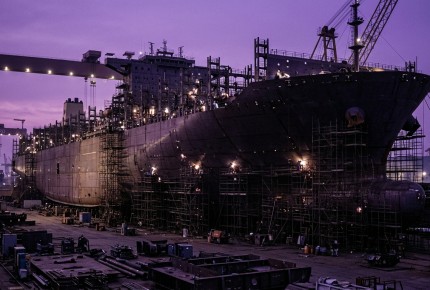
Typically, VLCCs are retired and scrapped after a service life of 20 to 25 years. This ageing fleet has heightened the demand for new VLCC constructions, leading to an increase in replacement orders, the majority of which are being fulfilled by Chinese shipyards.
Beyond the volume of orders, China is also at the forefront of the maritime sector's transition towards greener technologies and decarbonization initiatives.
Notably, it has secured 74.1% of the orders for vessels that utilise alternative fuels, such as ammonia, hydrogen, and methanol, reflecting a 5.7% increase when compared to the orders placed in the January to June timeframe.
China's dominance in global shipbuilding is attributable to several key factors. Firstly, its construction costs are significantly lower than those of competitors like South Korea and Japan.
In addition, China benefits from abundant raw materials and a robust domestic steel production capability, allowing for self-reliant supply chains for most projects.
Technologically, Chinese shipyards have narrowed the gap with advanced onboard systems, enabling the construction of sophisticated LNG and dual-fuel vessels on a large scale.
Furthermore, attractive payment packages from state-owned banks and financial agencies make China an appealing choice for foreign shipping companies.
Maritime Professional Courses explore how China's ascendance in global shipbuilding results from lower construction costs relative to South Korea and Japan, abundant raw materials, and domestic steel production. Technological advancements enable Chinese shipyards to produce complex LNG and dual-fuel vessels, while state-owned banks provide favourable payment packages to foreign shipping companies.


