
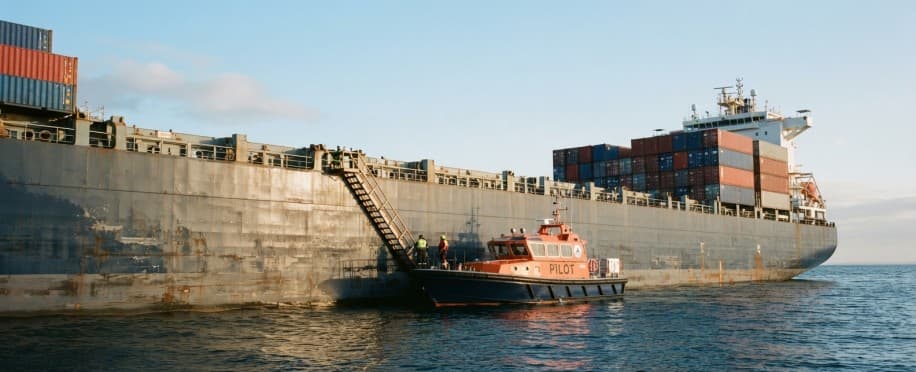
Safe pilot transfers depend on more than a sound ladder—they require compliant rigging, secure deck access, and strict supervision under SOLAS Regulation V/23. As updated mandatory IMO performance standards take effect in 2028, understanding equipment specifications, boarding height limits, and pre-transfer inspection routines helps shipowners protect personnel and prevent costly port delays.
A safe pilot transfer begins with a simple question: can the pilot move from the boat to the ship without being exposed to unnecessary danger? Answering that question involves much more than checking whether a ladder is available. Under SOLAS Chapter V, Regulation 23, pilot ladder requirements establish the standards for equipment construction, installation, access and supervision during boarding operations.
For shipping companies, these standards have direct operational consequences. A damaged step, poorly secured ladder or unsuitable boarding position can prevent a pilot from embarking, interrupt port schedules and expose personnel to serious injury. The challenge is ensuring that safety procedures remain effective during actual operations, particularly when crews are working under time pressure.
In this article, we examine what SOLAS requires, how these rules apply during a pilot transfer and what shipowners should consider as new international standards approach implementation.
SOLAS Chapter V, Regulation 23 governs pilot transfer arrangements on vessels where maritime pilots may be employed. It requires ships to provide suitable equipment and arrangements that allow pilots and other personnel to embark and disembark safely.
The regulation covers several connected responsibilities. A ship must have suitable boarding equipment, the ladder must be properly positioned and secured, and personnel must be able to move safely between the ladder and the deck.
But why does SOLAS address the entire arrangement rather than the ladder alone?
Because the pilot's safety depends on every stage of the transfer. A ladder may meet construction standards while the access point above it remains obstructed. Similarly, an otherwise suitable arrangement may become unsafe if it is secured incorrectly.
For shipowners, complying with pilot ladder requirements involves checking how the different elements of the boarding arrangement work together. This responsibility forms part of the wider obligations established by the SOLAS Convention, which sets international standards for the safety of ships and their operations.
Before considering how a ladder is rigged, operators need to establish whether the equipment itself is suitable for use.
IMO Resolution A.1045(27), as amended, provides technical recommendations supporting the existing SOLAS framework. These recommendations address the construction of steps, the spacing between them, the strength of side ropes and the features needed to maintain stability.
The principal specifications include:
| Component | Technical specification |
| Distance between side ropes | At least 400 mm |
| Step width | At least 115 mm |
| Step depth | At least 25 mm |
| Vertical step spacing | Between 310 mm and 350 mm |
| Spreader length | At least 1.8 metres |
| Lowest spreader | Fifth step from the bottom |
| Step surface | Effective non-slip finish |
Each measurement responds to a practical concern. Consistent step spacing helps the pilot maintain a predictable climbing movement, while spreader steps reduce the risk of the ladder twisting.
However, dimensions tell only part of the story. Materials and construction quality are equally important. Steps must provide adequate strength and secure footing, while side ropes must remain capable of supporting the ladder and its intended load.
For that reason, pilot ladder requirements should guide both equipment purchasing and onboard inspections.
A ladder manufactured to the correct specifications can deteriorate through repeated use. Cracked steps, worn ropes or inappropriate repairs may compromise its suitability long before the equipment is due for replacement.
Once the ladder has been inspected, the next decision concerns how it will be installed for the approaching pilot boat.
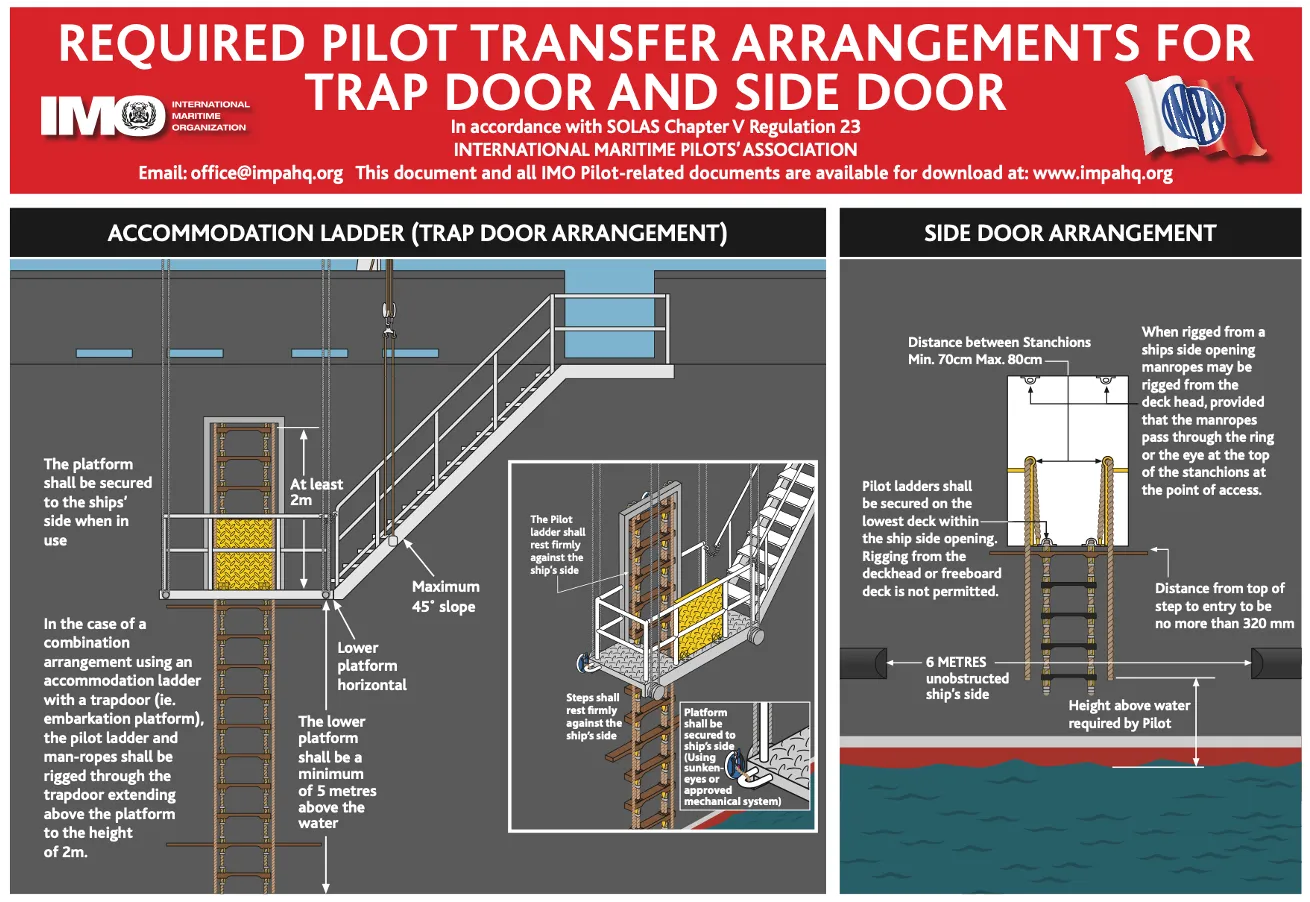
The boarding height is particularly important. Under the existing SOLAS framework, a pilot ladder used alone must generally accommodate a climb of between 1.5 and 9 metres above the water.
Where the climb exceeds 9 metres, an appropriately designed combination of accommodation ladder and pilot ladder, or another compliant arrangement, is required.
This becomes particularly relevant for tankers operating in ballast condition. With a higher freeboard than when fully loaded, the vessel may require a different boarding arrangement to accommodate the increased climbing height. The crew must therefore assess the actual boarding height before each transfer and select an arrangement that meets the applicable SOLAS requirements.
Correct positioning is just as important. The ladder should be located within the vessel's parallel body length, as far as practicable within its midship half, and away from discharges that could interfere with the transfer.
It must also be secured to suitable strong points, with its steps resting firmly against the ship's side.
When crews apply pilot ladder requirements during these preparations, they should also consider the pilot boat's ability to approach the boarding position safely.
A responsible officer should supervise the preparation and confirm that the arrangement is ready before the transfer begins.
The essential checks include:
These checks are particularly valuable during night arrivals, when visibility is limited and the crew may have fewer opportunities to identify problems once the pilot boat approaches.
In practice, the most reliable way to meet pilot ladder requirements is to make these checks part of the vessel's established arrival and departure procedures.
Equipment defects present a difficult operational decision, especially when a vessel is approaching a scheduled berth.
A common operational concern arises when a damaged ladder step is discovered shortly before port arrival. With the pilot boat already scheduled to approach, the crew must address the defect while managing the possibility of a delayed transfer.
What should happen next?
The defect must be reported and the crew must ensure that a safe, compliant arrangement is available before anyone uses the ladder. Depending on the problem, this could involve replacing the equipment or preparing another suitable boarding arrangement.
Continuing with a defective ladder creates an unacceptable safety risk and may lead to the pilot refusing to board.
This example illustrates why pilot ladder requirements need to be supported by clear maintenance and defect-reporting procedures.
It also highlights the importance of early preparation. When crews inspect equipment before arrival, they have more opportunity to correct deficiencies without disrupting the vessel's schedule.
For operators managing multiple ships, inspection records and replacement planning provide further assurance that equipment condition is being monitored consistently.
The international regulations are entering a significant transition, and shipowners need to understand how the changes affect existing and newly installed equipment.
In June 2025, the IMO Maritime Safety Committee (MSC) adopted amendments to SOLAS Regulation V/23 through Resolution MSC.572(110). It also adopted new performance standards under Resolution MSC.576(110).
According to the IMO's Maritime Safety Committee, 110th Session report, the amendments introduce mandatory performance standards for pilot transfer equipment and arrangements, including their design and construction, installation, inspection, maintenance and crew familiarisation.
What makes this development important is its emphasis on the complete working condition of the transfer arrangement throughout its service life.
The revised pilot ladder requirements enter into force on 1 January 2028, with transitional provisions for equipment installed before that date.
| Date | Compliance requirement |
| 1 January 2028 | New arrangements must meet the revised design and installation standards. |
| First survey on or after 1 January 2029 | Existing arrangements on ships covered by SOLAS Chapter I must comply. |
| 1 January 2030 | Compliance deadline for existing arrangements on ships outside Chapter I. |
The revised provisions covering inspection, stowage, maintenance, replacement and crew familiarisation apply from 1 January 2028 regardless of installation date.
The amendments also prohibit mechanical pilot hoists and strengthen provisions for lighting and reporting unsafe arrangements.
For shipowners, preparing for the new pilot ladder requirements involves reviewing the equipment currently installed across the fleet and identifying arrangements that may require modification or replacement.
It is also worth monitoring updates to the SOLAS Convention, particularly when planning equipment purchases and scheduled surveys.
One of the challenges in fleet management is maintaining consistent standards across vessels with different equipment configurations, operating schedules and crew experience.
A procedure that works effectively on one ship may need additional attention on another, particularly where boarding arrangements differ.
For this reason, shipowners should approach pilot ladder requirements through three connected areas: equipment management, crew competency and operational verification.
Maintenance systems should identify when ladders were supplied, inspected or replaced. They should also provide a clear process for removing defective equipment from service.
This allows technical managers to make informed replacement decisions instead of reacting to problems immediately before port arrival.
The crew responsible for preparing the ladder must understand how the equipment should be rigged and what conditions could make the transfer unsafe.
Training in Pilot Boarding Arrangements under SOLAS can help connect regulatory knowledge with the decisions made during actual boarding operations.
Before every transfer, the responsible officer should verify the arrangement's condition and suitability.
These inspections also support readiness for Port State Control inspections, where deficiencies in boarding equipment or procedures may be identified.
Together, these measures help integrate pilot ladder requirements into everyday vessel operations, reducing the likelihood that safety depends solely on individual experience.
Before the next transfer, the responsible crew should be able to answer the following questions:
For managers, the value of this checklist extends beyond the individual port call. It provides a practical basis for assessing whether pilot ladder requirements are consistently understood and followed across the fleet.
Pilot transfers remain demanding operations because the conditions surrounding them can change quickly. Equipment that appears satisfactory during preparation must also remain safe when the pilot boat comes alongside and the transfer begins.
Meeting pilot ladder requirements therefore calls for attention to equipment condition, correct installation and effective supervision, supported by reliable maintenance procedures and crew training.
As the revised SOLAS standards approach, shipowners have an opportunity to assess existing arrangements and address potential compliance gaps before the relevant deadlines.
The practical priority is clear: ensure that every vessel can provide a safe boarding arrangement whenever a pilot transfer is required.