
Subscribe to our newsletter
Copyright © 2026 lmitac.com All Rights Reserved. Contact - Terms and Conditions - Privacy Policy - Quality Policy - Vacancies - Sitemap
London Maritime Academy is a trade name for London Premier Group
version: 2.9.0
Subscribe to our newsletter
Posted On: 10/12/2026, 8:41:15 AM
Last Update: 10/12/2026, 8:41:15 AM
Global energy markets faced significant volatility on Thursday due to escalating regional conflict in the Middle East, leading to a sharp increase in crude oil prices. Brent crude futures rose nearly 5%, reaching approximately $104–$105 per barrel, with Dated Brent surpassing $136.
In tandem, benchmark Gulf-East Asia tanker rates exceeded $1.4 million per day, as commercial shipping operators prepared for increased risks along vital transit routes.
The surge follows military actions and maritime strikes, including a ballistic missile launch by Yemen’s Houthi militia targeting Riyadh’s airport.
This violence, along with fresh attacks on shipping in the Persian Gulf and Red Sea, has heightened inflation concerns, affected international bond markets, and pushed the 10-year U.S. Treasury yield to 5.34 per cent.
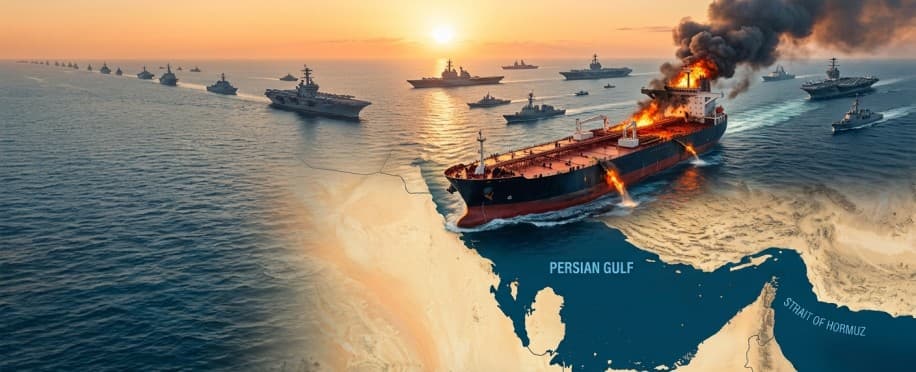
Commercial shipping in the Persian Gulf and Strait of Hormuz is increasingly threatened, highlighted by recent strikes affecting a significant number of ships. Public reports indicate 13 strikes this month, with private estimates suggesting around 20 ships impacted, emphasising the region's critical role in global oil exports.
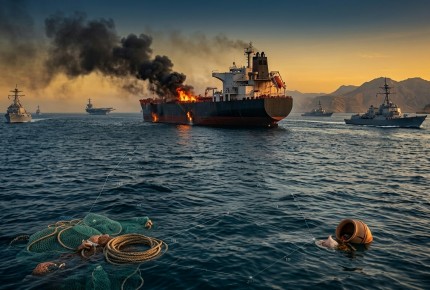
In the central Gulf, the Antigua-flagged product tanker Acers sustained damage from three drone strikes, igniting a fire in its engine room. Another crude oil tanker was impacted by an unknown projectile near the Musandam Peninsula, and satellite imagery supports reports of a strike off Fujairah in the Gulf of Oman. This indicates a troubling expansion of targeting into areas with less naval defence presence.
According to analyst Martin Kelly from EOS Risk Group, if confirmed, this would suggest Iran is focusing on feeders and shuttle runners beyond Hormuz.
Likewise, Founder of Marisks, Dimitris Maniatis, stressed that strikes on drifting vessels highlight the risks to both tankers and all ships navigating the Persian Gulf.
The increasing pressures on energy logistics are impacting global financial markets, leading to a decline in equity futures and a rise in sovereign debt yields as central banks plan to raise interest rates to combat inflation.
Senior Vice President at Rystad Energy, Jorge Leon, noted that while there was an expectation for a decrease in prices, this has not occurred, highlighting that “things in the Red Sea are heating up badly.”
American oil and gas producers preemptively shut down offshore production along the U.S. Gulf Coast due to concerns about Tropical Storm Isaias. Despite these precautions, Mr. Leon described the storm's impact as “marginal,” underlining that the more significant concern lies in anticipated increases in geopolitical tensions and attacks following the midterm elections.
Amid rising regional tensions, Washington's policy statements are crucial for market forecasts. President Trump specifically ruled out any immediate military action before the upcoming domestic elections, while maintaining that naval blockades will continue.
Remarkably, President Trump stated that despite Iran's poor economic and military conditions, and the ongoing blockade against the country, the United States would not attack Iran before the midterm elections scheduled for November 3. This announcement implies a strategic decision influenced by the electoral timeline.
In essence, internal defence preparations are underway despite public advisories against escalation. U.S. military planners are positioning three aircraft carrier strike groups in the region with contingency options for strikes on missile assets, energy facilities, and command sites, pending authorisation after the election cycle.
Maritime Online Courses examine how geopolitical conflicts and chokepoint disruptions impact oil prices and tanker rates. These supply shocks affect freight rate benchmarks such as VLCC and Aframax across vital trade routes. Factors like fleet capacity, shadow fleet movements, and ton-mile rerouting also influence global refining margins and energy market volatility.