Subscribe to our newsletter
Copyright © 2026 lmitac.com All Rights Reserved. Contact - Terms and Conditions - Privacy Policy - Quality Policy - Vacancies - Sitemap
London Maritime Academy is a trade name for London Premier Group
version: 2.9.0
Subscribe to our newsletter
Posted On: 10/7/2026, 11:57:50 AM
Last Update: 10/7/2026, 11:57:50 AM
On September 28, robots with 150-horsepower and 250-horsepower capabilities, developed and produced by Shandong Future Robot Co., Ltd., embarked from Weihai Port to the South China Sea for a joint scientific expedition. This advances China's goal of self-reliance in high-end deep-sea equipment.
As the launch order was issued, a 4,500-metre-class deep-sea robot was hoisted aboard a ship, bound for the South China Sea to perform deep-sea validation tests.
This robot signifies a breakthrough in domestic production, achieving full-chain manufacturing for tens of thousands of components, thus ending a long-standing foreign technological monopoly.
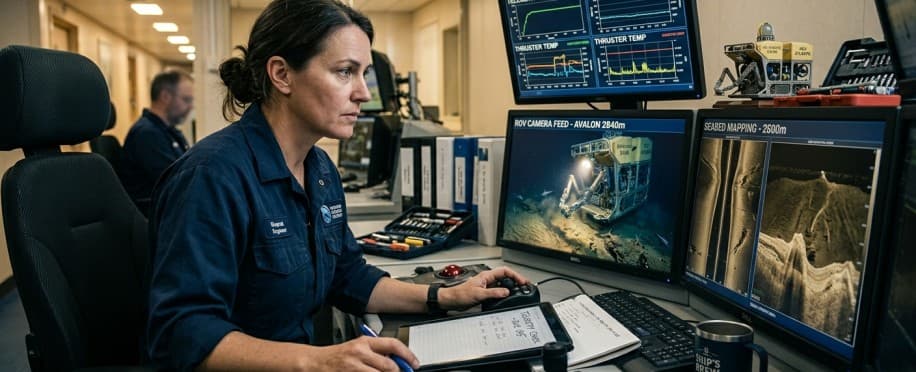
The 4,500-metre-class deep-sea robot's operational depth capabilities include 3,000 metres, 4,500 metres, and 6,000 metres underwater, and it features a self-developed seven-axis multi-functional hydraulic manipulator.
It has successfully achieved advancements in over 30 critical technologies, notably including deep-sea pressure-resistant sealing, high-power deepwater propulsion, long-distance underwater communication, and multimodal autonomous navigation.
This system is capable of performing a range of intricate operational tasks such as deep-sea oil and gas extraction, subsea pipeline inspections, exploration of mineral resources, underwater scientific research sampling, and emergency salvage operations. Furthermore, its equipment performance has received authoritative certification from DNV (Det Norske Veritas).
Meanwhile, this equipment signifies a substantial leap in China's heavy-duty deep-sea technology, representing one of the rare fully autonomous systems that oversee the entire production chain, encompassing core components, control systems, and full unit design and manufacturing, showcasing significant localisation achievements in deep-sea operational equipment in China.
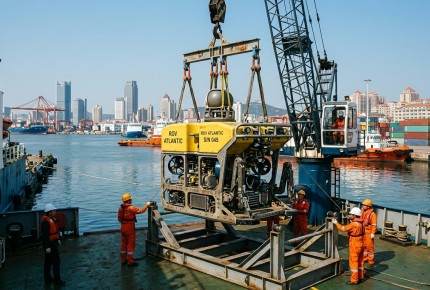
The company announced that its 4,500-metre-class deep-sea robot now has independent controllability for both core software and hardware.
Collaborating with Harbin Institute of Technology (Weihai), the enterprise aims to address "bottleneck" technological challenges in deep-sea equipment, converting laboratory research into practical devices capable of deep-sea dives and resilient to extreme marine conditions.
To enhance its position in the global offshore engineering market, the team plans to iteratively develop various deep-sea equipment types by utilising modular and large-scale technical solutions.
Further, this strategy aims to lower the application costs of domestically produced deep-sea equipment and promote Chinese-made solutions on the international stage, thereby enabling participation in global competition within the deep-sea equipment sector.
The 4,500-metre depth range is regarded as the primary zone for economically viable deep-sea resources. This environment poses extreme conditions, including high pressure, low temperatures, and strong ocean currents, which challenge the pressure resistance and operational stability of extraction equipment.
Eventually, a scientific expedition to the South China Sea is underway to rigorously test the fully domestically designed system of this equipment, focusing on the reliability and stability of its essential software and hardware components.
Maritime Engineering Courses cover deep-sea robotics, which uses resilient materials and bio-inspired mechanics to withstand harsh underwater conditions. Without GPS or light, these systems use acoustic communication and sonar for navigation, while haptic-feedback hydraulic manipulators enable precise sampling for scientific research and industrial offshore tasks.