Subscribe to our newsletter
Copyright © 2026 lmitac.com All Rights Reserved. Contact - Terms and Conditions - Privacy Policy - Quality Policy - Vacancies - Sitemap
London Maritime Academy is a trade name for London Premier Group
version: 2.9.0
Subscribe to our newsletter
Posted On: 6/9/2026, 8:57:46 AM
Last Update: 6/9/2026, 8:57:46 AM
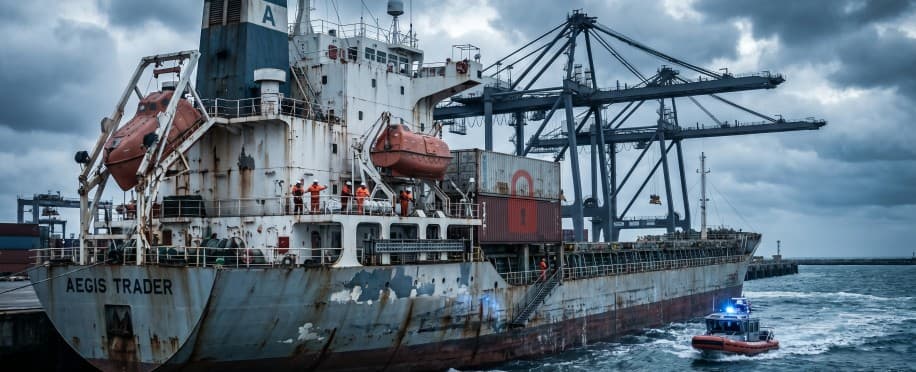
According to a recent study released by safety equipment suppliers during Posidonia, port state control detentions have increased by almost 70% over the previous five years, despite the fact that the number of inspections has remained constant.
The report indicates that detention of ships has become more common, with only half of inspections passing without deficiencies.
One in seven merchant ships is expected to be detained at least once in the next three years, primarily involving first-time offenders rather than repeat offenders.
Global inspections have remained around 75,000 annually since 2023. However, detentions in the Tokyo MoU doubled from 526 in 2021 to 1,255 in 2025.
The Paris MoU's detention rate is approximately 4 per cent, above the global average, while the Black Sea MoU had the highest rate last year at 6.8 per cent, attributed to an influx of older freighters and bulkers.
Notably, age is the most significant predictor of detention across various regimes, with risks increasing notably at ages 15 and 20. Additionally, the ageing global fleet is contributing to rising deficiencies; the proportion of ships 25 years or older increased from 36% in 2014 to 44% in 2024.
This trend is driven by owners retaining older vessels longer, aiming to navigate high newbuilding costs and uncertainties regarding future fuel options.
Allianz reports that in 2024, half of the incidents involved ships aged 20 years or older, with the average age of vessels lost to casualties being 29 years.
The primary deficiencies leading to detentions remain consistent, with inspectors highlighting issues related to the International Safety Management (ISM) code, fire safety, and life-saving appliances, which are fundamental safety concerns.
 Lifesaving Gear Failures Drive PSC Detentions
Survitec has analysed the PSC codes related to fixed firefighting systems, lifeboats, and liferafts, identifying that most detentions arise from preventable maintenance issues and inadequate crew training rather than unexpected equipment failures.
Besides, Survitec advises owners to invest in quality third-party inspection services to prevent PSC issues. They assert that even at low-end charter rates of $10-18,000 per day, these services are cost-effective if they avert just one detention over three years.
Despite current regulations for the annual renewal of fall wires and hooks, Survitec draws attention to a regulatory gap at the IMO, as brought up by ILAMA, regarding the absence of an obligatory replacement interval for chain and link components in lifeboat lifting assemblies.
These components have a commercial lifespan of 15-25 years. Although chain and link parts are not regulated by SOLAS, Survitec advises replacing or testing them every five years.
Flag & Port State Courses or Nautical Science identify governance and monitoring deficiencies that cause foreseeable non-compliance, leading to avoidable Port State Control detentions. Instead of unintended incidents, the area investigates organisational blind spots and cognitive biases, concentrating on why ships experience delays or fines under international maritime rules.
Read more news: